Dust Collector vs Shop Vac: Which Suits a Small Shop?
For most small shops, a shop vac is the simpler choice if you mainly run handheld tools, sand by hand or clean up spot messes. A dust collector is the better fit once you have stationary machines like a table saw, planer or band saw that throw off a lot of chips. Many small shops end up with both, because each one does a different job well.
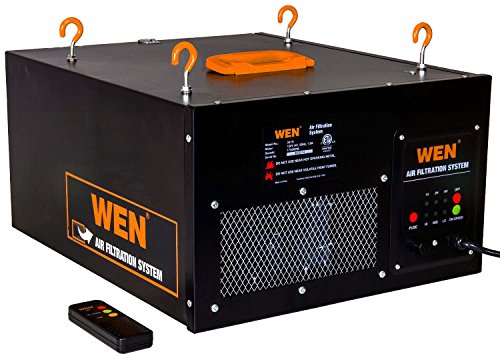 WEN 3410
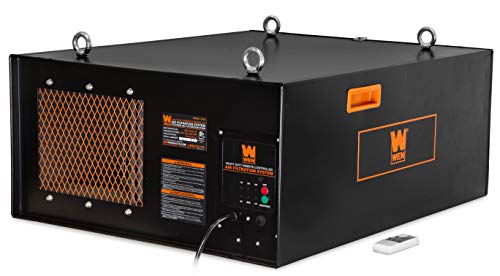 WEN 3417
 WEN DC1300Best overall
The core difference: airflow vs suction
A dust collector moves a large volume of air through a wide hose. That volume carries chips and dust away from a machine quickly. A shop vac does the opposite. It pulls a smaller volume of air through a narrow hose, which creates strong suction at the nozzle.
This is why the two tools feel so different in use. A shop vac is great at picking up fine dust off a bench or out of a corner. A dust collector is great at keeping a planer's chip stream from burying you, because a wide hose does not clog as easily on bulky shavings.
Neither one is better in every case. They are built for different kinds of dust, and the right pick depends on what your tools produce.
Side-by-side comparison
Here is how the main options compare in general terms. Exact performance varies by model, so check the published specifications for any unit you are considering.
| Feature | Shop vac | Dust collector | Dust separator (cyclone lid or pre-separator) |
|---|---|---|---|
| Best at | Cleanup and small tools | Stationary machines with heavy chip output | Protecting a vac from filling up |
| Hose size | Small | Large | Small, same as the vac |
| Airflow | Lower | Higher | Limited by the vac behind it |
| Suction at the nozzle | Strong | Moderate | Same as the vac |
| Fine dust filtering | Depends on the filter | Depends on the filter or bag | Catches bulk debris, not fine dust |
| Noise | Often loud | Often quieter, though still loud | Adds no extra noise |
| Space needed | Small, easy to store | Larger, often parked in a corner | Small |
| Portability | Easy to carry or roll | Wheeled models can move, some stay put | Easy |
When a shop vac makes more sense
If your shop is a corner of a garage and you mostly use a random orbit sander, a circular saw, a router or a jigsaw, a shop vac can handle the job. Many power tools have a small dust port that fits a vac hose. The narrow hose and strong suction suit those ports well.
A shop vac also doubles as your cleanup tool. You can use it on the floor, in the car or after a messy project, which a dust collector is not designed for.
Look at our guide to the best small shop vac if space and flexibility matter most to you.
- You use mostly handheld tools.
- You have little floor space and need to store the tool away.
- You also want a general cleanup tool.
- You work in short sessions rather than long machine runs.
When a dust collector is the better fit
Stationary machines create a lot of material fast. A planer, jointer or thickness sander can fill a small vac bin in minutes, and the narrow hose may clog on long shavings. A dust collector with a wide hose keeps up much better and has a larger collection bag or bin.
A dust collector also tends to run more comfortably for long sessions. Many people find them quieter than a shop vac, though you should still wear hearing protection.
If you are shopping for one, our page on the best dust collector for small shop compares models by published specifications, including airflow ratings and footprint.
- You run a planer, jointer, table saw or band saw often.
- You want to collect large volumes of chips without emptying a bin constantly.
- You can give it a fixed spot or a wheeled home near your machines.
- You want one unit that can serve several machines through a hose or blast gate setup.
What about a dust separator or an extractor?
A dust separator, such as a cyclone lid or a pre-separator drum, sits between your tool and a shop vac. It drops most chips and dust into its own bucket before they reach the vac. That keeps the vac filter cleaner and keeps suction from fading as quickly. It is a low-cost way to get more from a vac you already own.
An extractor is the name many people use for a vac built to pair with power tools. It usually has a better filter and may start automatically when the tool starts. In practice it is a shop vac with extra features for dust control. Dust collector and extractor are sometimes used loosely, so check the hose size and airflow rating in the specifications to see which type you are really looking at.
How to choose in five steps
Use this quick process to decide.
- List the tools you use most. Handheld tools point to a vac. Stationary machines point to a dust collector.
- Measure the space you can spare, including room for the hose to reach each machine.
- Check the dust port sizes on your tools so the hose and fittings will match.
- Compare filter type and capture details in the published specifications. Fine dust needs good filtration.
- Plan for noise. Both are loud, so budget for ear protection and consider where the unit will sit.
Safety notes for small shops
Fine wood dust is a health concern. Wear a dust mask or respirator suited to fine particles when sanding or emptying bins, and wear eye and hearing protection while machines run.
Dust can also ignite. Keep sparks, grinders and open flames away from collection areas, and empty bins regularly rather than letting dust build up.
Check that your outlet and extension cord can handle the unit's power draw, and unplug the tool before changing filters, bags or hoses. Never vacuum hot embers or smoldering material.
Frequently asked questions
Can I connect a shop vac to a table saw or planer?
Sometimes, if the dust port fits. Small ports on a table saw may work, but a planer produces bulky chips that can clog a narrow hose and fill the bin fast. A dust collector suits that job better.
Do I still need a shop vac if I buy a dust collector?
Often yes. A dust collector handles machines, while a shop vac is more useful for cleaning benches, floors and tight corners.
Does a dust separator replace a dust collector?
No. A separator protects a shop vac by catching bulk debris first. It does not add airflow or a larger hose.
Why does my shop vac lose suction quickly with wood dust?
Fine dust clogs the filter. A cleaner filter, a separator in front of the vac, and regular bin emptying can all help.