Does Ice Melt Damage Concrete? How to Avoid It
Yes, some ice melt can damage concrete, especially rock salt, heavy overuse, and slabs that are new or already cracked. The ice melt itself is only part of the problem. Water that melts, soaks in and refreezes does much of the harm. You can avoid most damage by choosing a product with a concrete-safe claim, using less of it, and sweeping up what is left.
 Snow Joe AZ-50-EBBest overall
 Snow Joe AZ-BH-50Deep cold, large bag
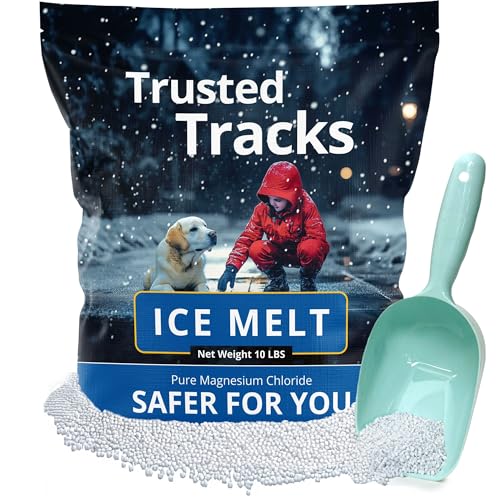 FIREKI ICEMELT-10-BAG-ALowest temperature rating
Why ice melt can harm concrete
Concrete looks solid, but it is porous. Water soaks into tiny openings, freezes, expands and pushes the surface apart. When this happens again and again, the top layer flakes off. This flaking is called scaling or spalling.
Ice melt makes this cycle more likely in two ways. It turns ice into liquid water that can soak in, and that water can refreeze on the next cold night. Some ice melt chemicals also attack the concrete itself, so the damage comes from both the water and the chemistry.
That is why a gentler product helps, but it does not make a slab immune. Even a product with a concrete-safe label can leave a weak surface worse off if you spread too much or leave it sitting.
Which kinds of ice melt are harder on concrete
Plain rock salt (sodium chloride) is the usual one to avoid on concrete. It also works poorly in deep cold and can corrode nearby metal. Fertilizer-style melters that contain ammonium nitrate or ammonium sulfate are another type to skip, because they can break down concrete chemically.
Gentler options include magnesium chloride and calcium magnesium acetate (CMA), as well as blends built around them. These are usually sold as safer for concrete, though gentler is not the same as harmless.
One more point from our spec sheet: concrete-safe is a maker claim from the listing, not an independent lab result. Treat it as a useful sign and still follow the usage directions on the bag.
Which products on our list make concrete-safe claims
All seven products on our best ice melt page list a concrete-safe claim. They differ in ingredient, cold rating and bag size, so match those to your driveway and your climate.
The table below shows the published specs for six of them. The seventh is a second FIREKI listing with the same -35°F rating and magnesium chloride as the first.
| Product | Ingredient | Effective down to | Bag weight | Listing notes |
|---|---|---|---|---|
| Snow Joe Premium Enviro Blend | Blend with CMA | -10°F | 50 lb | Green-coated crystals, plant-safe claim |
| Snow Joe Blue Heat | Blend of calcium, magnesium and sodium | -25°F | 50 lb | Blue-tinted pellets, plant-safe claim |
| FIREKI Magnesium Chloride (with scoop) | Magnesium chloride | -35°F | 10 lb | Not tinted |
| AquaDoc Magnesium Chloride | Magnesium chloride | -13°F | 10 lb | White pellets, resealable bucket |
| Safe Paw 8 lb | Chloride-free | -2°F | 8 lb | Granules, plant-safe claim |
| PawMedica Magnesium Chloride | Magnesium chloride | -15°F | 8 lb | Not tinted |
How to melt ice without damaging concrete
Technique matters as much as the product. These steps cut the risk with almost any ice melt:
- Shovel first. Remove as much snow and loose ice as you can, so the product only has to deal with a thin layer.
- Apply early. The FIREKI listings say their product works best when applied at the beginning of snowfall, which keeps ice from bonding to the slab.
- Spread thinly. More product does not melt faster. A light, even layer works, and extra only sits on the surface and soaks in.
- Use a tinted product if you tend to overdo it. Two products on our page are tinted, which shows where you have already spread.
- Sweep up leftovers. Once the ice is gone, brush away the pellets and slush so they do not soak in or get tracked indoors.
- Skip the chemicals in the worst cold. If the air is below your product's rating, it will do little. Use sand for grip instead.
Protect new or weak concrete
Young concrete is the most vulnerable. Many makers advise against using ice melt on a slab during its first winter, so check the bag and ask your installer how long yours needs to cure. The Safe Paw listing, for example, says it protects properly cured concrete, which shows that curing is part of the claim.
Cracked, flaking or pitted surfaces also take more damage, because water has an easy way in. For these areas, lean on shoveling and sand, and use ice melt only where you really need it.
Sealing concrete with a sealer made for driveways and walks can help keep water out. Check the sealer's instructions for timing and for which ice melts it works with.
Match the product to your lows and your bag size
Concrete safety is one check. The cold rating is another, and it decides whether the product works at all. Ratings on our page run from -35°F to -2°F, so a mild-winter yard can use a product near -2°F, while colder regions need a lower number.
Bag size matters because you carry it. Our listings run from 8 lb to 50 lb. A 50 lb bag, such as the Snow Joe Blue Heat rated to -25°F, suits a long driveway but is heavy to move. A 10 lb pail or an 8 lb jug is easier to lift and fits steps and short paths.
Coverage per bag is not published for these products, so size your purchase by bag weight and the area you clear.
Safety notes
Wear gloves and eye protection when you pour or spread ice melt, since dust and splashes can irritate skin and eyes. Keep bags closed and out of reach of children and pets, and rinse paws and hands if they get covered. Pet-safe claims are also from the makers, so follow their directions.
Wet ice melt and slush can make steps and ramps very slick. Wear boots with good tread, and take care when carrying a heavy bag over icy ground. If you use a spreader, keep it away from drains and lawn beds, unless the listing gives a plant-safe claim and you still apply it lightly.
Frequently asked questions
Is it OK to use ice melt on a driveway that was poured this year?
Often it is better not to. Many makers advise waiting until concrete has fully cured, which can mean a full season or more. Use sand and a shovel for traction in the meantime, and check the bag for guidance.
Does a plant-safe label mean it is also safe for concrete?
No. They are separate claims. On our spec sheet, each product lists them individually, so check both if you have lawn beds next to your walk.
Should I use sand instead of ice melt?
Sand gives grip but does not melt ice. It is a good choice for new concrete or very cold days when ice melt stops working. Sweep it up after the thaw so it does not clog drains.
Will a chloride-free product work in deep cold?
Not necessarily. The chloride-free product on our page is rated down to -2°F only, which is the mildest rating of the seven. In colder places, a lower-rated product is the better fit.