Does Ear Protection Work and How Well Does It Help?
Yes, ear protection works. Earplugs and earmuffs lower the level of sound that reaches your inner ear, and a good seal is what makes them effective. How much they help depends on the noise reduction rating (NRR), the fit, and whether you wear them for the whole time you are exposed.
 Walker's GWP-RSEMBest overall
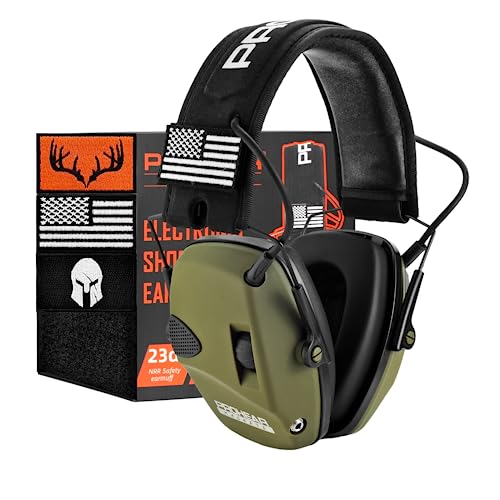 PROHEAR PROHEAR 066Light electronic, long battery
 Pro For Sho PAS-GYHigh NRR, low weight
How ear protection works
Hearing protectors are physical barriers. Loud sound travels through the air into your ear canal, and it also reaches the inner ear through the bones of your skull. A protector cuts down the first path by sealing off the opening to the ear.
Earplugs sit inside the ear canal and block it with foam, silicone or a similar material. Earmuffs cover the whole outer ear. They use a hard shell, dense foam inside the cups, and a cushion that presses against your head to form a seal.
Passive earmuffs rely only on those materials. Electronic earmuffs add microphones and small speakers. The electronics pick up quiet sounds such as speech and play them back at a safe level, so you can still talk and hear range commands while the cups block the loud noise.
So the answer to why ear defenders work is simple: they put mass and a seal between the noise and your ear. If the seal is good, less sound gets in. If the seal leaks, the protection drops quickly.
How much does ear protection help?
The number to look for is the noise reduction rating, or NRR. It is printed on the package or listing and shows how many decibels a protector is rated to take off. A higher NRR means more rated protection.
Our best ear protection page compares muffs from 22 dB to 37 dB NRR. That gap is meaningful. A 37 dB muff is rated to remove far more sound energy than a 22 dB model, and the ear cannot tell you how much damage is building up while you are in the noise.
Keep in mind that the NRR is a label rating, not a promise for every person. One listing in our lineup notes that its 34 dB NRR is adjusted to 31 dB under OSHA guidelines. That adjustment is a reminder to treat the printed number as the best case and to aim for a margin.
Fit is the biggest reason people get less than the rating. Glasses arms, long hair, a hat or a poorly adjusted headband can break the seal around the cup. A muff that does not seal will not give its rated protection.
Which ear protection is most effective?
No single device is best for every job. The most effective choice is the one with a high enough rating for the noise, a seal that fits you, and comfort that lets you keep it on. Protection you take off after twenty minutes does not help.
The table below uses specifications from the products on our comparison page to show how the main styles differ.
| Style | Example from our lineup | NRR | Weight | Main strength | Main limit |
|---|---|---|---|---|---|
| Passive muff, highest rating | Decibel Defense Ear Muffs | 37 dB | 12 oz | No batteries and the highest NRR on the page | Cannot amplify quiet sounds |
| Passive muff, light and compact | Pro For Sho Ear Muffs | 34 dB | 7.2 oz | High NRR at low weight, folds down | Snug fit may need a break-in period |
| Electronic muff, long battery | PROHEAR 066 | 23 dB | 9.6 oz | Amplifies low-level sound, lists 300 hr of battery life | Lower NRR than the passive models |
| Electronic muff, slim cups | Walker's Razor Slim | 23 dB | Not compared here | Low-profile cups, amplification and audio input | Lower NRR than the passive models |
Passive or electronic: what you give up
Passive muffs have no electronics to fail, and in our lineup they carry the highest ratings. If your only goal is the most protection against steady, loud noise such as a mower, a table saw or a loud event, a high-NRR passive muff is the straightforward choice.
Electronic muffs trade some rated protection for awareness. The microphones let you hear conversation, and the circuit reduces loud sounds to a safe level. That can be worth it at a shooting range or on a work site where you need to hear instructions.
One listing also notes that passive muffs reduce rather than cancel noise, and that low-frequency sound such as conversation and bass is less affected than high-frequency sound. That is a useful detail if you expect to hear speech through your muffs.
For the loudest situations, the same listing suggests wearing earplugs under the muffs. Combining the two is a common approach, since each blocks the sound in a different way.
How to get the most protection
A few simple habits make a real difference, whichever product you choose.
- Match the rating to the noise. Pick a higher NRR for very loud tools, engines or gunfire.
- Check the fit before you rely on it. The cups should fully cover your ears and sit flat against your head.
- Remove anything that breaks the seal. Move hair, glasses arms and hat brims out of the way, or choose low-profile cups.
- Break in a snug muff if the maker says so. Two listings say a snug fit is intentional, and one suggests stretching the headband over a box overnight if it feels too tight.
- Wear them for the whole noisy task. Taking protectors off for a few minutes lets loud sound reach your ears unprotected.
- Check the cushions and headband. Worn or cracked cushions leak sound, so replace them or the muff when they wear out.
- Look for ANSI S3.19 or CE EN 352 listings, which several muffs on our page carry.
Safety notes
Ear protection lowers noise but does not make any noise safe forever. Ringing in your ears, muffled hearing after an event, or needing to shout to be heard are signs that your exposure was too high. Move away from the noise and use stronger protection next time.
Muffs also reduce what you can hear around you. Do not wear them near traffic, moving machinery or at heights where you must hear warnings, unless you use an electronic model that passes speech through. Even then, stay alert and keep the volume at a level that lets you notice hazards.
When you use electronic muffs with an audio input, keep the music low. Playing audio through the cups on top of the noise defeats the purpose.
Wear eye protection along with hearing protection around power tools, lawn equipment and firearms. Never treat muffs as a substitute for the rest of your safety gear.
Choosing and comparing
If you are ready to compare, start with the NRR and the type, then check weight, cushion material and headband adjustment. Our best ear protection comparison lays out all of these side by side, so you can see how a 37 dB passive muff stacks up against a 23 dB electronic model.
You can also see how the lighter picks differ on the same ear protection comparison page. That is helpful if you plan to wear them for long sessions and weight matters as much as the rating.
Frequently asked questions
Do earplugs or earmuffs work better?
Both work when they seal well. Plugs are small and suit sleeping or tight spaces, while muffs are quick to put on and easy to check for fit. For extreme noise, wearing both together adds protection.
Can ear protection damage my hearing if it is too tight?
Snug muffs do not harm your ears, but a headband that is painfully tight will make you take them off. Adjust the cups or break in the band as the maker advises so you can wear them comfortably.
Do kids need ear protection too?
Children's ears are exposed to the same loud noises as adults. Look for a muff that lists a fit for smaller heads. One model on our page lists an adjustable fit from kids through adults.
Do electronic muffs protect as well as passive ones?
They protect well, but in our lineup the electronic models list 22 dB or 23 dB while the passive ones that list a type run 27 dB to 37 dB. Choose electronic if you need to hear speech, and passive if you want the highest rating.