Do You Need a Pilot Hole for a Step Drill Bit?
Not always. A step drill bit has a small, pointed first step that can start a hole in thin sheet metal, plastic and panels without a pilot hole. For thicker or harder material, for exact placement, or for a large final size, drilling a small pilot hole first gives a cleaner, safer and more accurate cut.
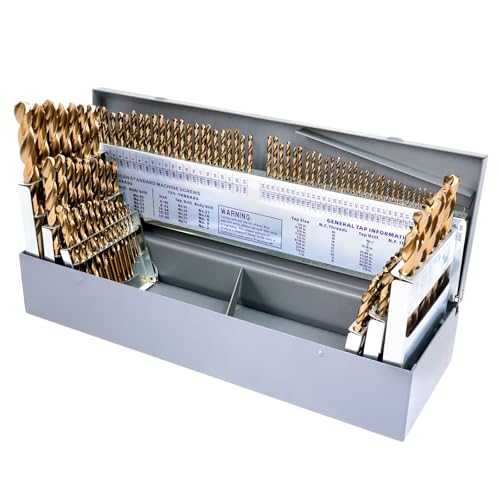 SEDIANAS 115 PCS Cobalt Drill Bit SetBest overall
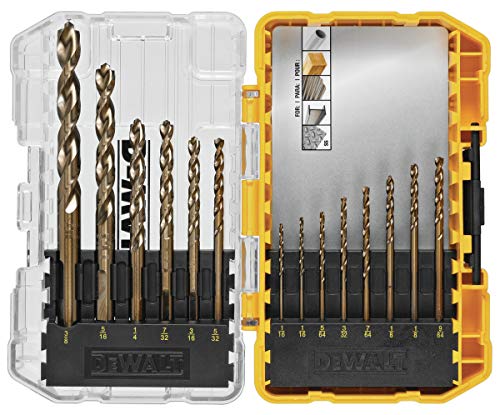 DEWALT DWA1240Easy-access storage system
 CRAFTSMAN CMAM2214Corrosion-resistant gold oxide
The short version: it depends on the material
A step drill bit is a single cone with stepped edges, so its tip already works like a small drill. In thin material, that tip bites, opens a hole, and the next step enlarges it. Many people never drill a pilot hole for this kind of job.
The picture changes as the metal gets thicker, harder or more slippery. The tip of a step bit is short and the cutting edges are small. In heavier material, the tip has to remove a lot of metal at once, and that is where a pilot hole earns its place.
Our best step drill bit page explains what to look for in a tip, and a sharp, centered tip matters most when you want to skip the pilot.
When you can skip the pilot hole
Skipping is reasonable when the material is thin enough that the tip cuts through before the bit has to work hard. Typical examples are thin sheet metal, plastic, and thin panels, which are the jobs step bits are known for.
You also need a way to keep the bit from wandering. A small dimple made with a center punch gives the tip a place to sit. On plastic, a light touch and a slow start do the same job.
- Thin sheet metal, where the first step cuts through almost right away
- Plastic and thin panels that you can clamp flat
- Enlarging an existing hole that is already close to the first step size
- Rough work where the exact position is not critical
When a pilot hole is worth the extra minute
A pilot hole removes the center of the cut so the step bit only has to widen an opening that already exists. That lowers the push you need, reduces heat, and helps the bit stay put.
It matters most in thicker or harder metal, such as stainless steel. It also helps when you need a hole in an exact spot, or when the first step of your bit is fairly large. Without a pilot, the tip can skate across smooth metal and scratch the surface before it bites.
A good rule of thumb is to size the pilot close to the first step of the bit you plan to use. That way the bit starts cutting right away and does not rub.
Quick guide by situation
Use this table as a starting point. It is general guidance, so adjust for your material and your bit.
| Situation | Pilot hole? | Why |
|---|---|---|
| Thin sheet metal, small final size | Usually not needed | The tip cuts through before heat builds up |
| Plastic or thin panels | Usually not needed | Low resistance; clamp the work and go slowly |
| Thicker mild steel | Recommended | Cuts the load on the small tip |
| Stainless steel or other hard metal | Recommended | Less heat and less skating on the surface |
| Exact hole position required | Recommended | A pilot is easier to place and check |
| Large final hole in any metal | Recommended | Less force and a cleaner, rounder result |
How to drill a pilot hole and follow with a step bit
The process is short. Take your time on the first hole, since that is the one that sets the position.
Pick a twist bit for the pilot. Our top-ranked picks on the best step bit page are twist bit sets rather than true step bits, and that is handy here. For example, the SEDIANAS 115-piece set lists a 135° split point, and the CaRoller 29-piece set covers 1/16 inch to 1/2 inch. A split point helps the bit start without wandering.
- Mark the spot and make a small dimple with a center punch.
- Clamp the work so it cannot spin or lift.
- Drill the pilot at a slow to moderate speed with steady, light pressure.
- Switch to the step bit and start slowly, letting the first step enter the pilot.
- Increase speed a little and keep pressure even until you reach the size you need.
- Back the bit out, then wipe away chips and check the hole size against the step markings.
Tips for a cleaner cut
Slow speed and light pressure beat force. Pushing hard on a step bit makes it grab and can leave a rough or out-of-round hole, especially as it breaks through thin sheet.
Cutting fluid or a drop of oil helps in metal, since it lowers friction and heat. Back the bit out now and then to clear chips.
A steady drill makes a difference too. A drill with variable speed and a good chuck lets you start slowly. See our best drill page if you are choosing one, and note that three-flat or hex shanks hold better in the chuck than smooth round ones.
If you are also building out a toolbox, a best drill driver bit set can cover the driving side of your projects.
Safety notes
Metal drilling throws chips and leaves sharp edges, so protect yourself before you start.
Wear safety glasses or goggles every time. Hearing protection is smart when working with a corded drill on sheet metal, which can ring and squeal. Clamp the workpiece instead of holding it, because thin sheet can spin and cut your hand when the bit grabs.
Avoid loose gloves, sleeves and hair near the spinning bit. Disconnect the power or remove the battery before changing bits. Deburr the finished hole with a file or deburring tool, as the edges are sharp.
Frequently asked questions
What size should the pilot hole be?
Close to the first step of the step bit you plan to use. That lets the bit begin cutting right away and keeps it centered.
Can I use a center punch instead of a pilot hole?
In thin material, often yes. The dimple gives the tip a place to start. In thicker or harder metal, a pilot hole still reduces the load and heat.
Will skipping the pilot hole damage my step bit?
Not in thin material it is designed for. Forcing it through thick or hard metal can overheat the tip and dull it faster.
Do I need cutting oil with a step bit?
It is a good idea for metal. A little oil lowers heat and friction, and it helps the bit last. Plastic usually does not need it.