Do You Actually Need a Torque Wrench? When It Matters
Yes, you need a torque wrench for any fastener where the maker lists a torque value, especially wheels, engine parts, brakes and suspension. For general household jobs like hanging a shelf or assembling furniture, you can usually skip it. The tool matters because a bolt that is too loose can work free and one that is too tight can stretch, strip or crack.
 SUERCUP BSM1-340Best overall
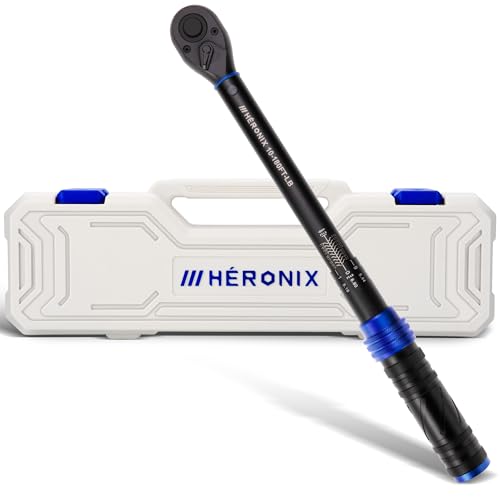 HERONIX HX9087USFine ratchet with case
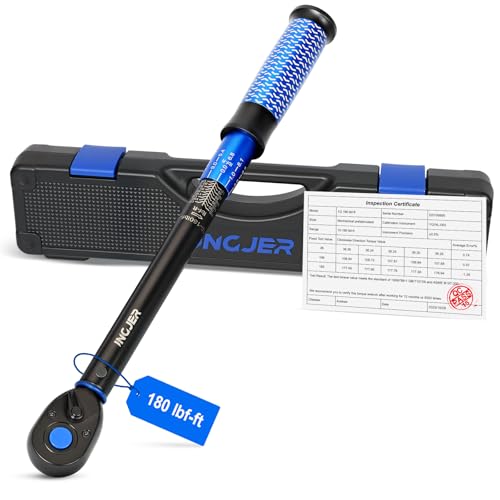 INGJER IJ12NEW180MLightest in the lineup
The short version: when a torque wrench earns its place
A torque wrench measures how hard you are turning a fastener and tells you when you have reached a set value. That value is the torque spec, and engineers choose it so the bolt clamps parts together firmly without being overstressed.
If a manual, a service guide or a part label gives a torque number, that is your sign to use one. If nobody gives a number and the part is not safety related, a regular ratchet and some common sense are usually fine.
- Wheels and lug nuts: yes, always use one.
- Engine work such as cylinder heads, spark plugs, oil drain plugs and exhaust manifolds: yes.
- Brake calipers, suspension and steering parts: yes.
- Bicycle parts, especially carbon frames, seat posts and handlebars: yes, usually at low values.
- Furniture, shelves, general household fixing: normally no.
Why torque matters so much
A bolt works like a very stiff spring. When you tighten it, it stretches slightly, and that stretch is what holds the parts together. Too little stretch and vibration can loosen the joint over time. Too much and the bolt can be pushed past its limit, which weakens it or strips the threads.
The part you are clamping can suffer too. Over-tightening can warp flanges, crack cast housings or damage soft aluminum threads. A cracked exhaust manifold or a stripped oil pan thread is a bigger repair than the job you started with.
Feel is not a reliable guide. Your sense of how tight something is changes with the length of your wrench, the state of the threads, your mood and how tired your arms are. A torque wrench replaces that guess with a number.
When you can safely skip it
Not every fastener needs this level of care. Plenty of everyday tightening has no published spec, and the parts are forgiving. Assembling flat-pack furniture, mounting a towel rail or fitting a curtain rod are all jobs where snug is the goal.
Even then, there is a limit. If a fastener holds something heavy over people, such as a ceiling mount or a child safety item, follow the maker's instructions and use the torque value if one is given.
One more honest point: if you only do one job a year, borrowing or renting a wrench is a reasonable choice. If you work on your own car, motorcycle or bike more than occasionally, owning one makes sense.
What to look for in a torque wrench
The right wrench is the one whose scale fits your jobs. A wrench cannot work reliably at the very bottom or top of its scale, so list the lowest and highest values you expect to use and pick a range that covers both. Our best torque wrench page lays several models side by side so you can compare these details.
Accuracy is the next check. It is listed as a plus-or-minus percentage around your setting. In the product data we compare, the SUERCUP digital model lists ±1%, while the HERONIX and INGJER click models list ±3% and the LEXIVON lists ±4%. Also look for a calibration certificate, which not every listing includes.
| Job type | Range to look for | Example from our data |
|---|---|---|
| Small bolts, bike parts | Low minimum, such as 5 ft-lb | A 3/8 inch drive model covers 5-45 ft-lb |
| General car work | About 10 to 180 ft-lb | HERONIX and INGJER click models list 10-180 ft-lb |
| Wheels, axles, heavy fasteners | High top end | LEXIVON covers 25-250 ft-lb; SUERCUP digital covers 3.8-250.8 ft-lb |
| Cramped engine bays | More ratchet teeth | 72 teeth needs a 5° swing; 24 teeth is coarse |
Lug nuts deserve special attention
Wheels are the most common reason people buy a torque wrench. Uneven or excessive tightening can distort a brake rotor, and loose lug nuts can let a wheel work free. Your owner's manual lists the correct value for your vehicle, so use that number rather than a general rule.
Wheel work usually needs a higher top end than bike or small engine work. If this is your main use, see our best torque wrench for lug nuts page for models that cover the needed range.
Avoid using an impact gun for the final tightening. It can overshoot the target badly. A common habit is to snug the nuts with the gun or a hand wrench, then finish with the torque wrench.
How to use one correctly
Owning the tool helps only if you use it well. A few habits make a real difference to the result.
Follow these steps on each job:
- Find the torque value in your manual or service guide, and note the unit (ft-lb or Nm).
- Clean the threads and check for damage. Dirty or rusty threads give false readings.
- Set the wrench to the value. Many models have dual ft-lb and Nm scales to avoid conversions.
- Tighten smoothly and steadily. Stop at the click, or at the alert on a digital model. Do not keep pulling.
- Work in a cross or star pattern on wheels and multi-bolt parts, and tighten in stages.
- After use on a click model, turn the setting back to its lowest value to protect calibration, as some listings advise.
Safety notes
A torque wrench is a measuring tool, not a breaker bar. Do not use it to loosen stuck bolts or add a pipe to the handle. That can damage the mechanism and throw off its accuracy.
Never work under a car held only by a jack. Use jack stands on firm, level ground. Wear safety glasses, because rust, dirt and fluids can fall toward your face, and a slipped wrench can send your hand into hard edges.
Do not go above the maximum on the scale. If a fastener needs more than your wrench can read, use a wrench with a higher range.
Frequently asked questions
Can I just tighten by feel if I am experienced?
Experience helps, but feel varies with tool length, thread condition and fatigue. For parts with a published spec, a wrench removes the guesswork.
How often should a torque wrench be checked?
Follow the maker's guidance. A calibration certificate shows the wrench was set at the factory, and rough handling, drops or overloading can shift it.
Is a digital wrench better than a click wrench?
Digital models in our data list tighter accuracy, with ±1% on the SUERCUP, and show a live reading. Click wrenches are simpler and need no batteries. The right choice depends on your jobs.
Should I lubricate bolt threads before using a torque wrench?
Only if the manual says so. Oil or grease changes how much clamping force you get at a given torque, so follow the specification for dry or lubricated threads.