Do Paint Edgers Really Work? What to Expect
Yes, paint edgers work for many people, especially on long, straight runs where wall meets ceiling or trim. They do not replace skill entirely, though. You still need a light touch, the right amount of paint on the pad and a tool that suits the job, and you will still need a small brush for corners and odd spots.
 Voomey 7 pc paint edgerBest overall
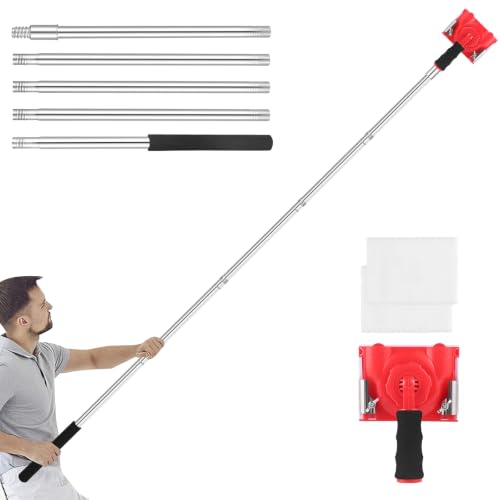 Woxnoc paint edger tool for walls-12APole included for ceilings
 Dekonmon XB7Most pieces in the kit
What a paint edger actually does
A paint edger is a small pad on a handle, sometimes with guide wheels, that lays paint right up to an edge. The idea is to replace the slow, steady-handed work of cutting in with a brush along ceilings, baseboards and window frames.
The pad spreads paint in a flat, even layer, so you can move along an edge in one pass instead of building a line stroke by stroke. When it is loaded correctly and the edge is clean, that can save time and reduce the need for masking tape.
Think of it as a helper for straight lines, not a cure for every edge. It works best on smooth, flat surfaces and gets less reliable on texture, curves and tight corners.
Where edgers fall short
Most disappointing results come from a few predictable problems. Knowing them ahead of time makes it easier to judge whether an edger fits your room.
If a pad is overloaded, paint can squeeze out past the edge and bleed onto the surface you are trying to protect. If it is underloaded, you get thin, patchy coverage and have to go back over it.
- Heavy texture, such as popcorn ceilings or rough plaster, stops the pad from sitting flat, so lines come out wavy.
- Inside corners and tight spots are hard for a wide pad to reach, so a small brush or corner pad is still needed.
- Pads need frequent reloading, which slows you down on large rooms.
- Dirty or dusty edges can drag the pad and leave a ragged line.
- Wheels can pick up paint or grime and smear it if they are not wiped clean as you go.
Wheel-guided or pad-only: which works better
The two main styles solve the same problem in different ways. Wheel-guided models ride along the ceiling or trim to keep the pad steady, which helps if your hand shakes a little. Pad-only models depend on your hand, but they are more flexible around corners and details. Our best paint edger comparison sets these styles side by side on one spec sheet.
The table below uses the specifications we have on file for a few popular models.
| Model | Style | Pad width | Pole situation |
|---|---|---|---|
| Voomey 7-Piece Kit | Pad only, rotating handle | 9 in | Pole compatible, not included |
| Woxnoc Paint Edge Trimmer | Wheel-guided, rotating handle | Not listed | Pole included, 78.7 in max reach |
| Dekonmon 15-Piece Kit | Pad only, rotating handle | 7 in | Pole compatible, not included |
| Novazzi Paint Edger | Wheel-guided, dual wheels | 4.7 in | Pole compatible, not included |
Do professional painters use edgers?
Some do, but many experienced painters prefer an angled brush for cutting in, because a brush adapts to any edge and they have the practice to control it. Others pick up an edger for long, straight ceiling lines where speed matters.
The honest takeaway is that an edger is a convenience tool. It lowers the skill needed for straight runs, which is why beginners often find it helpful. It does not beat a practiced hand with a good brush in every situation, so use it where its strengths apply.
How to get a clean line with an edger
Technique matters as much as the tool. These steps give you the best chance of a crisp edge.
- Clean the edge first. Wipe dust and cobwebs from the ceiling line and trim so the pad or wheels glide smoothly.
- Load the pad lightly. Slide it across the tray ridges and aim for an even coat with no dripping.
- Start a few inches from the corner and move in slow, steady strokes. Keep light, even pressure.
- Wipe the wheels or pad edge often if paint builds up, since buildup is a common cause of smears.
- Work in sections and finish with a small brush or corner pad in tight inside corners.
- Clean the pad right after use, because dried paint ruins a pad quickly.
Match the kit to the room
Pad width changes how the tool feels. Pad widths in our data run from 4.7 in to 9 in. A wider pad such as the 9 in Voomey covers more edge per pass on open walls, while a narrow pad such as the 4.7 in Novazzi gives more control near window frames and corners.
Reach matters on ceilings. Only a couple of models ship with a pole, such as the Woxnoc at 78.7 in maximum reach, so check the listing before you count on one. Kit extras like spare pads, a corner pad and a tray help in trim-heavy rooms. The Dekonmon kit lists 5 replacement pads among its 15 pieces, for example. You can browse the full set of options on our best paint edger page.
Safety notes
Use a stable stepladder if you are reaching ceilings by hand, and do not lean sideways. An extension pole reduces ladder trips, but keep it clear of lights, fans and smoke detectors.
Turn off power at the breaker if you are painting near switches or outlets, and remove the cover plates first. Wear eye protection when painting overhead, since drips fall straight down. Open windows for ventilation, especially with oil-based paint.
So, are paint edgers worth it?
If you have long, straight edges, smooth walls and a hand that is not perfectly steady, an edger can be a sensible tool that speeds up the work and reduces taping. If your room has textured ceilings, lots of curves or many tight corners, a good angled brush will likely serve you better.
Many people end up using both: the edger for the long runs and a small brush for the details. That combination is realistic for most home projects.
Frequently asked questions
Can a paint edger replace painter's tape?
Sometimes. On smooth surfaces with a light touch it can cut down on taping, but tape still helps on delicate trim or when you want a guaranteed sharp line.
Do edgers work on textured ceilings?
Not well. The pad cannot sit flat on heavy texture, so the line tends to wander. A brush gives more control there.
Can I use the same edger for latex and oil-based paint?
Check the maker's instructions. Pads absorb paint, so many people keep separate pads for different paint types and clean them right after use.
How do I stop paint from bleeding under the pad?
Use less paint on the pad, keep the edge clean and move slowly with light pressure. Wiping the pad or wheels between sections also helps.
Are spare pads important?
They help on bigger jobs, since a worn or dried-out pad gives rough lines. Kits in our data list anywhere from 0 to 9 replacement pads.