Do Light Bulbs Cause Cancer? What the Evidence Shows
No. Ordinary household bulbs, including LED, incandescent, halogen and compact fluorescent (CFL), are not established causes of cancer when used normally. The real open question is about too much light at the wrong hours, which can disrupt sleep rhythms, so the practical move is to choose warmer, flicker-free bulbs for evenings.
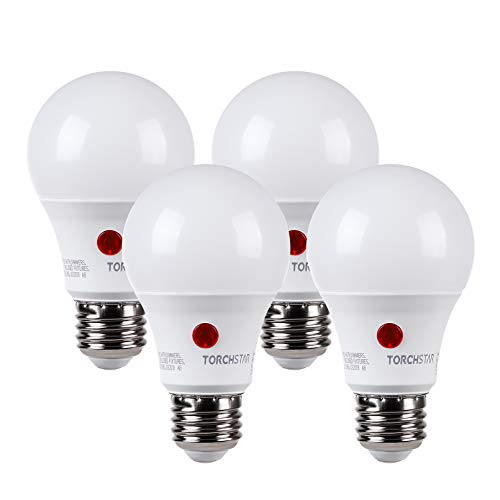 TORCHSTAR A-50408Top-ranked outdoor sensor bulb
 TJOY QASN83+85Best fit for eye comfort
 SETEN LED BULB 10WBrightest A19 in top ten
The short version of the evidence
Cancer-causing radiation, such as strong ultraviolet (UV) light, is the kind that damages DNA. Household bulbs give off very little of it. LEDs produce almost no UV, and incandescent bulbs produce only a small amount. Standard CFLs can emit a trace, but not enough for normal room use to be a recognized cancer risk.
So the headline claim, that a light bulb in your lamp gives you cancer, is not supported by what is currently known. That does not mean light has no effect on the body. The better-supported concerns are about timing and brightness, not about a specific bulb type causing tumors.
Where the worry comes from
Most of the alarming headlines trace back to a few kinds of research. Some population studies compare cancer rates in places with more outdoor artificial light at night to places with less. Those studies can show a pattern, but they cannot prove the light is the cause. Brighter areas also differ in air pollution, income, diet, work schedules and many other things.
Other work looks at blue-rich light in the evening and its effect on melatonin, a hormone that helps regulate sleep. Light at night can suppress melatonin and shift your body clock. Long-term disruption of sleep and circadian rhythm is a reasonable health concern. It is not the same as proof that a bulb causes cancer.
A small number of papers have also suggested that the electronics in LED and fluorescent bulbs could play a role in certain cancers. That idea is not an accepted conclusion, and it should be treated as an unproven hypothesis.
Which bulbs and lamps are actually worth being careful with
If you want to know which bulbs are dangerous, the useful answer is to separate real hazards from internet worry. The table sorts common types by what matters.
The clear exception to all of this is lamps made to give off strong UV, such as tanning beds. Those are a recognized skin cancer risk and are a different category from a lamp in your living room.
| Bulb or lamp type | Main concern | Practical takeaway |
|---|---|---|
| LED | Blue-rich light in the evening, possible flicker | Choose warm color temperature and flicker-free designs |
| Incandescent and halogen | Heat, burn risk | Keep away from fabric and paper, let cool before touching |
| CFL | Contains a small amount of mercury, trace UV | Handle gently, follow cleanup steps if one breaks |
| UV lamps and tanning beds | Strong UV exposure, a known skin cancer risk | Not a household lighting choice; avoid or use only as directed |
| Bug zappers and black lights | UV output varies, usually low at a distance | Do not stare at them; keep them out of bedrooms |
What really matters: light at night
The most defensible health advice about light is about when you use it. Bright, cool light late in the evening tells your body it is daytime. That can make it harder to fall asleep. Dim, warm light in the hours before bed is gentler.
Color temperature is measured in kelvin. Lower numbers look warmer and carry less blue. Our best light bulbs for health page points to around 2700K to 3000K for bedrooms and living rooms at night, while 5000K daylight bulbs look crisp and suit garages or task areas.
Here are a few habits that follow from that:
- Use warm bulbs (2700K to 3000K) in bedrooms and living spaces.
- Dim or switch off overhead lights in the hour or two before bed.
- Keep bedrooms dark while you sleep, or use a low, warm night light.
- Save cool daylight bulbs for places where you want to feel alert, like a workshop.
Flicker, color accuracy and the specs to read
Flicker you cannot see can still tire your eyes. Few makers publish a flicker rating, so read the listing. In the lineup on our health page, TJOY describes its 3000K A19 bulbs as flicker-free, and the listing gives an 800 lumen output from 9 W with a CRI of 85. Non-dimmable bulbs on a plain switch also avoid dimmer mismatch, a common cause of flicker.
CRI shows how true colors look under a bulb, and higher is better. Only 9 of the 34 bulbs on that page list it, and the listed values run from 80 to 85. If a maker skips CRI, you cannot judge color accuracy from the listing.
These specs are about comfort, not cancer. They are still the sensible things to check if you want light that is easier on your body.
Choosing bulbs for health-minded rooms
Many top-ranked bulbs in our data are dusk to dawn sensor bulbs for porches and driveways. They switch on by themselves and use cool light. For example, the TORCHSTAR A19 is 5000K and its listing says it is only for outdoor use. Do not cover its red sensor.
For a desk, bedroom or reading lamp, a standard A19 with an E26 base in a warm tone is the better fit. If you are comparing across the whole range, our best light bulbs page covers general picks, and the best light bulbs for outdoor fixtures page is the place for porch and driveway lighting.
Safety notes for changing and handling bulbs
Light bulbs are a small hazard compared with the handling around them. A few precautions are worth following:
- Turn the switch off and let the bulb cool before changing it, since halogen and incandescent bulbs get hot.
- Match the bulb to the fixture. Check that it is rated for enclosed fixtures, damp locations or outdoor use when needed.
- Use a stable ladder and have someone nearby for ceiling and porch fixtures.
- If a CFL breaks, open a window, leave the room for a few minutes, and pick up the pieces carefully instead of vacuuming right away.
- Do not stare at UV or black light lamps, and wear eye protection around any strong UV source.
Frequently asked questions
Are LED bulbs worse for you than old incandescent bulbs?
Not in a way that has been shown to cause disease. LEDs can have more blue light than warm incandescents, which matters at night, so a warm LED is the closer match.
Does blue light from bulbs cause cancer?
That has not been established. Blue-rich light in the evening can affect sleep and circadian rhythm, and research on longer-term effects is still ongoing.
Is it safe to sleep with a night light on?
A dim, warm night light is generally a gentler choice than a bright or cool one. If you can, keep the bedroom as dark as is comfortable and safe.
Should I replace all my bulbs because of cancer worries?
There is no need to for cancer reasons. If you are swapping bulbs anyway, choose warm, flicker-free ones for evening spaces.