Detail Sander vs Orbital Sander: What Is the Difference?
The main difference is pad size and shape. A detail sander uses a small, pointed triangular pad to reach corners, edges and tight spots, while an orbital sander uses a larger square or round pad to cover flat surfaces quickly and evenly. If you sand big panels, doors or tabletops, start with an orbital. If you work on trim, furniture details and small repairs, a detail sander fits better.
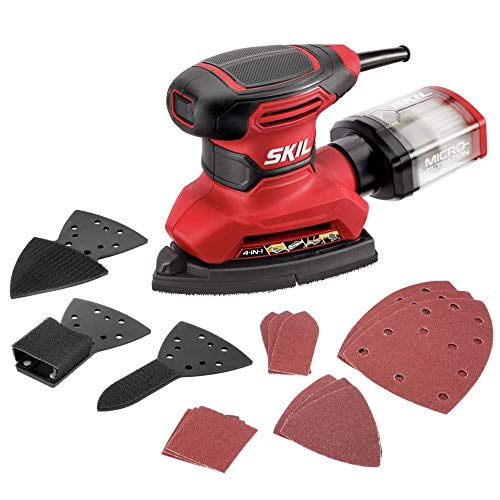 Skil SR232301Best overall
 HYCHIKA BETTER TOOLS FOR BETTER LIFE MS200WCompact with dust bag
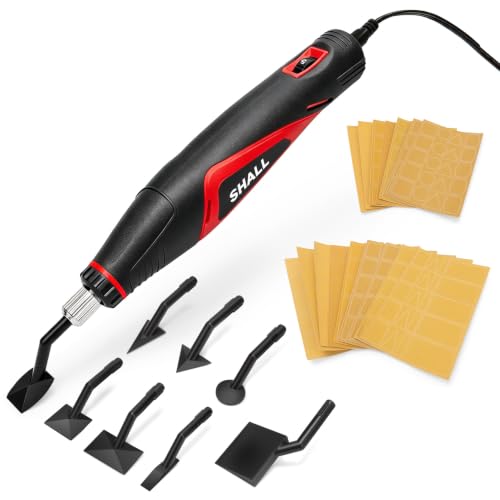 SHALL SH111052Lightest in the lineup
How each sander works
Both tools move sandpaper in a small, rapid motion so you do not have to rub by hand. The difference is in the shape of the pad and how much surface it covers at once.
A detail sander has a flat, triangular pad, often called a mouse sander because of its shape. The pointed tip slides into corners where a round or square pad cannot go. The pad usually oscillates, meaning it vibrates in a tiny back-and-forth motion, and the paper is held on with hook-and-loop or sometimes clips.
An orbital sander has a larger pad that moves in small circles or ellipses. The term covers two styles. A quarter-sheet or palm orbital sander has a square pad that takes a cut piece of standard sandpaper. A random orbital sander has a round pad that spins and orbits at the same time, which helps avoid repeating scratch patterns. Because people use the word "orbital" for both, check which pad shape a product has before you buy.
Detail sander vs orbital sander at a glance
This table summarizes the general differences between the two tool types. Exact power, weight and pad size vary by model, so check the published specifications on each product page.
| Feature | Detail sander | Orbital sander |
|---|---|---|
| Pad shape | Small triangle | Square or round, larger |
| Best surfaces | Corners, edges, trim, small areas | Flat panels, doors, tabletops, decks |
| Speed on large areas | Slow | Faster and more even |
| Access to tight spots | Excellent | Limited |
| Control on delicate parts | High, thanks to the small footprint | Moderate |
| Dust collection | Usually a small bag or port | Often a bag or hose port, varies by model |
| Typical role | Finishing touch tool | Main sanding tool |
When a detail sander is the better pick
A detail sander earns its place when the work is small or awkward. The pointed pad lets you sand right up to an inside corner without rounding over the surrounding wood.
Common jobs include:
- Window sashes, shutters and louvered doors
- Chair spindles, cabinet frames and raised panels
- Picture frames, moldings and baseboard trim
- Paint prep on small repairs and touch-ups
- Removing old finish from crevices after a larger sander has done the flat areas
When an orbital sander is the better pick
If the surface is big and flat, an orbital sander saves real time. The larger pad covers more area with each pass, and the steady motion gives a more uniform finish than a small pad can across a wide board.
A random orbital sander is a strong all-around choice for furniture, cabinets, doors and deck boards, since the round pad moves in a way that reduces visible swirl marks when you use the right grit. A quarter-sheet orbital is lighter and easier to handle with one hand, and the square pad gets closer to edges than a round one, though it still cannot match a detail sander in corners.
If you are leaning toward a larger tool, see our best orbital sander comparison. If you prefer a round pad for smoother results on open surfaces, our best random orbital sander page lines up the published specifications side by side.
How to choose
Start with the project in front of you, not the tool. Ask what surface you will sand most often and how much of it is flat.
Use these steps to decide:
- Look at the work. If most of it is large and flat, choose an orbital sander first.
- Check for tight areas. If you have many corners, narrow rails or trim, add or choose a detail sander.
- Think about control. Smaller pads are easier to guide on delicate pieces, but they take longer on wide areas.
- Compare dust handling. Look for a bag, a port for a vacuum hose, or both, and see how well it fits your shop setup.
- Review the specs. Compare pad size, motor power and weight on the product pages before you decide.
Using both together
Many woodworkers and DIYers end up with both tools because they cover different parts of the same job. A common routine is to sand the large flat surfaces with an orbital sander, then switch to a detail sander for corners, edges and carved areas.
If you only want to buy one, an orbital sander covers more projects. Add a detail sander when you notice that you keep reaching for folded sandpaper and a sanding block to finish the tight spots. Our best detail sander comparison shows what to look for when you get to that point.
Safety and technique tips
Sanding is simple, but it creates fine dust and noise, and it uses electricity. A few habits keep it safe and give better results.
Wear a dust mask or respirator rated for fine particles, plus safety glasses. Hearing protection is a good idea during long sessions. Sanding old paint can release lead dust in older homes, so use proper precautions and consider a lead test before you start.
Let the sander do the work. Pressing hard slows the motion, wears out the paper faster and can leave marks. Keep the pad flat on the surface, move steadily, and work up through the grits instead of skipping several steps.
Unplug the tool or remove the battery before changing paper. Keep cords clear of the pad. Fine wood dust can ignite, so empty the dust bag regularly and keep sparks and open flames away.
Frequently asked questions
Can a detail sander replace an orbital sander?
Not for large jobs. A detail sander can sand flat areas, but the small pad makes it slow and harder to keep even on big surfaces.
Is a random orbital sander the same as an orbital sander?
Not exactly. A random orbital sander has a round pad that spins and orbits. A standard orbital sander usually has a square pad that moves in small circles.
Which one is better for beginners?
An orbital sander is usually easier to start with because it handles the most common flat surfaces. Add a detail sander later if your projects have lots of corners.
What sandpaper do these sanders use?
Detail sanders use triangle-shaped sheets, often with hook-and-loop backing. Orbital sanders use square sheets or round discs, depending on the pad. Check the product page for the exact size.