Deadbolt vs Deadlock: What Is the Difference?
In everyday use, a deadbolt and a deadlock are very close, and many people use the words for the same lock. When a difference is drawn, a deadbolt is usually turned by a key outside and a thumb turn inside, while a deadlock needs a key on both sides. Either way, the solid bolt that does not rely on a spring is what sets these locks apart from an ordinary knob latch.
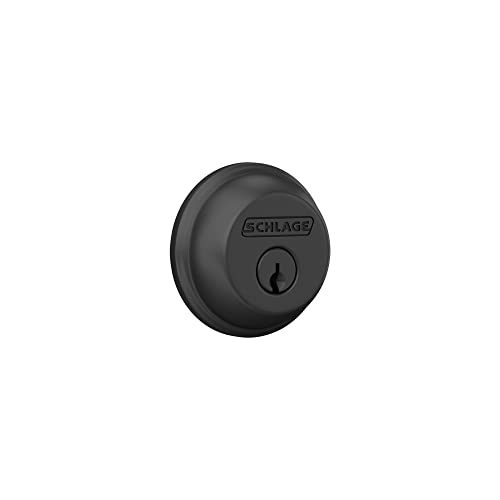 SCHLAGE B60N622Best overall
 BESTTEN DK1-ET-SNDurable keyed knob
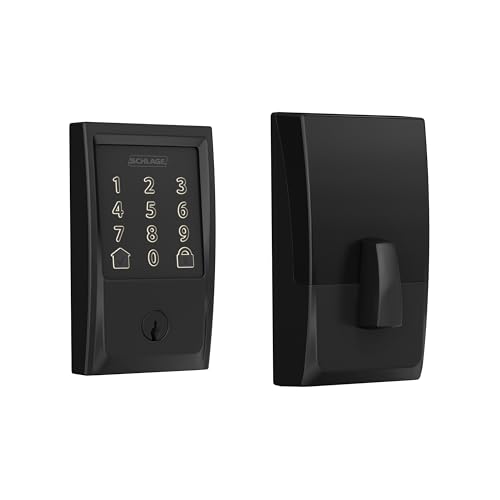 SCHLAGE BE489WBCEN622Smart lock with alarm
The short version of the difference
Both locks use a solid metal bolt that slides into the door frame. The bolt does not spring back when pushed, so it cannot be nudged open the way a simple spring latch can. That shared design is why the two names get mixed up.
Where the names split depends on who is talking. In the US, deadbolt is the standard word for nearly every lock of this type. In other regions, deadlock is the more common term, and it often describes a lock that is keyed on both sides. So the question is less about two different products and more about two features: the bolt itself, and how you operate it from the inside.
How a deadbolt works
A deadbolt has a bolt that you extend or retract by turning a key on the outside. On the inside, most homes use a thumb turn, which is a small knob you twist by hand. This is called a single-cylinder deadbolt because the keyhole is only on the outside.
The bolt stays in place until someone turns the key or the thumb turn. It does not depend on a spring to hold the door shut, which is the main reason people add one above the knob on an entry door.
Our best deadbolt page lists a few examples of this setup. The Schlage B60N622, for instance, is thrown or retracted by key from outside or by an inside turn unit, and its listing describes a 1-inch deadbolt with a hardened steel spinning pin, anti-drill plates and anti-pick pins.
How a deadlock works
A deadlock, in the narrower sense, has a keyhole on both the inside and the outside. You need a key to lock or unlock it from either side. This is often called a double-cylinder lock.
The upside is that a person who breaks a nearby window or glass panel cannot simply reach in and turn a thumb turn. The downside is real: anyone inside needs a key to get out, including you in an emergency.
Safety note: a lock that needs a key from the inside can trap people during a fire or other emergency. Many local building and fire codes limit or ban these on main exits in homes. Check your local rules before you buy one, and if you use one, keep the key in a known spot near the door.
Deadbolt, deadlock and deadlatch compared
A third term causes more confusion: the deadlatch. A deadlatch is a spring latch with a small extra pin that stops the latch from being pushed back once the door is closed. It is a step up from a plain latch, but it is not a solid throw bolt.
This table sums up how the common types differ.
| Lock type | How it locks | Inside operation | Good to know |
|---|---|---|---|
| Single-cylinder deadbolt | Solid bolt, key outside | Thumb turn | The usual choice for home entry doors |
| Double-cylinder deadbolt (deadlock) | Solid bolt, key outside | Key required | Slower exit in an emergency; check local codes |
| Deadlatch | Spring latch with a locking pin | Knob or lever | Not a solid throw bolt |
| Knob or lever lock | Spring latch | Knob or push button | Fine for rooms, a weaker barrier on exterior doors |
Which one fits your home
For most homes, a single-cylinder deadbolt is the practical choice. It gives you the solid bolt, and anyone inside can leave quickly without hunting for a key.
A double-cylinder lock can make sense in a narrow case, such as a door with glass beside it, where codes allow it. Think it through first, because the exit risk matters more than the extra step for a burglar.
Whichever you pick, a few checks help:
- Look for a published security grade. On our best deadbolt page, Grade 1 is the top grade listed, and Grade 3 appears on two models.
- Check the cycle rating if one is given. Only 8 of 31 products on that page publish one, so a blank is common.
- Confirm the lock is a true deadbolt. Some products in our lineup are knobs or interior privacy levers, and we flag them.
- Choose a keyed model if you want fewer parts and no batteries. Smart models add codes and alerts but weigh more, at 3.4 lb for the Encode against 0.75 lb for the lightest deadbolt.
Measure before you buy
A lock that does not fit does not secure anything, so measure first. You need three numbers: door thickness, backset and bore hole size. Backset is the distance from the door edge to the center of the hole.
Most models on our comparison page fit doors 1.375 in to 1.75 in thick and a backset of 2.375 in or 2.75 in. Some reach further. The Schlage B60N622 lists doors up to 1.875 in thick, and the Philips 4200 Series lists up to 2 in. If your door is thicker than standard, check the maximum before anything else.
The strike plate and frame matter as much as the lock. A strong bolt in a weak frame is the weak point. The Schlage listing mentions an integrated strike reinforcer with 3 in screws, which is a good example of the kind of detail to look for. For a side-by-side view of these numbers, see our deadbolt comparison.
Installation and safety basics
Most keyed deadbolts install with a screwdriver on a door that already has the standard bore holes. Take your time lining up the bolt and the strike so the bolt slides freely without rubbing.
Safety notes: wear safety glasses if you drill or chisel, since wood chips and metal shavings fly. If you are cutting new holes, use a drill with a hole saw and keep the door firmly clamped. Smart locks need batteries, so keep spares on hand and know how to unlock the door with the physical key or a backup if the batteries die.
Finally, test the lock with the door open before you close it. Turn the key and the thumb turn a few times to be sure the bolt moves smoothly, then check it again with the door shut.
Frequently asked questions
Is a deadlatch good enough for an exterior door?
A deadlatch resists simple prying better than a plain spring latch, but it is not a solid throw bolt. For an exterior door, most people add a deadbolt as a second lock.
Can a smart lock be a deadbolt?
Yes. Some smart locks include a deadbolt, like the Schlage Encode on our comparison page. Others are knobs or levers, so check that the product includes a deadbolt before you buy.
Do I need two keys for a single-cylinder deadbolt?
No. You only use a key from the outside, and the thumb turn handles locking from the inside. Many sets come with two or three keys so you can share them.
Can I put a deadbolt on any door?
Not always. The door needs enough thickness and the right bore holes, and the frame should be solid. Measure thickness and backset first and compare them with the lock's listed range.