Can You Use Air Compressor Fittings for Water, Gas, or AC?
Air compressor fittings are made for compressed air, and that is the only job you should count on them for. They can sometimes handle low-pressure water for a short task, but they are a poor match for pressure washers, and you should never use them on fuel gas or air conditioning refrigerant. Those systems need fittings rated for that specific fluid and pressure.
 Ailbiuko aircoupler_plug-iron-45pcsBest overall
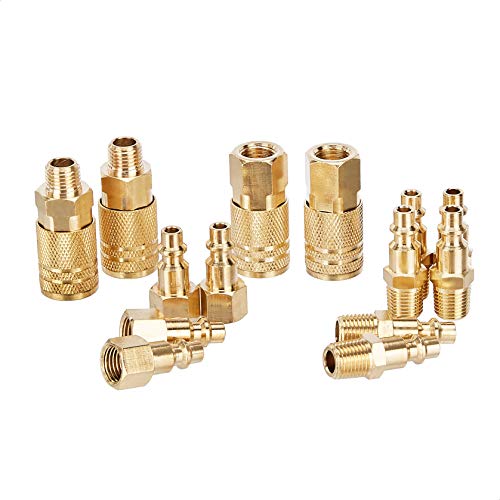 Amazon Basics A140001Brass starter set
 SOKOSEY 20SMmutou2packsReplacement M/D couplers
Why air fittings are built only for air
A quick-connect air fitting has one job: hold compressed air and let you swap tools fast. The common 1/4 in NPT kits we compare on our best air compressor fittings page are designed around the Industrial (M/D) coupler profile, and the ones that publish a rating list 300 psi. That rating is for air, not for other fluids.
Air is forgiving. It is light, it does not corrode metal on its own, and a tiny leak just hisses. Water, gas and refrigerant are different. They carry weight, chemistry or fire risk, and the seals and metals inside a coupler were not chosen with them in mind.
The thread is a separate question. A 1/4 in NPT thread will physically screw into another 1/4 in NPT port. That only tells you the parts fit together. It does not tell you the fitting is safe or legal for what flows through it.
Quick answers by use
Here is the short version for each use people ask about. Details follow in the sections below.
| Use | Air fittings OK? | Main concern | Better choice |
|---|---|---|---|
| Compressed air | Yes | Match thread and coupler profile | The kit you already have |
| Low-pressure water, short task | Sometimes | Rust, leaks, wrong seals | Garden hose or plumbing fittings |
| Pressure washer | Not recommended | Pressure far above the fitting rating is possible | Fittings from the washer maker |
| Natural gas or propane | No | Fire and explosion risk | Gas-rated fittings, installed by a pro |
| AC refrigerant lines | No | Wrong connection type, contamination, legal rules | Flare or brazed joints and service tools |
Using air fittings with water
Brass is a normal material in plumbing, so a solid brass air fitting will not fall apart in water the way a plain steel one might. Many kits on our comparison page, such as the Amazon Basics set, list solid brass. Others mix materials. The Ailbiuko 45-piece kit lists brass and plated steel, with an iron body and a copper plating layer, and that plating is the only thing standing between the steel and rust.
Even so, water is not a good fit. Water left sitting in a coupler can rust steel parts and leave deposits on the locking balls, and a coupler with rust inside may stick or leak when you go back to air. Water also leaves moisture behind in your tools. If a fitting has touched water, do not put it back on an air tool line without drying and checking it.
If you do use one for a short, low-pressure task, keep it simple:
- Use solid brass only, and skip plated steel or iron parts.
- Wrap the threads with tape and snug them by hand first, as you would for air.
- Keep the pressure low and watch for drips at the sleeve.
- Do not use air fittings on drinking water lines. Plumbing parts sold for potable water are made for that.
- Take the fitting out of your air kit afterward, or mark it, so it never goes back on a tool.
What about pressure washers?
Some kit listings mention pressure washers as an application. That is worth reading carefully. The listings that give a rating say 300 psi, and many pressure washers work at much higher pressures than that. Check the psi rating on your washer and on any fitting before you connect anything. If the fitting does not state a rating, or the rating is lower than the washer's, leave it off.
A failed coupler under pressure can let go suddenly. Spraying water, or a hose end whipping around, can injure you or someone nearby. Use the connectors that came with the washer, or ones the washer maker lists for your model. Wear eye protection when you connect, test or run a pressure washer.
Quick-connect fittings for pressure washers are their own product type. They are made for the water flow and pressure involved, so shop for those instead of borrowing from an air kit.
Why fuel gas is off limits
Natural gas and propane need fittings tested and approved for fuel gas. Air fittings are not made for that. A coupler built to release and re-seal quickly can leak at the sleeve, at the threads, or from a worn seal, and a gas leak is a fire and explosion hazard.
Gas fittings also use thread sealants made for fuel gas. The white tape in air kits is not a stand-in for that. If you have a gas appliance, grill or heater to connect, use parts made for it, and have a qualified pro do any work on fixed gas piping. Check the connection with the leak-test method the manufacturer or your gas supplier recommends. Do not hunt for leaks with a flame.
The same goes for other gases such as oxygen or acetylene, which have their own regulators and fittings. Never connect them with an air coupler.
Air conditioning and refrigerant lines
Refrigerant lines use their own connections. Most are flare fittings, brazed joints or service ports made for refrigerant, and an NPT air coupler is not any of those. Compression fittings and quick-connect air fittings are not a sound way to join refrigerant lines, so the answer to the compression fitting question is also no.
The system is also sealed and sensitive. Air and moisture inside an AC system cause real damage, which is why technicians pull a vacuum before charging. Using a compressor to blow into refrigerant lines can push in moisture and contaminants.
Handling refrigerant is regulated in the US. Venting it is not allowed, and buying or working with many refrigerants requires certification. If your AC is leaking or needs a line connected, call a licensed HVAC technician.
One AC job where air does help is clearing a clogged condensate drain line. Use low pressure with a regulator, turn the power to the unit off first, and wear eye protection.
What to do instead
When you need to move something other than air, start from the fluid. Look for a fitting that names it, then check the pressure rating and the material. If you only need more air fittings, compare kits on our best air compressor fittings page, where we list thread size, coupler style, material and pressure rating side by side.
If you are setting up a compressor for the first time, our guides to the best air compressor for home garage and the best air compressor for home shop show what to pair with it. Keep a labeled set of fittings for air only. That habit prevents most mix-ups.
Before you connect anything, run through this list:
- Name the fluid: air, water, gas or refrigerant.
- Find the pressure the system runs at.
- Check that the fitting lists a rating at or above that pressure.
- Confirm the material suits the fluid.
- If it involves gas or refrigerant, stop and call a professional.
Frequently asked questions
Can I use the same hose for air and water?
It is best not to. Water left in an air hose can corrode fittings and tools, and an air hose may not be made for the water you want to move. Keep separate, labeled hoses.
Are brass air fittings safe for drinking water?
Do not assume so. Air fittings are not made or listed for drinking water. Use plumbing parts sold for potable water.
Does thread tape make air fittings safe for gas?
No. Tape helps a thread seal, but it does not change what the fitting was designed for. Fuel gas needs gas-rated fittings and sealant.
Can I use air to test an AC line for leaks?
Leave that to a technician. Compressed air carries moisture into the system, and pressure testing needs the right gas, gauges and regulators.
How can I tell which pressure a fitting can take?
Look for a stated psi rating on the package or listing. Some kits list 300 psi, and some makers do not publish a rating. A missing rating means you cannot confirm the limit.