Can You Use a Step Drill Bit on Metal and Steel?
Yes. A step drill bit works on metal, including mild steel, stainless steel, aluminum and brass, as long as the metal is thin, roughly sheet or plate up to about 1/4 inch. For thicker steel or deep holes, a cobalt twist bit is the better tool.
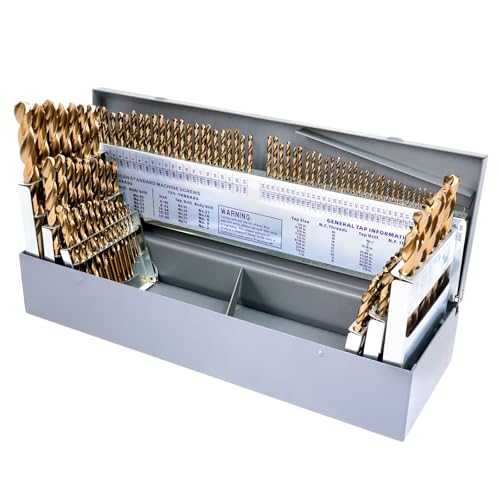 SEDIANAS 115 PCS Cobalt Drill Bit SetBest overall
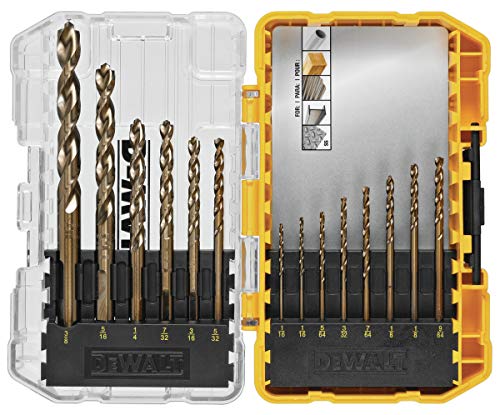 DEWALT DWA1240Easy-access storage system
 CRAFTSMAN CMAM2214Corrosion-resistant gold oxide
Why step bits suit thin metal
A step drill bit is a single cone with stepped edges. Each step cuts a slightly larger hole, so one bit can make many sizes. On thin metal this is a real advantage, because each step only has to cut a short, shallow edge.
The bit also tends to leave a clean, round hole with little burr. A standard twist bit can grab and tear sheet metal as the tip breaks through, which leaves a ragged or out-of-round hole. A step bit has a gentler cutting action, so it is popular for electrical panels, sheet metal enclosures, automotive panels and ductwork.
The limit is thickness. Each step is a wide, short cutting edge, and it has to push through the full thickness of the material. In thick steel the bit heats up fast and clogs. That is why step bits are a thin-metal tool, and why our best step drill bit page frames them around sheet metal, plastic and thin panels.
Which metals work and how thick
Soft metals are easy. Hard metals are possible, but they demand a harder bit, slower speed and plenty of lubricant. The thickness figures below are rules of thumb, not fixed limits, and they vary with bit quality and how hard the alloy is.
| Metal | Step bit suitability | Notes |
|---|---|---|
| Aluminum | Very good | Use cutting fluid or wax to stop chips from sticking to the steps. |
| Brass and copper | Good | Go slowly, because the bit can grab as it breaks through. |
| Mild steel sheet | Good | Works well up to roughly 1/8 inch. Use oil and moderate speed. |
| Stainless steel | Possible on thin sheet | Needs a cobalt or coated bit, slow speed, and steady pressure. |
| Thick steel plate | Poor | Switch to a cobalt twist bit, and drill a pilot hole first. |
| Hardened steel | Not recommended | Standard step bits will dull quickly. |
How to drill steel with a step bit
Good technique matters more than force. Follow these steps for a clean hole:
- Mark the center with a center punch. A small dimple keeps the tip from wandering on smooth metal.
- Clamp the workpiece firmly. Thin sheet can spin or lift as the bit breaks through, so never hold it by hand.
- Put a few drops of cutting oil on the bit and the hole location.
- Start at a slow speed with steady, light pressure. Let the bit cut instead of leaning on it.
- Back the bit out now and then to clear chips and add more oil.
- Stop when the hole reaches the size you need. Deburr the edge with a file or a deburring tool.
How to use a step bit on stainless steel
Stainless steel work-hardens. If the bit rubs without cutting, or you drill too fast, the surface hardens and the bit stops biting. That is the main reason people struggle with it.
Choose a step bit made of cobalt steel or one with a heat-resistant coating, and keep it sharp. Run the drill at a low speed, press firmly enough that the bit always cuts a chip, and use plenty of cutting oil. If you see smoke or the bit turns blue, stop and let it cool.
Do not pause with the bit spinning against the metal. A dull edge that glazes the surface is harder to restart. If that happens, replace or resharpen the bit and begin again at a fresh spot nearby.
When a twist bit is the better choice
Use a twist bit when the steel is thick, the hole is deep, or you need a precise single size. A cone-shaped step bit does not cut deep holes well, and in thick material its edges can overheat.
The top-ranked sets on our best step drill bit page are twist bit sets, not true step bits, so read each entry for fit. Several are cobalt, which resists heat better than plain steel, and that matters on stainless. For example, the SEDIANAS 115 piece set lists M35 cobalt with 5% cobalt and a 135° split point, with 29 fractional sizes from 1/16 inch to 1/2 inch in 1/64 inch steps. The STROTON metric set lists M42 cobalt with 8% cobalt and a 135 degree split point, from 1mm to 10mm in 0.5mm increments.
A 135° split point helps a bit start without skating across smooth metal. For tough steel, a practical approach is to drill a small pilot hole with a twist bit, then enlarge it with a step bit if the sheet is thin enough, or with larger twist bits if it is not.
Safety notes
Metal drilling throws chips and builds heat, so protect yourself:
- Wear safety glasses or goggles. Metal chips are sharp and can fly.
- Wear hearing protection when drilling large holes in sheet metal, which can be loud.
- Wear gloves only if they are snug, and keep sleeves and hair away from the spinning bit. Many people skip gloves entirely near a rotating chuck.
- Secure the work in a clamp or vise so it cannot spin.
- Let the bit cool before touching it. Fresh holes and chips are hot and have sharp edges.
- If you drill near wiring, panels or gas lines, shut off power or gas first and check what is behind the surface.
Pairing the bit with the right drill
A step bit works with most corded or cordless drills, but control matters. A variable speed trigger and a low speed setting make stainless and thicker steel much easier. If you are shopping, see our best drill comparison for models with good speed control.
Also check the chuck. Many step bits use a three-flat or hex shank so they do not slip in the chuck. If you already own a mixed kit, our best drill driver bit set page can help you see what a general set covers and where a dedicated metal bit fits better.
Frequently asked questions
Do I need to drill a pilot hole first?
Not on thin sheet, because the tip of a step bit usually starts on its own. On thicker steel, a small pilot hole helps the bit start accurately and reduces the force you need.
Can a step bit drill through a bolt or hardened steel?
Not well. Hardened steel dulls standard step bits quickly. A cobalt twist bit or a carbide-tipped bit is a more suitable choice, and even then you should go slowly with lubricant.
What speed should I use on steel?
Go slower as the metal gets harder or the hole gets bigger. Start at a low speed, watch the chips, and raise the speed only if the bit cuts cleanly without smoking.
Can I sharpen a step bit?
Some people touch up the edges with a small file or a sharpening tool, but the stepped geometry makes this fiddly. If the bit rubs instead of cutting, replacing it is often easier.