Can You Use a Portable Air Compressor to Power Wash?
No. A portable air compressor, including a tire inflator, cannot power a standard pressure washer, because a pressure washer makes its own high-pressure water with a motor or engine and pump. Air-powered washers do exist, but they need a large shop compressor with steady airflow, and a small portable unit is not built for that job.
 AstroAI AIRUN L7Best overall
 OlarHike TIC3V401Best dual power option
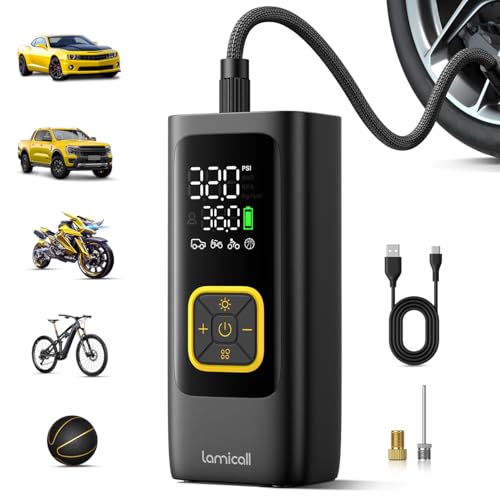 Lamicall VHEP02
Why a compressor does not replace a pressure washer
A standard pressure washer has its own pump, driven by an electric motor or a gas engine. The pump takes water from your hose and pushes it out through a small nozzle at high pressure. Nothing in that system uses compressed air, so there is no place to plug a compressor in.
A compressor and a pressure washer both make pressure, but they move different things. One squeezes air into a tank or a tire. The other pressurizes water. Connecting an air hose to a water pump will not make it run, and it can damage both tools.
So if your question is whether you can swap a portable compressor in for the motor of a regular washer, the answer is no. The more interesting question is whether a compressor can drive a washer designed to run on air. That is a different tool, covered next.
What an air-powered washer actually is
Air-powered pressure washers, sometimes called pneumatic washers, use shop air together with water to create a strong water jet. Compressed air does the work that a pump motor would normally do, or it mixes with the water stream to push it out harder.
These washers suit people who already own a larger compressor for a garage or workshop and want one more attachment for it. They are usually a niche choice. They tend to demand a lot of continuous airflow, and the maker will list the airflow the washer needs.
If you are shopping for a compressor with that kind of job in mind, look at larger tank-style models. Our guide to the best air compressor for home garage and the best air compressor for home shop cover the kind of equipment that can keep up with air tools over longer sessions.
Why portable inflators fall short
Portable air compressors, the small units sold as tire inflators, are designed for short bursts. They top up a car tire, a bike tire or a ball and then stop. Washing needs steady output for many minutes, and these units are not built for that.
Our spec sheets show this clearly. The AstroAI L7 weighs 0.96 lb, reaches 150 PSI, and lists a duty cycle of 15 minutes of use followed by 10 minutes of rest. Its listing says it can add 6 PSI to a 195/65R15 tire in about 1.5 minutes. That is a good profile for tires and a poor one for any task that needs air flowing for a long stretch.
Even the heavier models are built around tire work. The OlarHike TIX7V101 weighs 3.2 lb and lists about 20 seconds for a sedan tire. The inzeetor ITI001 weighs 1.94 lb and can fill all four tires in a row without a rest. Those are strengths for inflating, not for running a washer. Pressure reading also matters little here, since air tools care more about airflow than about the top PSI number on the box.
| Tool | What it does | Can it power a washer? |
|---|---|---|
| Portable tire inflator | Short bursts of air for tires and balls | No, airflow and duty cycle are too limited |
| Large shop or garage compressor | Steady air for tools and attachments | Only an air-driven washer made for it |
| Electric pressure washer | Pumps water with its own motor | Does not use a compressor at all |
| Gas pressure washer | Pumps water with its own engine | Does not use a compressor at all |
What a portable compressor is good for instead
A portable compressor still has plenty of use around the house and driveway. It is the right tool for tires, sports gear and quick pressure checks. If you want one for those jobs, see our list of the best portable air compressor picks, which compares fill speed, weight and power source side by side.
It can also help around a cleaning day, as long as you stay with what it was built for:
- Top up the tires on a car, bike or cart before you head out.
- Check and set pressure with a preset and auto shut-off, which every top-five unit on our list offers.
- Use the built-in LED light on models that include one, such as the OlarHike TIX7V101, when you work in a dim garage.
- Charge a phone from the USB port on models that have one, such as the AstroAI L7.
If you still want to try air-driven washing
Start with the washer's own manual. It will state the airflow and pressure it needs, and that tells you whether your compressor can keep up. If your compressor cannot meet the stated airflow, the washer will sputter or stop, and you will have gained nothing.
Then check the connections. Air hoses, couplers and fittings need to match in size and pressure rating, or you will get leaks and weak output. Our guide to the best air compressor fittings explains what to look for. If your compressor lives in a busy workspace, the best air compressor for automotive shop page shows what higher-demand setups look like.
Follow this order when you set up:
- Read the washer's airflow and pressure needs.
- Compare them with the compressor's published ratings.
- Match hoses, couplers and fittings to both tools.
- Keep air and water lines separate and clearly labeled.
- Test on a low setting aimed at the ground before you start cleaning.
Safety notes
Water and electricity do not mix. Plug any electric compressor or washer into a GFCI-protected outlet, keep cords out of puddles, and never let a compressor, a battery pack or a charger get wet. Portable inflators are not made for spray or standing water.
Compressed air and high-pressure water can both injure skin. Never point either at a person, a pet or your own hands. Wear safety glasses or goggles every time, and add hearing protection when a larger compressor is running, since many are loud. Do not connect a water hose to an air tool or an air hose to a water pump.
If you clean on a ladder, a roof or a raised deck, take extra care. Pressure spray can push you off balance, so use stable footing and avoid working at heights with a spray wand.
Choosing the right tool for the job
For cleaning a deck, siding or a driveway, buy a pressure washer designed for the job, or rent one. For tires and light inflation, a small portable compressor does the work well. For a garage full of air tools, a larger compressor makes sense.
Keep the roles separate and each tool does what it was built to do. A portable inflator is a good tire tool and a poor washer, and no amount of adapters will change that.
Frequently asked questions
Can I connect a garden hose to a portable air compressor?
No. A compressor has no water pump and no water inlet. Forcing water into it can ruin the unit and create a shock risk.
Will a bigger garage compressor run a standard pressure washer?
No. A standard washer has its own motor or engine and pump. A garage compressor only helps with washers made specifically to run on air.
Can a portable inflator blow dust off a surface?
For light dusting, a short burst may help, but the airflow is small and the duty cycle limits how long it can run. Wear eye protection and keep bursts short.
What should I check before pairing any compressor with an air-driven attachment?
Compare the attachment's required airflow and pressure with the compressor's published ratings, and confirm that the hose and coupler sizes match.