Can You Use a Gate Latch on a Dog Kennel, Crate or Pen?
Yes, a gate latch works well on a dog kennel run or a fixed pen with a real gate, as long as the latch fits the swing direction and frame material. It is usually the wrong choice for a dog crate, which already has its own door latch and thin frame. Pick a self-latching, padlockable steel model and mount it so the dog cannot reach or lift it.
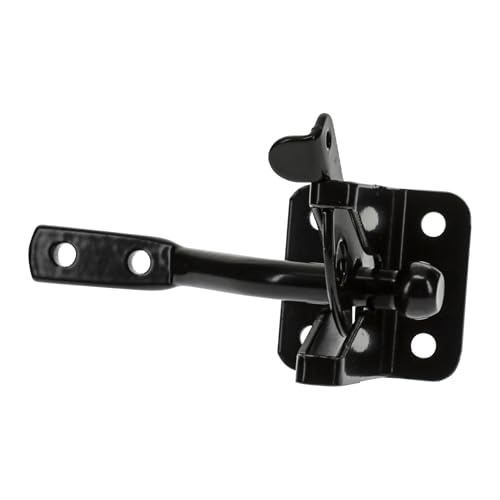 National Hardware N184-861Best overall
 SANKINS Pet-safety gravity latch
 HILLMASTER 3830Long body, pull string
The short version by setup
A gate latch is built for a gate: a solid frame that swings on hinges and closes against a post. That is why it suits some dog containment setups and not others.
Kennel runs and permanent pens usually have exactly that kind of gate, so a latch fits naturally. Crates and freestanding exercise pens are a different story. They come with their own closures, and their lightweight frames are not made to hold screws and hardware.
| Setup | Gate latch a good fit? | Why |
|---|---|---|
| Outdoor kennel run with a swinging gate | Yes | Solid frame, post to catch the latch, and a gate that closes the same way every time |
| Permanent pen built from wood, vinyl or metal | Yes | Frame can take mounting screws, and the gate swings like a fence gate |
| Freestanding exercise pen | Usually no | Panels are light and the pen already has a clip or latch |
| Wire or plastic crate | Usually no | The door has its own latch, and added hardware can snag or pinch |
| Baby gate or pet gate in a doorway | Sometimes | Works only if the gate has a solid frame and the latch fits it |
Using a gate latch on a kennel run
A kennel run is the best match. The gate is a proper hinged panel, and the latch sits on the gate or the post where you can reach it. A self-latching model closes by itself when you swing the gate shut, so you cannot forget to lock it.
Check which way the gate swings first. Some latches only work on gates that open away from the kennel. The National Hardware N184-861, for example, is listed for outswing gates and animal pens only. Others, like the SANKINS gravity latch and the HILLMASTER 3830, are listed for inward and outward swinging gates, which gives you more freedom if your kennel gate opens into the run.
Dogs that are strong, clever or bored will test the gate. Steel construction and a padlock option add a second barrier. Padlocks are not included in the listings that mention them, so plan to supply your own.
Using a gate latch on a pen
For a permanent yard pen with a wood, vinyl or metal gate, a gate latch is a sensible choice. Look at the gate material before you buy. The HILLMASTER 3830 listing names wood, vinyl and metal gates and mentions dog kennels and animal pens. Some listings tell you to swap in harder screws for aluminum or metal gates, so read the fine print.
A freestanding exercise pen is different. The panels fold and move, and they rely on built-in clips. A heavy latch on a lightweight panel can twist the frame or pull loose. If your pen keeps popping open, a better fix is usually a weighted base, a different pen, or a proper fixed gate.
If you are building or upgrading a fixed pen gate, our best gate latch for dogs page lines up weight, length, swing direction and what comes in the box so you can compare quickly.
Why a gate latch is usually a poor fit for a crate
A crate is a small, enclosed space, and the dog is inside it. That changes the risk. A latch that works well on a fence gate can create a snag point for a paw, jaw or collar when mounted on a crate door.
Most crates also have thin wire, plastic or fabric frames. A steel latch weighs more than the frame is designed to carry, and screws need solid material to bite into. Some models are very light. The National Hardware N184-861 is listed at 0.35 lb, and the HILLMASTER 612 spring latch at 0.75 lb. Even those are not designed for wire panels.
If your crate door does not stay closed, check the original latch first. Then look at the crate maker's own replacement parts or a crate with a stronger door. A simple secure clip that the maker approves is safer than a homemade fix.
What to look for in a latch for dog containment
Use this checklist when you compare models:
- Self-latching action, so the gate locks as it closes without any extra step from you.
- Steel construction, which resists chewing, bending and being pushed.
- A padlock or pin option for dogs that learn to nudge or lift a latch.
- A swing direction that matches your gate. Confirm inward, outward or both.
- A frame match. Check that the latch is listed for your gate material.
- Included screws. The SANKINS listing says 12 mounting screws come with it, while the HILLMASTER 3830 listing says 6.
- A release you can use with one hand, such as a fingertip release or a pull string, so you are not fumbling with a leash in the other hand.
Gravity or spring: which suits a dog area?
Gravity latches drop a lever into place when the gate closes. They are simple and have few parts to wear out. The SANKINS and HILLMASTER 3830 are gravity models. They are heavier than the spring type: the SANKINS is listed at 2.16 lb and the HILLMASTER 3830 at 1.47 lb with a 10 in body.
Spring latches use tension to hold the gate shut. The HILLMASTER 612 is a spring model listed at 0.75 lb and 4.7 in long. A spring design suits lighter gates, though its swing direction is not published, so confirm that before you buy.
If you want more options, our best gate latch page covers the wider range. For a gate that needs to work from either side, see our best gate latch to open from both sides comparison. If your dog leans on the gate or you have a large breed, check our best heavy duty gate latch picks.
Install it safely
A careful install matters as much as the latch you pick. Follow these steps:
- Mount the latch high enough, or on the outside of the gate, so the dog cannot reach it or lift it with a nose.
- Fit the strike plate firmly on a solid post. A loose post will let the gate flex and the latch slip.
- Test the gate several times to make sure it closes and locks every time, including in wind.
- Keep the padlock key where you can reach it fast. In a fire or heat emergency you need to get the dog out right away.
- Check for sharp edges, protruding screws and pinch points where a paw or collar could catch.
Safety notes
Use eye protection and hearing protection if you drill or drive screws into metal. Use a drill bit sized for the screws, and unplug or switch off power tools before you change bits. If you are on a ladder, keep both feet steady and ask someone to hold it.
Never leave a dog in a locked crate, kennel or pen in extreme heat or cold, and always provide shade, water and shelter. A latch keeps the dog in, but it is not a substitute for supervision. Check the hardware often, since rust, loose screws and worn springs can turn a secure gate into an unsafe one.
Frequently asked questions
Can a dog open a gravity latch?
Some can. Dogs learn to nudge or lift a lever, especially if they watch you open it. A padlock or pin adds a second barrier, and mounting the latch out of reach helps too.
Do I need a padlock on a kennel gate?
Not always, but it is worth it for dogs that test latches or in areas where strangers might open the gate. Choose a latch that is listed as padlockable, and supply your own padlock.
Will a gate latch work on a vinyl or aluminum gate?
Some are listed for vinyl and metal gates, but you may need different screws than the ones in the box. Check the listing for your gate material before you buy.
Is a self-latching latch safe for dogs?
It helps because the gate closes and locks without you remembering to do it. Still check for snag points and keep the release easy for you to use in an emergency.