Can You TIG Weld Aluminum, Steel, and Other Metals?
Yes. TIG welding works on aluminum, mild steel, stainless steel, copper, brass and more. The main difference is the current type: aluminum needs AC TIG, while steel, stainless and copper run on DC TIG, so an AC/DC machine covers the widest range.
 Sunstac TIG-250 TP ACDCBest overall
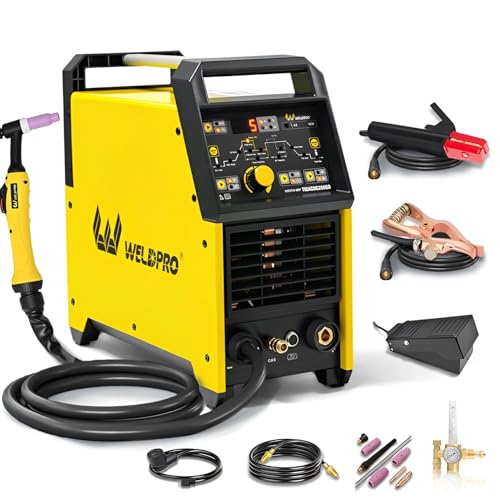 W Weldpro TIG200-KT26 TorchPedal-ready aluminum machine
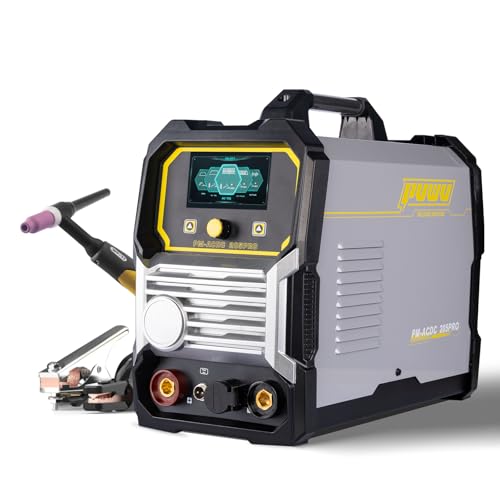 PUWU PM-ACDC-205PROCompact 205A option
The short version by metal
TIG (tungsten inert gas) welding gives you a clean, controlled arc, which is why it suits so many metals. What changes from one metal to the next is the current type, the shielding gas, how much heat you need and how much prep the metal demands.
Here is a quick map of what works and what to expect.
| Metal | Current type | What to know |
|---|---|---|
| Aluminum | AC | Needs a machine with AC TIG. Clean off the oxide layer first. Heat spreads fast, so higher amperage helps. |
| Mild steel | DC | The most forgiving metal to learn on. Remove rust, oil and mill scale. |
| Stainless steel | DC | Use low heat and keep the metal clean. Too much heat causes warping and discoloration. |
| Copper | DC | Conducts heat very quickly, so it needs plenty of amperage and often preheating. |
| Brass | DC (usually) | Possible, but the zinc in brass gives off fumes. Ventilate well. |
| Magnesium | AC | Handled much like aluminum, but it is a fire risk in dust and shavings. |
Can you TIG weld aluminum?
Yes, but only with AC output. Aluminum forms a tough oxide skin that melts at a much higher temperature than the metal underneath. The AC cycle breaks that skin up so the weld pool can form. A DC-only machine cannot do this reliably.
Aluminum also pulls heat away from the weld quickly. That means you need more current than you might expect for the thickness. Our best TIG welder page notes that higher current handles thicker plate, especially aluminum, and that several models do not publish a maximum aluminum thickness at all.
Published figures help here. The Sunstac 250A lists 0.24 in of aluminum capacity, with 4 mm at 110V and 6 mm at 220V. The ARCCAPTAIN TIG200PACDC lists 0.5 to 5 mm (0.02 to 0.20 in) of aluminum. These are maker specifications, so check the thickness chart for any machine you consider.
Can you TIG weld steel and stainless?
Yes. Mild steel and stainless both weld on DC TIG, and a DC-only machine handles them well. Mild steel is a good first metal because it tolerates small mistakes. The PUWU 205A lists mild steel up to 3/8 in (10 mm), and the ARCCAPTAIN TIG200PACDC lists 0.5 to 10 mm (0.02 to 0.39 in) for metals in general.
Stainless steel is less forgiving. It holds heat in the weld zone instead of passing it along, so thin sheet can warp or burn through. Pulse TIG helps by alternating between high and low current, which lowers the average heat going in. Keep the metal free of carbon steel dust and oil, or the weld can lose some of its corrosion resistance.
Whichever you pick, prep matters:
- Grind or wire-brush off rust, paint and mill scale.
- Wipe the joint with a suitable solvent and let it dry fully.
- Use a stainless-only brush on stainless, so you do not drag in steel particles.
- Keep a steady gas flow and a tight, short arc.
Copper, brass and other metals
Copper can be TIG welded on DC. Its challenge is heat. Copper moves heat away from the joint so fast that a small machine may struggle to get a pool started. Welders often preheat the part and use higher current than steel of the same thickness would need.
Brass is a copper and zinc alloy. TIG can join it, but zinc boils at a lower temperature than the weld pool, which creates fumes and porosity. Welding it outdoors or with strong fume extraction is wise. Never weld brass in a closed space.
Other metals such as titanium and magnesium are also TIG weldable, but they have stricter needs. Titanium must be shielded from air on the back side of the weld, and magnesium needs careful fire precautions. These are better left until you have mastered the basics on steel and aluminum.
Matching a machine to your metals
Start with the current type. If aluminum is anywhere on your list, you need an AC/DC machine. If you only work with steel, stainless and copper, a DC-only model is enough. Our best TIG welder comparison flags this as the single biggest filter, and it names the YESWELDER and the ARCCAPTAIN 205P as DC-only models that skip aluminum.
Next, look at output current and input power. Listed maximums among the models that publish them run from 160A to 250A. Every model in our top ten accepts 110V/220V dual input, but output is usually lower on 110V, so a household outlet may limit your thickness range.
Finally, check the controls that suit your work:
- Foot pedal: gives live amperage control, which helps on aluminum. The Weldpro 200A includes one. Note that the PUWU pedal only switches power on and off rather than adjusting current.
- Pulse range: the Weldpro 200A lists 0.5 to 200 Hz, which suits thin sheet where heat control matters.
- Weight: the PUWU 205A lists 25.1 lb and the ARCCAPTAIN TIG200PACDC lists 26.5 lb, while the Weldpro 200A lists 61.8 lb. Think about how often you will move it.
Safety before you strike an arc
TIG looks calm compared with other processes, but the risks are real. Take these steps every time:
- Wear a welding helmet with the right shade. The arc can burn your eyes and skin, even from a short exposure.
- Wear flame-resistant clothing, gloves and closed shoes. Cover bare skin.
- Use hearing protection if you are also grinding or cutting nearby.
- Ventilate the area. Fumes from stainless, copper and especially brass should not be breathed in.
- Secure gas cylinders upright and check hoses and fittings for leaks. Argon displaces air, so avoid enclosed spaces.
- Check your power supply and circuit rating before plugging in. Keep cables dry and undamaged, and never weld on wet ground.
Frequently asked questions
Can I TIG weld aluminum to steel?
Not in the usual way. The two metals do not fuse well together and form brittle compounds. Mechanical fasteners or adhesive bonding are the common choices, and special transition joints exist for industrial work.
Do I need a different gas for different metals?
For most jobs, pure argon covers aluminum, steel, stainless and copper. Some welders add helium for thick aluminum or copper. Check your machine and the filler rod supplier for guidance.
Do I need filler rod?
Often yes, and it should match the base metal. Thin joints with tight fit-up can sometimes be welded without filler, but most structural welds need it.
Is TIG harder to learn than other welding?
It takes more coordination, since you manage the torch, filler rod and, with a pedal, the current at once. Starting on clean mild steel is a gentle way to build the skill.