Can You Take a Rolling Tool Box on a Plane?
Yes, you can usually fly with a rolling tool box, but it almost always has to go in checked baggage. TSA allows tools 7 inches or shorter in a carry-on, while longer tools and power tools must be checked. Most rolling chests are also too big and too heavy to be a carry-on, so check your airline's size and weight limits before you pack.
 LARBANKE tool chestBest overall
 VEVOR TBT112405BKThick Q235 steel body
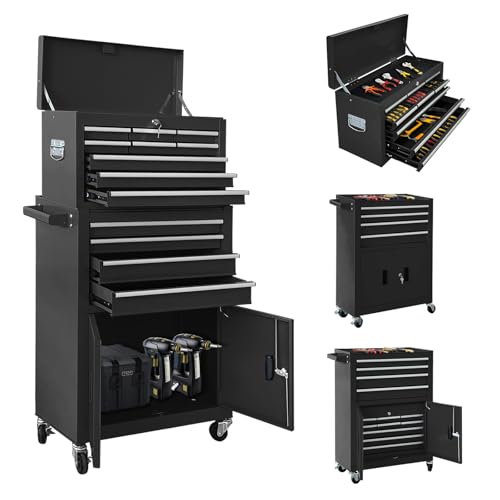 Sormols No.1Detachable rolling combo
The short version: checked bag, with conditions
Two sets of rules apply when you fly with tools. TSA decides what may go through security in the cabin. Your airline decides how big and how heavy a bag can be, and what it will charge to carry it.
For tools, TSA's published guidance is simple. Tools 7 inches or shorter may be allowed in carry-on baggage. Power tools, and any tool longer than 7 inches, belong in checked baggage. The 7 inches is measured by the length of the tool, not the length of the box that holds it.
A full rolling tool chest will have wrenches, pry bars, hammers or drills inside, so the whole box becomes a checked item. Even an empty box is a poor carry-on, because of its size. The final call at the checkpoint belongs to the TSA officer, so pack with that in mind.
Check the size and weight first
Airlines set their own limits for checked bags. Many US carriers use a weight limit around 50 lb and a size limit of about 62 linear inches (length plus width plus height) for a standard bag. Those numbers vary by airline and ticket type, so confirm them on your airline's baggage page. Heavier or oversize items often move into a special handling category with extra fees.
Empty weight matters because you still have to add the tools. Using the specs from our best rolling tool box comparison, here is how a few boxes stack up against a typical 62 inch size limit. The totals are our own arithmetic from the listed dimensions.
| Box | Empty weight | Length + width + height | Fits a 62 in total? |
|---|---|---|---|
| LARBANKE 4-drawer portable chest | 27.51 lb | about 50.1 in | Yes |
| VEVOR 24 in 5-drawer steel box | 27.56 lb | about 49.0 in | Yes |
| Maxority 7-drawer rolling chest | 60 lb | 67 in | No |
| Sormols 13-drawer rolling chest | 73 lb | about 80.7 in | No |
Which boxes make sense to fly with
The compact steel boxes are the realistic option. A portable chest such as the LARBANKE (27.51 lb, 24.6 x 13 x 12.48 in) or the VEVOR (27.56 lb, 23.62 x 10.24 x 15.16 in) stays under the typical linear limit. Both leave room for tools before you reach a 50 lb ceiling, if your airline uses that number.
Larger rolling chests are a different story. The Maxority weighs 60 lb empty, and the Sormols weighs 73 lb empty. Both are already over a 50 lb limit before you add a single tool, and the Sormols is also well over the size limit. For those, shipping by freight or carrier is usually more practical than checking them.
Our best tool box page lists lighter carry-style options if you mainly want something to travel with and do not need wheels.
How to pack a tool box for a flight
A checked tool box gets thrown around, so pack it like cargo. Work through this list before you leave for the airport:
- Empty the heavy items first. Move large tools into a separate bag if the box would go over the weight limit.
- Latch or lock every drawer so nothing slides open in transit. Packing foam or towels in gaps stops tools from rattling.
- Remove loose small parts and sharp edges, or put them in sealed containers.
- Wrap blades and chisels in a sheath or heavy cloth.
- Take out any fuel, aerosols, solvents, paints and compressed gas. These are restricted or banned on planes.
- Put a name and phone number inside the lid and on the outside.
- Photograph the contents so you have a record if something goes missing.
Locks, wheels and inspection
Checked bags can be opened and inspected. If TSA needs to look inside and your box is locked with an ordinary padlock, the lock may be cut. A TSA-recognized lock lets officers open it without damage, or you can leave the box latched but unlocked and rely on a latch to keep drawers shut.
Wheels and handles can snag on conveyor belts. Lock the casters if they have brakes, and fold or secure any handle. If your box has a detachable top, like the Sormols, you can split it into two lighter pieces and pack them separately, which helps with weight limits.
If you travel often with tools for work, a stronger box with ball-bearing drawer slides and secure latches is worth a look. Our best tool box for mechanics page compares options built for heavy use.
Safety notes
Never pack lithium batteries from cordless tools in checked baggage. Airline rules generally require spare lithium batteries to travel in the cabin, with terminals protected. Check your airline's current policy before you go.
Fuel, propane, gas cans and anything flammable are not allowed in a tool box on a plane, even in checked baggage. Lift heavy boxes with your legs and ask for help with anything near the weight limit. Sharp tools can injure baggage handlers and inspectors, so cover every edge.
When flying is not the best option
For a heavy chest, a ground shipping service may be safer and simpler than the airline counter. You also avoid oversize and overweight handling. If you only need a few tools on a trip, a small hand-carry organizer plus a checked bag for longer tools may be enough.
For vehicle trips, a box built for a truck bed can make more sense than a rolling chest. See best tool box for truck for those options. If you are sorting a larger setup, best tool box organizer system shows how organizers work inside a box.
Frequently asked questions
Can I carry a small tool box into the cabin?
Only if every tool inside is 7 inches or shorter, no power tools are inside, and the box fits your airline's carry-on size limit. TSA officers make the final decision at the checkpoint, so expect it to be pulled for inspection.
Do I need to declare tools at the airport?
You do not normally need to declare ordinary hand tools in checked baggage. Just keep fuel and other hazardous items out of the box, and be ready for it to be opened for inspection.
Will the airline treat a rolling tool chest as oversize?
It can if the total of length, width and height goes past the airline's limit. Many large chests do, so measure the box fully loaded and compare it with your airline's published rules.
Can I fly with a drill or other power tool?
Power tools go in checked baggage, not the cabin. Remove the battery from a cordless model and follow your airline's rules for lithium batteries.