Can You Sharpen Hedge Trimmer Blades? A Step-by-Step Guide
Yes, you can sharpen most hedge trimmer blades, and a flat file is the simplest tool for the job. Remove the battery or unplug the trimmer, file along each blade's existing bevel, then clean and oil the blades. If the blades are bent, cracked or badly worn, replacing them is the better choice.
 EGO Power+ HT2601Best overall
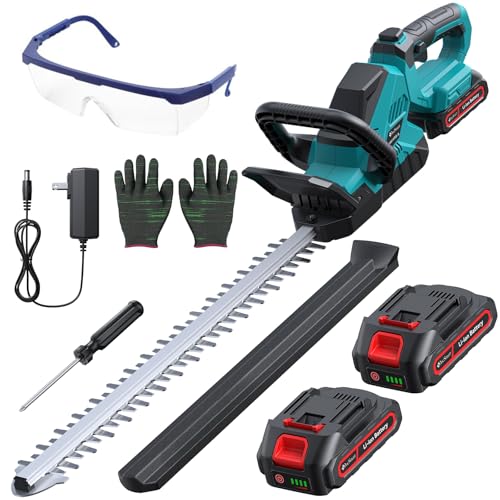 DocSmart HT02-BLongest listed runtime
 BLACK+DECKER BEHT150Corded and lightweight
Can you sharpen hedge trimmer blades?
For most electric and battery models, yes. The blades are hardened steel with a beveled cutting edge on each tooth, and that edge can be restored by hand with a file. Dual-action blades, where both blades move, work the same way. Each blade has its own edge to touch up.
Sharpening is a good fit when the blades are dull but straight and undamaged. It does not fix bent teeth, deep chips or cracks. Those problems call for new blades.
Some makers design for it. The EGO POWER+ 26in HT2601 listing, for example, mentions a fully serviceable gearbox for quick and easy blade sharpening. Check your manual for what the manufacturer allows, because some brands prefer that you use a service center.
Signs your blades need sharpening
Dull blades do not cut cleanly. They crush and tear stems, which leaves ragged, browning tips on the hedge. A sharp blade slices, so cuts look neat and heal better.
Watch for these signs:
- Leaves and twigs get chewed or folded instead of cut
- The trimmer stalls or bogs down on stems it used to handle
- You need several passes over the same spot
- The motor sounds strained or the battery drains faster than before
- The cutting edges look rounded, shiny or nicked when you inspect them
What you need before you start
You do not need much. A flat file is the main tool, and a mill bastard file is a common choice. A 6 to 8 inch size is easy to control. Add a few supplies for safety and cleanup.
- Flat file (mill bastard or similar single-cut file)
- Cut-resistant gloves and safety glasses
- A vise or sturdy clamp, or a workbench where you can pin the blade
- Stiff brush and rag for cleaning
- Blade oil, machine oil or a resin cleaner for sticky sap
- Fine sharpening stone or fine file for removing burrs
How to sharpen hedge trimmer blades with a flat file
Take your time and keep the work consistent. Even strokes matter more than speed.
- Make the tool safe. Unplug a corded trimmer, or remove the battery from a cordless one. Never work on blades with a power source connected.
- Clean the blades. Brush off debris and wipe away sap with a rag and resin cleaner. A clean blade shows the bevel clearly.
- Secure the trimmer. Clamp it so the blades cannot move. Keep your hands behind the cutting edge as you work.
- Find the bevel. Each tooth has a slanted face that forms the cutting edge. Hold the file so it sits flat against that slope and match the existing angle.
- File in one direction. Push the file along the edge away from your body, lift it, and return. Do not saw back and forth.
- Count your strokes. Use the same number on each tooth so the blades stay even. Light pressure is enough.
- Work the whole blade. Move tooth by tooth along the length, then flip to the other blade if both have cutting edges.
- Remove burrs. File or stone the flat back side of the blade lightly to knock off the rough lip that filing leaves behind.
- Oil and test. Wipe on a thin coat of oil, reinstall the battery or plug in, and test on a small branch.
Hand filing versus other methods
A file is slow but forgiving. Power tools remove metal faster, which also makes it easier to ruin a blade. Here is how the main options compare.
| Method | Best for | Main risk |
|---|---|---|
| Flat file | Light touch-ups and regular upkeep | Takes time; uneven strokes leave uneven edges |
| Rotary tool with grinding bit | Small nicks and tight spots | Overheating the steel and removing too much metal |
| Bench grinder | Experienced users with heavy wear | Heat can soften the blade; sparks and flying debris |
| Professional sharpening | Blades you are unsure about | Extra trip and time without the trimmer |
| Replacement blades or a new trimmer | Bent, cracked or worn-out blades | Cost of parts, and fit must match your model |
Safety notes
Blades stay sharp even when the trimmer is off, and the cutting action can start instantly if the power is connected. Remove the battery or unplug the cord before every inspection, cleaning or filing session.
Wear gloves and eye protection. Filing and grinding can throw fine metal particles. If you use a grinder or rotary tool, add hearing protection and keep sparks away from dry leaves and any flammable cleaners.
Look for a safety lock or switch as well. Some trimmers include these to prevent accidental starts. The DocSmart HT02-B listing, for instance, mentions a safety lock, gloves and goggles in its kit. Those features help during use, but they are not a substitute for disconnecting power before maintenance.
When to replace instead of sharpen
Sharpening has limits. If a blade is bent, cracked, missing teeth or deeply pitted with rust, filing will not make it cut well, and it may be unsafe. A blade that has been filed many times can also lose its edge geometry.
Compare repair against replacing the tool. If the gearbox, motor or battery is also failing, a new unit may make more sense. Our best hedge trimmer page lists blade length from 17 in to 26 in and cutting capacity from 0.625 in to 1.2 in, which helps you match a replacement to your hedge.
Match blade length and capacity to the job. For example, the BLACK+DECKER BEHT150 is a 17 in corded model with 0.625 in capacity, while the EGO POWER+ HT2601 offers a 26 in blade with 1.2 in capacity. Thicker, woody growth is harder on blades and dulls them faster, so a trimmer with more capacity can be a better fit for older hedges.
Keep blades sharper for longer
Good habits slow dulling. Wipe the blades after each session, remove sap, and apply a light coat of oil before storage. The DocSmart listing also advises lubricating with oil after use to maintain blade performance.
Avoid cutting wire, fence posts or stones, since one hit can chip the edge. Stay within your trimmer's stated branch capacity, and use pruning shears or a saw for thicker stems. If you are choosing a trimmer, our best hedge trimmer comparison shows capacity and weight side by side so you can pick one suited to your hedge.
Frequently asked questions
How often should I sharpen hedge trimmer blades?
There is no fixed schedule. Sharpen when cuts turn ragged or the trimmer struggles. Heavy use on woody hedges means touch-ups sooner than light seasonal trimming.
Do I need to take the blades off the trimmer?
Often not. Many people file the blades in place with the tool secured and power removed. Remove them only if the manual describes it or if access is poor.
Can I sharpen blades on a cordless trimmer the same way?
Yes. The process is the same, but take out the battery first. A battery left in place can start the blades if the switch is bumped.
Will sharpening fix a blade that jams?
Not always. Jamming can come from sap buildup, loose blade bolts, a bent blade or lack of lubrication. Clean and oil the blades first, then check for damage.
Should I sharpen both blades on a dual-action trimmer?
Yes, if both have cutting edges. Give each blade the same number of strokes so they stay matched and cut evenly.