Can You Sharpen Cobalt Drill Bits and How Long Do They Last?
Yes, you can sharpen cobalt drill bits, and it is usually worth doing on larger bits that are worn but not damaged. Cobalt steel is hard and heat resistant, so it often outlasts plain steel bits, but there is no fixed number of holes. How long a bit lasts depends mostly on speed, pressure, cooling, and the metal you drill.
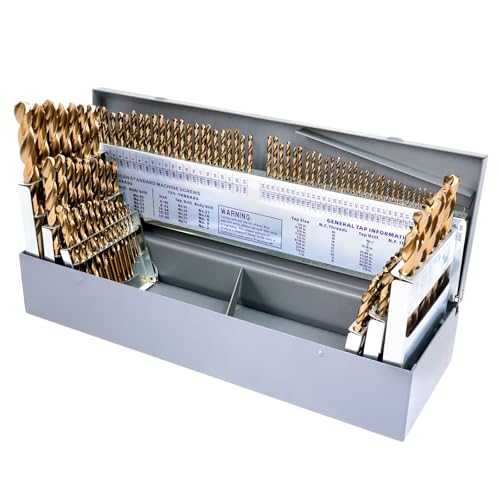 SEDIANAS 115 PCS Cobalt Drill Bit SetBest overall
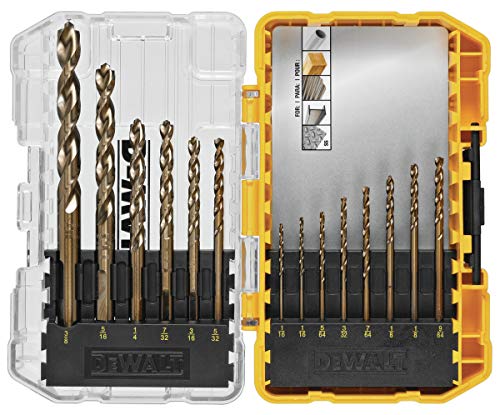 DEWALT DWA1240Fewest pieces, tidy case
 STROTON .M42 steel, 8% cobalt
Can you sharpen cobalt drill bits?
Cobalt bits are made from high speed steel with cobalt added, such as the M35 grade with 5% cobalt or the M42 grade with 8% cobalt that appear in our comparison data. They can be ground back to a sharp edge like other high speed steel bits. The difference is that the steel is harder, so it takes a bit longer to grind and it is less forgiving of a rough technique.
Hardness also means cobalt is more brittle than standard steel. A bit that is dropped, forced, or ground too aggressively can chip at the cutting edge. Sharpening works best when you remove only as much metal as needed to bring the edge back.
Two limits are worth knowing. First, coatings such as gold oxide or TiAlN sit on the surface, and grinding the tip removes the coating there. The bit still cuts, but you lose that surface protection at the edge. Second, very small bits are hard to hold and grind by hand, so many people simply replace those.
How to sharpen a cobalt bit
You can use a bench grinder, a drill sharpening jig, or a dedicated electric bit sharpener. A jig or dedicated sharpener holds the angle for you, which is the easiest route for beginners. A bench grinder is fine if you are steady and patient.
Use an aluminum oxide wheel that is in good shape, and dress it if it is glazed or uneven. A clean wheel cuts cooler, and heat is the enemy of the cutting edge.
- Inspect the bit. If the flutes are cracked, the tip is chipped deeply, or the bit is bent, replace it instead.
- Set your angle. Most cobalt bits for metal use a 135° point, which matches the 135° split point listed on most sets on our page. Keep the same angle you started with.
- Grind one cutting lip with light passes, following the original shape. Keep the lip sloping slightly away behind the edge, called relief, so the edge can bite.
- Turn the bit and grind the other lip the same amount. Both lips must be equal in length and angle, or the hole will come out oversized and the bit will wear unevenly.
- Cool the bit often. Pause and let it air cool, or dip it briefly if you are sure it is only warm. Never cool a very hot bit suddenly, since the shock can crack it.
- Check the result. The two lips should look like mirror images, with a small chisel edge in the center.
Split points and why they are harder to redo
Many cobalt sets are sold with a split point tip, which helps the bit start on a mark without wandering. Our best cobalt drill bits page lists 135° split points on most ranked sets for this reason.
Sharpening a split point by hand is harder than sharpening a plain conical tip. The little notch in the center has to be recreated, or the bit will start to skate again. A jig or sharpener that is made for split points handles this better. If you grind a split point bit freehand and lose the split, you can still drill, but center punch your mark first and start slowly.
How long do cobalt drill bits last?
There is no honest single number. A bit used lightly on soft steel can last for a long time, while the same bit pushed hard in stainless steel can dull in a few holes. Nobody can promise a hole count without knowing your metal, your drill, and your habits.
Cobalt bits do hold up better than ordinary bits when the work gets hot. The listings in our data point to heat resistance as the main benefit, and one lists a hardness of 68 to 70 HRC for its M42 bits. Heat is what dulls bits in stainless steel and other hard metals, so resisting it is where cobalt earns its keep.
In short, do cobalt bits last longer? Often yes in hard metals, as long as you drill them correctly. In soft wood or mild steel the gap is smaller, and a cobalt bit can be more than you need.
What shortens bit life
Most early dulling comes from a few habits that are easy to fix.
Running the drill too fast is the biggest one. Hard metals need slower speeds, and a fast bit builds heat at the tip. Pressing too lightly is the second. A bit that rubs without cutting work-hardens stainless steel and turns the edge blunt. Use steady, firm pressure so the bit makes a continuous chip.
No lubricant is the third. Cutting oil carries heat away and eases the cut. Bits also dull when they are tossed loose in a drawer, where the edges knock together. A case with size markings, like those in most sets we compare, protects the tips.
If you are choosing a drill for hard metal work, look at one with variable speed and good low speed control. Our best drill page is a good place to compare options.
Sharpen or replace?
A quick rule: sharpen when the bit is worn but whole, and replace when it is damaged or very small. Here is how the common situations compare.
Signs a bit is dull include squealing, smoke, a hot bit, and chips that come off as dust instead of curls.
| Situation | Best choice | Why |
|---|---|---|
| Dull edge, bit straight and whole | Sharpen | Restores the cutting lips with little material lost |
| Chipped tip, shallow damage | Sharpen | Grinding back past the chip can remove it |
| Cracked flute or bent shank | Replace | Damage cannot be ground out and may break in use |
| Very small bit (fine sizes) | Replace | Hard to hold at the right angle by hand |
| Coated tip with worn coating | Either | Sharpening works, but the coating is gone at the edge |
| Split point lost by freehand grinding | Re-grind with a split point jig or replace | Without the split, the bit may wander on start |
Safety when sharpening and drilling
Grinding throws sparks and tiny metal particles. Wear safety glasses or a face shield every time, and add hearing protection if your grinder is loud. Wear a dust mask when grinding for longer sessions.
Keep the tool rest on a bench grinder close to the wheel, with only a small gap. Do not wear loose gloves or sleeves near a spinning wheel, and tie back long hair. Hot bits and fresh chips can burn, so let them cool before handling.
When drilling, clamp the workpiece. Metal that spins free with the bit can cut hands badly. Unplug the grinder or remove the drill battery before you change settings or bits.
Frequently asked questions
Does sharpening change the size of the bit?
Only very slightly. Grinding the tip does not change the diameter of the bit, but a bit that is worn along its sides can cut a hole smaller than its label.
Can I sharpen cobalt bits with a standard drill-powered attachment?
Yes, many attachments and handheld sharpeners work on cobalt, though they may take more passes because the steel is hard. Check that the product lists high speed steel or cobalt compatibility.
Is a bigger set better if I plan to sharpen?
Not necessarily. Larger bits are easier to sharpen, so a set with a few common sizes can serve you well. Our page lists sets from 14 to 115 pieces, so pick the size range you actually drill.
Should I use cobalt bits in wood or masonry?
Cobalt bits can drill wood, but they are built for metal. For brick or concrete, use bits made for that material, such as those on our best masonry drill bits page.