Can You Reuse Exhaust Clamps or Do They Wear Out?
Yes, a band-style exhaust clamp can often be reused if the band is still round, the bolt and nut turn freely and nothing is rusted thin. Clamps are not strictly one-time parts, but they do wear, so inspect each one before you trust it again. Old U-bolt clamps are a different story, because they crush the pipe and are best replaced.
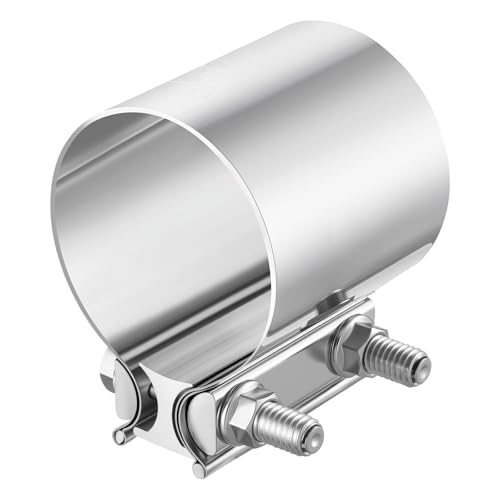 EVIL ENERGY 473SU5TBest overall
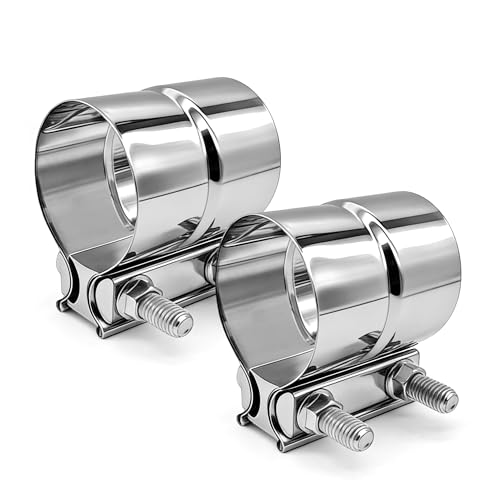 SKYMIRO CPBJ-3IN-2Best double-layer band
 SKYMIRO CPSC-25IN-1Best butt joint clamp
When reuse is fine and when it is not
A band clamp works by pulling a steel strap tight around a joint. When you loosen it, the strap springs back and can be tightened again. If the strap kept its shape and the hardware is healthy, nothing about the design makes it a single-use part.
The trouble is what happens between installs. Heat cycles, moisture, road salt and vibration all take a toll on the band, the bolt and the nut. A clamp that looks fine from the outside can have a stretched bolt or a band that no longer sits flat.
Some makers of turbo and factory clamps recommend replacing them after one removal. That advice is common for high-heat, high-pressure joints, so follow your vehicle maker's guidance when it says to replace. For a typical muffler or pipe joint, a careful inspection is a reasonable test.
What actually wears out
Knowing the weak points helps you judge a used clamp quickly.
- The band: it can kink, flatten or crack where it bends around the bolt. A kinked band leaves a gap that leaks.
- The bolt and nut: threads stretch, strip or seize with rust. A zinc-plated bolt can corrode even when the band is stainless.
- The sealing block: the small block under the bolt spreads force around the pipe. If it is crushed or cracked, the clamp tightens unevenly.
- The gasket or sealing surface: where a clamp includes a gasket, it flattens and hardens after heat. A used gasket often will not seal a second time.
- The pipe itself: a pitted or thinned pipe end can keep a good clamp from sealing, no matter how new the clamp is.
A quick inspection before you reuse a clamp
Take the clamp off the vehicle, wipe it clean and look at it in good light. Go through these steps in order.
1. Check the band shape. Lay it on a flat surface. It should form a smooth round loop with no kinks, creases or flat spots.
2. Look for rust. Surface staining on stainless steel is cosmetic. Flaking, pitting or thin edges mean the band is done.
3. Test the hardware. Thread the nut on and off by hand. It should run the whole length without binding. Replace any bolt with stretched, galled or rounded threads.
4. Inspect the sealing block and gasket. Swap in a new gasket if your clamp uses one, and discard a block that is cracked or deformed.
5. Check the pipe ends. Look for rust scale, burrs or out-of-round shapes that would stop a clean seal.
Reuse by clamp type
Different designs have different odds of surviving a second install. The table gives a general guide, and the products on our page show how makers describe their own clamps.
Our best exhaust clamp page lists 304 stainless bands with a sealing block and weld-free installation. The Qziulr butt joint clamp listing says it can be reused, and the GaRhomxy lap clamp listing describes repeated disassembly and installation. Those are the makers' own claims, so you still need to inspect the clamp yourself.
| Clamp type | Reuse outlook | What to check first |
|---|---|---|
| Stainless band clamp with sealing block | Often reusable | Band shape, bolt threads, block |
| Band clamp with a steel gasket | Reuse the band, replace the gasket | Gasket condition and seating |
| Plain steel band clamp | Less reliable | Rust on the band and bolt |
| Factory V-band or turbo clamp | Replacement often advised | Your vehicle maker's guidance |
| U-bolt clamp | Replace | Crushed pipe, bent saddle, stripped threads |
How to reinstall a reused clamp
Clean the pipe ends with a wire brush until the metal is smooth and free of loose rust. Slide the clamp over the joint and center it so the band covers both pipes evenly. On a lap joint, the band should sit over the overlap. On a butt joint, it should straddle the gap between the two pipe ends.
Tighten the nut gradually and evenly, then bring it to the torque the clamp maker lists. For example, the EVIL ENERGY 3 in lap clamp on our page lists 63 N·m with an M10 bolt and nut. Check your own clamp for its figure rather than copying another one.
Start the engine and check for leaks once the exhaust is up to temperature. Listen for ticking or puffing at the joint. If you hear it, let everything cool, then retighten or replace the clamp.
How long exhaust clamps last
There is no single lifespan. A stainless clamp on a dry, lightly driven vehicle can outlast a plain steel clamp on a car that sees salted winter roads. Heat, moisture and vibration decide the outcome more than age alone.
The practical rule is to inspect clamps whenever you open the exhaust, and again if you notice a new rattle, ticking sound or exhaust smell. Material matters, too. We favor 304 stainless bands because they resist rust and heat better than plain steel, which helps a clamp survive more than one install. You can compare options on our exhaust clamp comparison.
If you are stuck choosing between reusing and replacing, remember that the clamp is a small part of the job. A failed joint means a second round of work, so replacing a doubtful clamp is cheap insurance.
Safety notes
Exhaust parts stay hot long after the engine stops. Let the system cool fully before you touch it, and wear gloves, because cut edges on rusty pipe are sharp.
Wear safety glasses when you work under a vehicle. Rust and debris fall straight down. Support the vehicle on jack stands on level ground, never on a jack alone.
Exhaust gas contains carbon monoxide, which you cannot smell or see. Never run the engine in a closed garage while you test for leaks. Do it outdoors or with the garage door fully open.
A clamp is only one tool in the job. If you also need to hold pieces in place while you fit them, our best F clamps page compares options for that kind of work.
Frequently asked questions
Do I need to replace the gasket when I reuse a clamp?
If your clamp uses a gasket, replace it. Gaskets flatten and harden after heat, and a used one is a common cause of leaks on a second install.
Can I reuse a clamp if the bolt is rusty?
Replace the bolt, and possibly the whole clamp. A rusted or stretched bolt cannot hold the right tension, and it may snap when you tighten it.
Is it a problem if I overtighten an exhaust clamp?
Yes. Too much torque can stretch the bolt, deform the band or crush the pipe. Stick to the figure the clamp maker lists.
What are signs that an exhaust clamp has failed?
Common signs are a ticking or puffing sound at the joint, a louder exhaust note, soot staining around the clamp and an exhaust smell near the vehicle. Check the clamp as soon as you notice any of these.
Does a lap clamp or a butt clamp last longer?
Neither has a built-in advantage. Lifespan depends on band material, how well the clamp fits the pipe and how it was installed. Match the type to your joint and measure the pipe's outside diameter first.