Can You Plane Wood Against the Grain or Across It?
You can physically plane against the grain, but it often tears out chunks and leaves a rough surface, so plane with the grain whenever you can. Planing across the grain is fine with a hand plane for flattening wide panels, but you should never feed a board sideways through a thickness planer. Always feed boards so the grain runs along the direction of travel.
 WEN PL1337Best overall
 CRAFTSMAN CMEW320Longest warranty listed
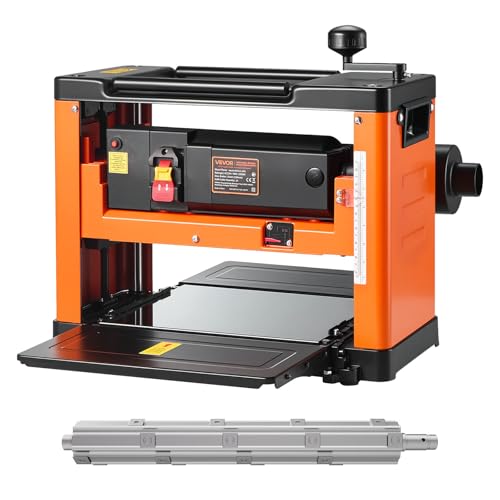 VEVOR M1B-LS-3301Fastest cutterhead speed
What 'with,' 'against' and 'across' the grain mean
Wood is made of long fibers that run mostly along the length of a board. Planing with the grain means the blade moves in the direction that lays those fibers down, like petting a cat from head to tail. Planing against the grain means the blade runs the other way and tends to lift the fibers.
Across the grain, also called cross grain, means the blade moves sideways to the fibers, from edge to edge instead of end to end. This is a different problem from planing against the grain, and the right answer depends on whether you use a hand plane or a machine.
You can usually read the grain on the edge of a board. Look at the thin lines running up the face and the edge, and note which way they slope toward the surface.
- With the grain: the lines rise ahead of the blade, so the blade lifts the fibers gently and shears them cleanly.
- Against the grain: the lines dive into the board ahead of the blade, so the blade can pry fibers up and rip them out.
- Across the grain: the blade crosses the fibers sideways, which works with a hand plane held at an angle but is not suited to a powered thickness planer.
What happens when you plane against the grain
When the blade meets fibers that slope down into the board, it can wedge under them and split them ahead of the cut. The result is tearout, which shows up as small chips, raised fuzz or gouges in the surface. Tearout is most common near knots, in curly or wavy grain, and on boards where the grain changes direction.
You do not always get tearout against the grain. Straight-grained boards, sharp blades and light cuts can come out fine. But the risk is higher, and fixing a torn surface means removing more wood, which costs thickness.
The simple habit is to check the grain before each pass and flip the board end for end if the grain runs the wrong way. On boards with swirling or figured grain, no direction is fully safe, so you reduce the cut instead of relying on direction.
Planing across the grain: hand plane versus machine
With a hand plane, working across the grain is a normal technique for flattening a wide glued-up panel or a cupped board. You push the plane diagonally or straight across the width, then finish with light passes along the grain to remove the marks. Holding the plane at a skew angle gives a slicing cut that helps limit tearout.
With a power thickness planer, the rule is different. The feed rollers pull the board through along its length, so the fibers should run in the same direction as travel. Turning a board sideways so that the grain crosses the cutterhead puts the blade into the fibers at the worst angle, and it can tear out or chip the board edge, which stresses the machine. Very short or narrow pieces are also hard to hold flat and can tip or jam.
Here is how the options compare.
| Method | Direction of cut | Result | Good for |
|---|---|---|---|
| Hand plane, with the grain | Along fibers, downhill | Cleanest surface | Final smoothing |
| Hand plane, across the grain | Sideways or diagonal to fibers | Fast flattening, some marks | Leveling wide panels or cupped boards |
| Hand plane, against the grain | Along fibers, uphill | High tearout risk | Avoid; flip the board instead |
| Thickness planer, grain along feed | Along fibers | Smooth, repeatable results | Thicknessing boards |
| Thickness planer, board fed sideways | Across fibers | Tearout and unsafe handling | Not recommended |
Setting up a thickness planer to reduce tearout
If you use a thickness planer, the machine matters as much as the direction. As our best wood planer comparison explains, spiral cutterheads use many small cutters, while two- and three-knife heads use fewer edges. Spiral heads are usually quieter and tear out less on figured grain. For example, the WEN PL1337 lists a spiral head with 26 cutters, and the DEWALT DW735 lists a three-knife head.
Feed speed also shapes the finish. A slower feed makes more cuts per inch, so the surface comes out smoother, though planing takes longer. The WEN lists feed rates of 26 FPM and 16 FPM, and the DW735 lists a gearbox that sets 96 or 179 cuts per inch. When the grain is tricky, choose the slower setting.
If you are still choosing a machine, our wood planer comparison puts capacity, cutterhead type, snipe control and weight on one sheet, which helps if figured hardwood is part of your plans.
- Check the grain and feed the board so the fibers slope the right way.
- Take light passes instead of one deep cut.
- Use the slower feed speed if your planer offers one.
- Keep blades or inserts sharp or rotated.
- Support long boards at both ends, and keep the grain running along the feed.
How to fix tearout you already have
If a pass leaves torn spots, stop and look before running the board again, since repeating the same pass usually deepens the damage. Flip the board end for end and take a very light cut so the blade approaches from the other direction.
Sometimes the grain reverses within one board, so one end tears while the other is clean. In that case a sharp hand plane or a scraper can finish the rough area. A lightly dampened surface can also help the fibers stand up for a final pass, but let the wood dry fully before finishing. Sanding handles minor fuzz after the last cut.
If tearout shows up on most boards, the cause is more likely dull blades, a heavy cut or a feed that is too fast than direction alone.
Safety notes
Planers throw chips and make a lot of noise, so wear eye protection and hearing protection every time. Use a dust port connected to a collector, since fine dust is unhealthy to breathe, and wear a dust mask if you work without one.
Unplug the machine before you change blades, clear a jam or adjust the cutterhead. Keep your hands clear of the infeed and outfeed openings and never reach in while the cutterhead is spinning. Check boards for nails, screws and loose knots before planing them, since these can damage blades and send fragments flying.
Stand to the side of the board path in case of kickback, and do not feed pieces that are too short to hold safely. Heavy machines also need care when you lift them. Several benchtop models on our comparison weigh over 60 lb, so use a helper or a stand.
Frequently asked questions
Does planing against the grain damage the wood?
It can leave torn fibers and gouges, which you then have to remove by planing deeper. Wood is not ruined, but you lose thickness fixing the surface.
Can I plane end grain?
Not with a thickness planer. End grain needs a low-angle block plane or a shooting board, and you should work from the edges toward the middle so the far edge does not split off.
How do I tell which way to plane a board?
Look at the grain lines on the edge of the board. Plane in the direction that makes the lines rise toward the surface ahead of the blade.
Why does my planer tear out even when I follow the grain?
Likely causes are dull blades, a deep cut, a fast feed, or figured wood where the grain changes direction. Try a lighter pass at a slower feed rate.