Can You Paint Kitchen Cabinets Without Sanding?
Yes, you can often paint kitchen cabinets without sanding, but you cannot skip the prep. The surface still has to be deeply degreased, cleaned and dulled with a liquid deglosser, and you need a paint or primer made to bond to slick finishes. Cabinets in good shape with an intact factory finish are the best candidates.
 Rust-Oleum Home 372011Fastest drying
 INSL-X CC560109A-01Best for a full kitchen
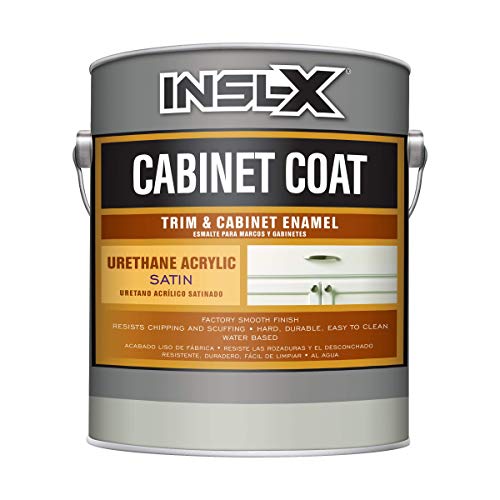 INSL-X CC550109A-01Best satin finish
What "No Sanding" Really Means
When people say they painted cabinets without sanding, they usually mean they skipped the long, dusty step of sanding every door down to bare wood. They did not skip cleaning. Kitchen cabinets collect cooking grease, hand oils and cleaning-product residue, and paint will not stick to any of that.
Sanding works by roughening a glossy surface so paint has something to grip. A liquid deglosser, sometimes called liquid sandpaper, does a similar job chemically. A bonding primer, or a cabinet paint that lists strong adhesion to hard-to-coat surfaces, does the rest.
Our own best paint for kitchen cabinets page recommends degreasing and scuff-sanding first. That is still the most forgiving route. Skipping the sander is a trade-off, and it works best when the cabinets are in good condition and you follow the other steps closely.
When Skipping Sanding Works
A no-sanding job has the best odds when the existing finish is sound. If the surface is smooth, firmly attached and only dull from age, a good bonding product has something solid to hold onto.
Look at your cabinets and check how many of these describe them:
- The finish is intact, with no peeling, flaking or bubbling.
- The doors are wood, laminate or metal with a plain, smooth surface.
- There are no deep scratches, gouges or raised grain you want to hide.
- The surface is clean after degreasing, and water beads on it rather than soaking in.
- You are painting a similar or lighter color, not covering a very dark stain with a pale paint.
When You Should Still Sand
Some cabinets need at least light sanding. If the old finish is chipped or peeling, paint over it will fail in the same spots. Scrape and sand those areas until the edges feel smooth, then continue.
Sanding also helps when you want a flat, furniture-grade surface. Paint highlights flaws rather than hiding them, so dents, rough patches and drips from earlier coats will show through. A light scuff with fine sandpaper between coats takes only a few minutes per door and smooths the result.
Finally, if the cabinets have a heavy, glossy factory topcoat that resists the deglosser, a quick scuff sand gives the primer a better grip. Skipping it on that kind of surface is the most common reason for chipping later.
How to Paint Cabinets Without Sanding
The order of steps matters more than any one product. Follow this sequence and give each stage its full dry time.
- Remove doors, drawer fronts and hardware. Label each piece and its position so everything goes back where it came from.
- Degrease every surface with a strong kitchen degreaser, then rinse with clean water and let it dry. Pay extra attention near the stove and around handles.
- Apply a liquid deglosser with a rag, following the label, then wipe off any residue.
- Fill holes and dings with wood filler. This is the one spot where a little sanding is hard to avoid.
- Prime with a bonding primer, unless your paint is made to go on without one.
- Apply thin coats of cabinet paint, letting each coat dry fully before recoating.
- Let the paint cure before heavy use, and handle the doors gently for several days.
Choosing a Paint That Bonds Well
The paint you pick decides how much prep you can safely skip. Urethane-modified acrylic cabinet paints flow like oil-based paint, level out so brush marks fade, and clean up with water. Several listed products also state that they bond without a separate primer.
Even so, a "no primer" claim on the label is not a reason to skip cleaning. Treat it as a bonus on a properly prepped surface. Here is how the products on our comparison page line up, using published specifications.
| Product | Sheen | Primer needed per listing | Coverage or timing |
|---|---|---|---|
| INSL-X Cabinet Coat gallon, semi-gloss | Semi-gloss | No primer | 350 to 450 sq ft per gallon |
| INSL-X Cabinet Coat gallon, satin | Satin | No primer | 350 to 450 sq ft per gallon |
| INSL-X Cabinet Coat quart | Semi-gloss | No primer | 87 to 112 sq ft per quart |
| Giani Nuvo Cabinet Makeover Kit | Satin | No stripping or priming, minimal prep | 100 sq ft, tools included |
| Rust-Oleum Cabinet Transformations | Semi-gloss | Not specified | Touch dry in 30 minutes, recoat in 2 hours, normal use after 24 hours |
Painting Cabinets Without Removing Them
You can paint cabinets without taking the doors off, and some people choose to. It saves time on reassembly, and a self-leveling paint helps hide brush marks on a vertical surface. The downside is drips and sags, which are harder to control on hanging doors, and you cannot reach hinges, edges and the inside lip as cleanly.
If you do paint in place, remove at least the hardware and tape off hinges and walls. Use light coats and check for runs a few minutes after painting each door. Drawer fronts are easy to pull out and paint flat.
Whichever way you go, follow the temperature range on your paint label. The INSL-X listings, for example, say to apply when air, product and surface temperatures are above 50 °F and below 90 °F. When you reinstall, new pulls are a quick way to finish the look. Our best hardware for white kitchen cabinets page compares options if you are painting white.
Safety Notes
Degreasers, deglossers and primers can irritate skin and lungs. Wear chemical-resistant gloves and eye protection, and keep the room well ventilated. Never mix cleaning products, since some combinations release harmful fumes.
If your home was built before 1978, the old paint could contain lead. Test it before you scrape or sand anything, and follow lead-safe practices if the result is positive.
Use a stable step stool for upper cabinets, and wear a dust mask or respirator rated for the product if you do any sanding or spraying. Dispose of oily rags according to the label, because some can overheat as they dry.
Frequently asked questions
Do I need primer if I skip sanding?
Usually yes, unless your paint states that it bonds without one. Some cabinet paints list no-primer adhesion, but a bonding primer adds a safety margin on glossy or laminate surfaces. Always follow the instructions on the product label.
How long should I wait before using the cabinets?
Wait until the paint is dry to the touch, then give it time to cure before heavy use. One listed paint says normal use after 24 hours. Treat the doors gently for several days, since cure times run longer than dry times.
Will painted cabinets chip without sanding?
They can if the prep was rushed. Chipping usually traces back to leftover grease, a skipped deglosser or paint applied too soon. Thorough cleaning and thin, fully dried coats lower the risk significantly.
Can I paint laminate cabinets without sanding?
Often yes, with a bonding primer or a paint made for laminate. Clean and deglossing steps are essential on slick laminate. Check that the laminate is not peeling at the edges before you start.