Can You Hammer a Nail into a Stud, Brick, or Drywall?
Yes for studs and drywall, and only with the right nail and tool for brick. A stud is solid wood and takes a nail easily, drywall alone holds only light items, and brick needs a masonry nail or a drilled anchor. Match the nail to the surface and the hammer to the job.
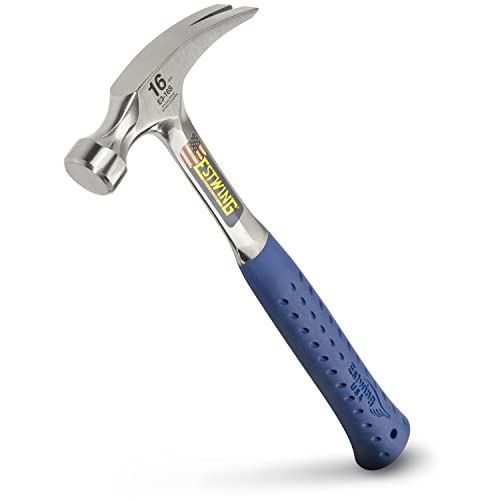 Estwing E3-16SBest overall
 Jorgensen 60102Magnetic starter, 20 oz head
 Estwing E3-16CCurved claw for prying
The short version, surface by surface
Each material grips a nail in a different way, so the answer changes with the wall. Wood fibers squeeze a nail tightly. Drywall is a soft gypsum core with paper on each side, so it crumbles around a nail. Brick is hard and brittle, so an ordinary nail bends or the brick cracks.
The table below sums up what works and what to watch for.
| Surface | Can you hammer a nail in? | Best approach | Main risk |
|---|---|---|---|
| Wood stud | Yes | Common or finish nail driven straight into the center of the stud | Nail splits the wood near an edge |
| Drywall only | Yes, for very light items | Small nail or picture hanger at a slight downward angle | Nail pulls out or crumbles the core |
| Brick | Sometimes | Hardened masonry nail into the mortar joint, or drill and use an anchor | Cracked brick, bent nail, flying chips |
Hammering a nail into a stud
A stud is the best place to nail. The nail bites into solid wood, so it holds far more than it would in drywall alone. Use a stud finder, or knock lightly and listen for a solid sound instead of a hollow one. Studs are commonly spaced at regular intervals, so once you find one you can usually find the next by measuring along the wall.
Aim for the center of the stud. Nails near the edge can split the wood or miss and poke out the side. Start the nail with a few light taps, then swing from the elbow with your eye on the nail head. A hammer with a magnetic nail starter can help you set the nail one-handed, which keeps your fingers clear.
- Find the stud and mark its center with a pencil.
- Hold the nail near the head and tap it in about half an inch.
- Let go and drive it with firm, straight strikes.
- Stop when the head sits flush, so you do not dent the wall.
Hammering a nail into drywall
You can nail into drywall, but it holds little. A nail alone grips weak gypsum, so it suits only light, flat items such as a small frame. For anything heavier, find a stud or use a wall anchor made for hollow walls.
Tap gently. A hard swing can punch through the paper face and leave a crater. Start with a light touch, and use a hammer with a smooth face if you want fewer marks on the surface. Our best hammer page notes that a smooth face leaves fewer marks, while a milled face grips the nail head better.
- Check for wires and pipes first. Electrical cable and plumbing often run inside walls, usually near outlets, switches and along studs.
- Drive the nail at a slight downward angle for a little extra hold.
- Pull out a bad nail with the claw and patch the small hole rather than nailing next to it.
Hammering a nail into brick
Brick is the hardest of the three. A regular steel nail will bend, and a hard swing can crack the brick face. The mortar joint between bricks is softer, so it is the better target for a light nail or a masonry nail. Even then, the hold is modest.
Use a hardened masonry nail, which is made to resist bending. Wear safety glasses, because chips of brick and bits of nail can fly off. For anything heavy, drill a pilot hole with a masonry bit and use a plug or anchor instead. Brick that is old, crumbly or part of a historic wall is a case for drilling carefully or asking a pro.
A straight, accurate blow matters more here. A heavier head adds driving power, and the head weights in our hammer comparison run from 16 oz to 24 oz. A 16 oz head suits general repairs, and heads of 20 oz and up add power but tire your arm sooner.
Choosing a hammer for these jobs
For light nailing into studs and drywall, a general-purpose 16 oz hammer is a sensible fit. The Estwing E3-16S, for example, lists a 16 oz head, a 13 in overall length, a steel handle and a molded shock reduction grip. For heavier driving, the Jorgensen 60102 lists a 20 oz head and a magnetic nail starter.
Grip matters if you hammer for long stretches. Estwing says its molded grip reduces impact vibration by 70%, which can lower hand fatigue over many strikes. Also consider the face. A milled face holds the nail head, and a smooth face leaves fewer marks.
Safety notes
Wear safety glasses every time you hammer, and more so on brick, where chips can fly. Keep your free hand back from the nail head and use a nail starter or hold the nail with pliers for short nails.
Before nailing into any wall, look for electrical cable and pipes. Do not nail near outlets or switches, and if you are unsure, use a detector or choose a different spot. Strike the nail squarely so the hammer face does not glance off.
Frequently asked questions
How long should a nail be to hold in a stud?
The nail should pass through the drywall and go well into the wood. As a general rule, aim for at least an inch of the nail inside the stud.
Why does my nail bend when I hit it?
Bending usually means the swing is off-center, the nail is too thin for the material, or the surface is too hard. Use a thicker nail, strike squarely, or switch to a masonry nail for brick.
Can I reuse a nail hole in drywall?
A used hole holds less than a fresh one. For a heavier item, move to a stud or fill the hole and use an anchor.
Do I need a special hammer for brick?
No special hammer is needed for a light masonry nail, but a hammer with a solid steel head and good grip helps. For heavier loads, drilling is the better method.