Cable Cutter vs Wire Cutter: Which Tool Do You Need?
Use a wire cutter, such as a diagonal cutter, for thin wire and small conductors. Use a cable cutter when the cable is thick, stranded or made of steel rope, because its shear or ratchet jaws cut cleanly instead of crushing the strands. Check the capacity listed on the tool against your material before you buy.
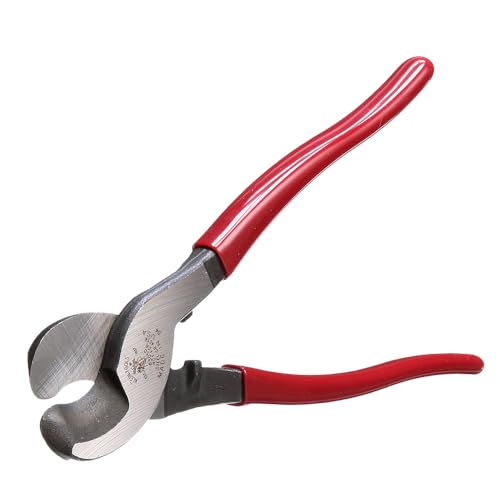 KLEIN TOOLS 63050Best overall
 Muzata MZZ1616Highest wire rope rating
 HKS Cable Cutter 36DLargest copper capacity
The short version
The two names get mixed up, but the tools are built for different loads. A wire cutter is a general-purpose hand tool for small wire. A cable cutter is a specialist tool for large or tough cable.
Here is the quick rule most people can follow:
- Small solid or stranded wire for electronics, fencing ties or household wiring: wire cutter or diagonal cutter.
- Thick copper or aluminum power cable: cable cutter with a copper size rating, often a ratchet or shear design.
- Steel wire rope, aircraft cable or bike brake cable: a cable cutter that says it cuts steel wire and lists a rope diameter.
- Hard rods, chain, bolts or padlock shackles: a bolt cutter, not a cable cutter.
How a cable cutter differs from a wire cutter
A wire cutter, including the common diagonal cutter, uses two wedge-shaped edges that meet and bite through a small wire. That works well on thin conductors. On a thick cable the same bite tends to squash the strands and leave a ragged end, and you can damage the jaws by forcing it.
A cable cutter is built to handle bulk. Shear-type jaws pass by each other like scissors, so the cable is sliced rather than pinched. Ratchet designs split the cut into small steps, which lets you cut large conductors with modest hand force. The result is a cleaner end that is easier to terminate or crimp.
Cable cutters are also usually specific about the material. Some are made for soft copper and aluminum only, and others are made for steel rope. That is why the capacity listing matters more than the name on the tool.
Cable cutter vs bolt cutter, snips and pliers
A bolt cutter has long handles and short, heavy jaws made to cut solid steel such as bolts, chain and rods. It is more than you need for most cable, and the thick jaws can flatten stranded cable before they cut it. A cable cutter is the better pick for rope and conductors.
Tin snips cut sheet metal, not wire. Their blades are made for slicing flat stock, so they do not suit round cable. Wire cutters versus pliers is a simpler split: cutting pliers and diagonal cutters cut, while standard pliers grip, bend and twist. Many combination pliers include a small cutting edge, which is fine for light wire but not for cable.
The table below sums up the differences.
| Tool | Best for | Poor fit for |
|---|---|---|
| Wire cutter or diagonal cutter | Thin wire and small conductors | Thick or stranded cable |
| Cutting pliers | Light wire with some gripping | Large cable, steel rope |
| Cable cutter (shear or ratchet) | Thick copper or aluminum cable, or steel rope if rated | Solid rods, bolts, chain |
| Bolt cutter | Bolts, chain, rods, padlock shackles | Clean cuts on stranded cable |
| Tin snips | Sheet metal | Round wire or cable |
How to pick the right cable cutter
Cable cutters are not interchangeable, so start with the material and work from there. Our best cable cutter page lines up five models on one spec sheet, and it shows how different the capacity claims can be.
- Identify your cable. Is it steel wire rope, hard steel wire, or copper or aluminum conductor?
- Find the stated capacity. For rope, look for a maximum diameter. For power cable, look for a copper size such as mm² or an AWG rating.
- Confirm the material claim. A cutter that says it cuts steel wire is the one to use on rope. One that says it does not is for soft conductors only.
- Think about leverage. Short handles are easy to carry, while longer handles or a ratchet help on big cable.
- Check for a safety lock, which keeps the jaws closed in storage.
What published specs tell you
Published numbers show how specialized these tools are. The HKS Cable Cutter 36D lists 300 mm² (AWG 600MCM) for copper and aluminum, and it has a ratchet drive and a 1000 volt insulated handle. Its listing also says it should not cut steel, steel wire or iron wire. It is 10.74 inches long and weighs 1.68 pounds.
The Muzata MZZ1616 goes the other way. It lists a 4 mm maximum wire rope diameter, cuts steel wire, and is 3.54 inches long at 0.66 pounds. The WORKPRO W015066AE and GRENPRO 7.5-inch cutter each list 3.97 mm for rope and cover hard steel wire, stainless rope and aircraft cable. Only the GRENPRO lists blade hardness, at 63-65 HRC.
The Klein Tools 63050 is a compact shear-type cutter at 3.8 inches and 0.9 pounds. Its listing names 4/0 aluminum, 2/0 soft copper and 100-pair 24 AWG communications cable, and it makes no steel wire claim. None of these five lists a warranty length, so confirm coverage with the seller. If you want the full side-by-side, see our cable cutter comparison.
Safety notes
Cutting tools are simple, but the jobs around them are not. A few habits prevent most problems.
Treat all electrical cable as live until you have shut off power and confirmed it is dead with a proper tester. An insulated handle, such as the 1000 volt rating on the HKS, is a backup layer, and its own listing says not to cut live cables. Wear safety glasses, because cut ends of steel rope can spring or throw sharp fragments. Gloves help with frayed strands.
Do not use a cutter beyond its rated capacity or on a material it excludes. Forcing a cut can chip or spread the jaws, and the tool can slip. Use the safety lock when you store the cutter so the jaws cannot open or close on your hand in a bag. For rope under tension, such as railing or fencing cable, release the tension before you cut. If you work on a ladder or at height, secure your footing first.
Frequently asked questions
Can I use diagonal cutters on a thick cable?
It is not a good idea. Diagonal cutters pinch small wire, and on thick stranded cable they can crush the strands and damage the jaws. A cable cutter rated for that size gives a cleaner cut with less force.
Is a ratchet cable cutter better than a shear cutter?
It depends on the cable. A ratchet design helps most on large copper or aluminum conductors because it cuts in small steps. A shear cutter is lighter and easier to carry, which suits smaller cable and tight spaces.
Why does the cut end of a cable look frayed?
Fraying usually means the jaws are crushing rather than slicing, or the cutter is not suited to the material. Use a cutter rated for your cable type and diameter, and make the cut in one steady motion.
Do I need a cutter with a safety lock?
It is a useful feature. A lock keeps the jaws closed in a tool bag or drawer, which protects your hands and the blades. The Muzata, WORKPRO and GRENPRO listings mention one, while the Klein and HKS listings do not.