Are Crowbars Good for Self-Defense?
Not really. A crowbar is a prying tool, and its length, weight and shape work against you in a sudden, close-range threat. It can also create legal trouble that other defensive choices avoid. If personal safety is your goal, you are better served by awareness, an escape plan, and tools made for the purpose.
 Titan 11509Lightest in the lineup
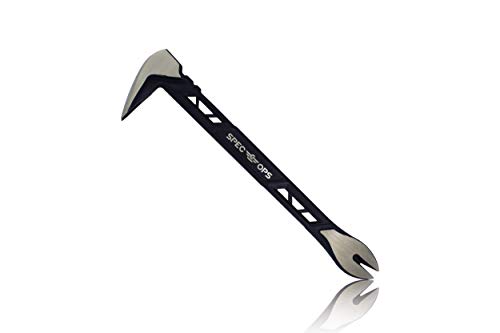 Spec Ops SPEC-D10CLAWBest for pulling nails
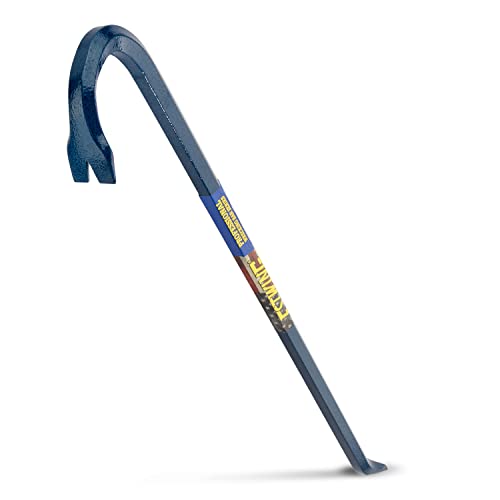 Estwing EWB-30Classic forged gooseneck
Why a crowbar is a poor defensive tool
A crowbar is designed to apply leverage to a nail, board or stuck panel. That job rewards length and mass, and it happens slowly, with both hands, while you set your feet. A real threat gives you none of that. It is usually sudden, close, and over in seconds.
Most crowbars are also awkward to keep within reach. You will not carry a 24 in or 30 in steel bar around the house, so it ends up in a garage or truck. In an emergency, the tool you can reach in seconds matters far more than the tool that looks strongest on paper.
There is also the control problem. A heavy bar swung and missed leaves you off balance. A bar taken away from you becomes a danger to you. These are the main reasons most self-defense instructors point people toward avoidance and escape first.
What crowbars are actually built for
Our best crowbar page compares these tools on the things that matter for work: forged one-piece steel, length, weight and nail puller slots. None of those specs describe defensive performance, because the tools are not made or rated for it.
A forged one-piece bar has no joints to fail when you lean on it or strike a nail puller with a hammer. That is a durability feature for demolition and framing. It says nothing about how the bar behaves in a stressful encounter, and a sturdy tool is not the same as a safe or practical one.
What the size and weight specs show
The published specs make the tradeoff clear. Short bars are easy to hold but tiny. Long bars have more mass but are hard to control in a hallway, a car or a doorway.
Here is a sample of bars from our comparison data.
- The lightest bars are too small to be a meaningful barrier, and they are made for scraping and trim work.
- The mid-length bars are the easiest to handle, but they are still work tools with chisel ends and nail slots.
- The longest and heaviest bars are the hardest to control, especially in tight indoor spaces.
| Model | Length | Weight | Built for |
|---|---|---|---|
| Titan 11509 | 9.25 in | 0.1 lb | Scraping and light prying |
| Estwing PB-18 | 18 in | 1.5 lb | Nail pulling |
| Olympia Tools 87-731 | 18 in | 2 lb | General wrecking work |
| Estwing EWB-24PS | 24 in | 4.8 lb | Heavier prying |
| Spec Ops SPEC-D30PRY | 30 in | 6.4 lb | Demolition |
| Mayhew Dominator Pro | 58 in | 9.32 lb | Automotive and industrial prying |
Legal and practical risks
Using any object against another person can carry serious legal consequences. Self-defense laws vary by state and by situation, and they usually require that your response match the threat. A tool that can cause severe injury invites close scrutiny afterward, even when you were the one in danger.
Keeping a crowbar in a vehicle or by the bed can also look different to a prosecutor or a jury than a tool kept in a toolbox. If you are thinking about this seriously, talk to a local attorney or a certified self-defense instructor about the rules where you live. This guide is general information, not legal advice.
There is a household safety angle too. A heavy steel bar left near a door can be picked up by the wrong person, including a child or someone who has broken in.
Safer ways to prepare
The most reliable self-defense plan rarely involves hitting anything. It starts with making yourself a harder target and giving yourself more time to get away or get help.
Consider these steps first:
- Lock doors and windows, and add lighting and a doorbell camera or similar deterrent where it makes sense.
- Plan an exit route from each room and agree on a meeting spot with the people you live with.
- Keep a charged phone within reach so you can call 911 quickly.
- Take an in-person self-defense class, where an instructor can teach awareness and escape skills.
- Look into legal, purpose-made options in your state, such as pepper spray, and learn the local rules before buying.
If you own a crowbar anyway
Plenty of people keep a crowbar for projects, and that is a good reason to own one. If you are shopping for that purpose, choose by the job: a short, light bar for trim and nails, and a longer forged bar for heavy prying. Our crowbar comparison lays out length, weight, material and features side by side.
Wear safety glasses whenever you pry, pull nails or strike a bar, because chips of steel, nails and wood can fly. Wear gloves for grip, and keep your body out of the line the bar will travel if it slips. Prying at height calls for stable footing, so do not pry from a ladder you cannot brace. Store the bar somewhere that is not easy for children to reach.
Frequently asked questions
Is it legal to keep a crowbar in my car?
In most places, owning a crowbar is legal because it is a common tool. Rules differ by state and city, and context can matter if you are stopped. Check your local laws if you are unsure.
Would a shorter crowbar work better indoors?
A shorter bar is easier to handle in tight spaces, but it is still a prying tool and not a defensive one. Neither size changes the legal and safety concerns above.
What should I do first if someone breaks in?
Get to a safe room if you can, lock the door and call 911. Stay on the line and follow the dispatcher's instructions. Avoiding contact is usually the safest choice.
Are there tools designed for personal protection?
Yes, such as pepper spray and personal alarms, though legality varies by location. A local self-defense instructor can explain which options are allowed and how to use them responsibly.