Are Cordless Caulking Guns Worth It? Electric vs Manual
A cordless caulking gun is worth it if you caulk often, work on long runs, or have weak hands or wrists. For a single tub surround or a few windows, a good manual gun does the job. Either way, the gun matters less than your prep, your bead technique, and the right sealant.
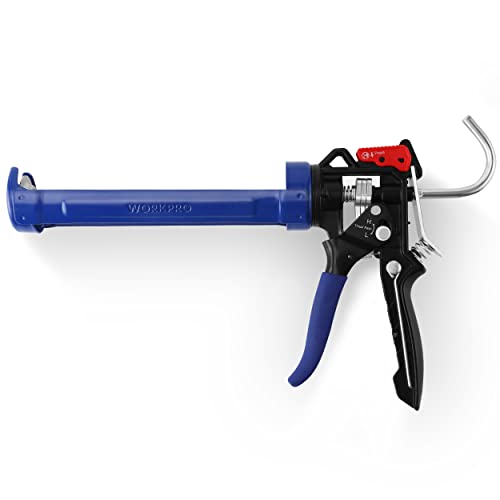 WORKPRO W024006Best overall
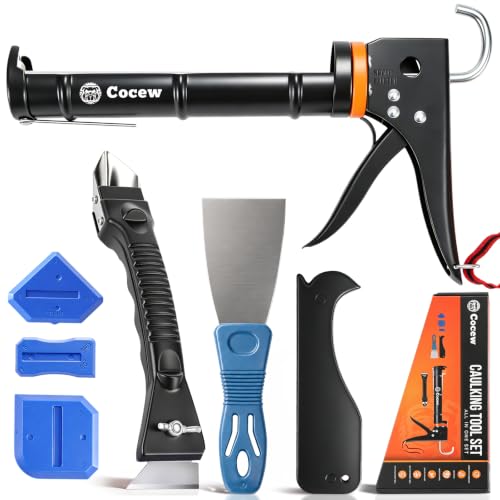 Cocew scraper varKit with scraper included
 Newborn 250Steel frame, 18:1 thrust
What a cordless caulk gun does differently
A cordless caulk gun uses a battery and a small motor to push the plunger. You pull a trigger and the tool feeds sealant at a steady pace, so your hand is not squeezing the whole time.
Most cordless models also pull the plunger back a little when you release the trigger. That relieves pressure in the tube and helps stop sealant from oozing out of the nozzle between passes. Many let you change the feed speed too, which helps when you switch between thin and thick materials.
A manual gun does the same job with your grip strength. A trigger and a rod push the plunger forward a small step with each squeeze. The output depends on how hard and how evenly you squeeze, which is why hand fatigue and uneven beads are the usual complaints.
When a cordless gun is worth it
The case for a battery tool gets stronger as the job gets bigger or harder on your hands. Think of it as paying for comfort and consistency over many tubes.
A cordless gun tends to make sense in these situations:
- You caulk often, such as renovation work, repairs for rentals, or regular maintenance on a large home.
- The job has long, continuous joints, like siding, baseboards, a full set of windows, or a whole bathroom.
- You use thick materials such as construction adhesive or polyurethane, which take a lot of squeezing.
- Arthritis, a wrist injury, or small hands make a long squeeze session painful.
- You want a steady, even bead and are willing to learn the speed setting.
When a manual gun is enough
If you caulk a few times a year, a manual gun is simpler. It has no battery to charge, no motor to maintain, and nothing to go flat in the drawer between projects. It is also lighter in most cases, which helps on ladders.
Many small jobs finish in one or two tubes. Re-sealing a sink, a tub edge, or one window is well within what a decent manual gun handles, especially one with a smooth rod and drip control.
One honest note about our own data: every gun on our best cordless caulk gun page is a manual model, and none runs on a battery. We list them because many people searching for cordless guns find a good manual gun meets their needs. If battery power is a firm requirement, you will need to look in a separate battery-powered category.
Manual vs cordless at a glance
This table summarizes the general trade-offs. It describes how the two types work, not any one product.
| Factor | Manual gun | Cordless gun |
|---|---|---|
| Power source | Hand squeeze | Rechargeable battery |
| Hand fatigue | Higher on long jobs | Lower |
| Bead consistency | Depends on your squeeze | Steadier with a set speed |
| Drip control | Built-in switch or release lever on some models | Often auto-retracts the plunger |
| Weight | Often lighter | Often heavier because of the motor and battery |
| Upkeep | Wipe clean and store | Charge, store the battery, keep the motor clean |
| Best for | Occasional and small jobs | Frequent, long, or thick-material jobs |
What to check on a manual gun
If you decide a manual gun is enough, a few published specs predict how it will feel in your hand. Thrust ratio shows how much force the trigger turns into pushing power. Higher ratios move thick material with less effort. On our comparison page, the Red Devil 3989 lists a 26:1 ratio and 950 pounds of force, while the lowest ratio on the page is 8:1, which suits thin sealants better than thick adhesives.
A switchable ratio is useful if you use more than one material. The WORKPRO W024006 lists 18:1 for adhesives and 9:1 for acrylics, and it is also the lightest listed gun at 0.625 lb. Weight matters most when you work overhead or along a ceiling line.
Also look at the rod and the drip control. A smooth rod needs less effort and is quieter than a ratchet rod. A drip control switch or a release that backs off pressure keeps beads clean between passes. A rotating barrel helps you hold bead direction around corners. For a side-by-side look, see our caulk gun comparison.
How to decide in three steps
Use this quick check before you buy anything:
- Count your jobs. If you expect more than a handful of tubes a year, lean toward cordless.
- Check your hands. If squeezing a trigger for ten minutes hurts, battery power is a real comfort upgrade.
- Match the gun to the material. Thick adhesive needs a high thrust ratio or a motor. Thin silicone and acrylic are fine with a lower ratio and good drip control.
Safety and technique tips
Wear safety glasses. Sealant tubes can burst or squirt when you puncture the seal or release pressure, and old caulk chips fly when you scrape it out.
Work in a ventilated space. Some silicones and adhesives give off strong fumes as they cure, so follow the label. Wear gloves if the product says it can irritate skin.
If you use a ladder, keep both feet on the rungs and hang the gun on a hook if it has one, rather than reaching with one hand and balancing the tool with the other. With a cordless gun, take the battery out before you clear a clogged nozzle or change a tube, and never charge a battery on a surface that is wet or near flammable material.
For the best bead, cut the nozzle small, clean and dry the joint first, and keep a steady pace. Release pressure before you lift the nozzle away. A smooth finish comes from a clean joint and a consistent speed more than from the tool itself.
Frequently asked questions
Do cordless caulk guns stop dripping?
Many auto-retract the plunger when you release the trigger, which relieves pressure and cuts down on ooze. It will not fix a nozzle cut too wide or a tube that is under pressure from the last pass.
Can a manual gun handle thick adhesive?
Yes, if it has a high thrust ratio. Guns listing 18:1 or higher are better suited to thick material than low-ratio guns, and a smooth rod reduces the effort.
Does a cordless gun make a better bead?
It can make a steadier one, because the feed rate stays constant. A good bead still depends on a clean joint, a properly cut nozzle, and an even pace.
Do cordless guns work with any standard tube?
Many are built for standard cartridges, but sizes vary. Check the cartridge size listed for the tool, since some guns take larger tubes than the common 10 oz size.