Air Compressor for a Home Garage: Electric vs Gas Power
For almost every home garage, an electric air compressor is the better choice. It runs without exhaust, is quieter, needs less upkeep, and plugs into an outlet you already have. A gas compressor only makes sense if you regularly work far from power, such as on a job site or a remote property, and even then it should stay outdoors.
 Klutch 203001005001Best overall
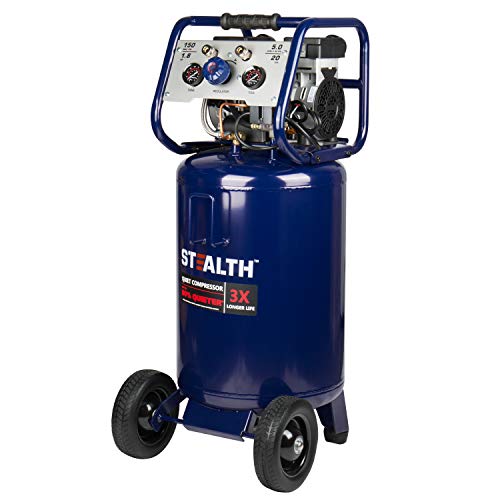 Stealth SAQ-12018
 ECOMAX 0210673ACompact pancake with hose
Electric vs gas at a glance
The two types do the same job: an engine or motor drives a pump, the pump fills a tank, and the tank feeds your air tools. The difference is what turns the pump, and that changes where you can safely use the machine.
Here is how they compare for typical home use.
| Factor | Electric | Gas |
|---|---|---|
| Fumes | None at the machine | Exhaust includes carbon monoxide |
| Where it can run | Garage, basement, workshop | Outdoors only, with open air around it |
| Noise | Loud, but usually lower than an engine | Typically louder, with engine and pump noise |
| Upkeep | Oil changes on some models, drain the tank | Engine oil, fuel, spark plug, air filter |
| Power source | Wall outlet or dedicated circuit | Gasoline, no outlet needed |
| Portability | Limited by cord length and outlet access | Can go anywhere you can carry fuel |
| Starting | Switch on | Pull start or electric start, plus fuel handling |
Why electric suits a garage
A garage is an enclosed space with a car, tools, and often stored fuel and chemicals. Electric compressors fit that setting because they make no exhaust. You can run one with the door closed in cold weather, and you do not have to think about fumes building up.
Electric models are also simpler to live with. You flip a switch, the motor builds pressure, and it shuts off when the tank is full. There is no fuel to store, no engine to warm up, and no carburetor to clean after a season of sitting.
Many electric models also come in a range of tank sizes, from small pancake units to taller stationary tanks. That makes it easier to match one to the space you have. If you want to see specific models side by side, our best air compressor for home garage page compares published specifications.
When a gas compressor makes sense
Gas compressors are built for places without electricity. Think of a farm field, a remote cabin site, or a work truck that moves between locations. The engine gives you freedom from outlets and extension cords.
The tradeoff is that you take on engine care and fuel handling. You also need to keep the machine outside, well away from open doors, windows and vents.
For a home garage, a gas unit usually adds work without adding much. If you want to fill tires or run a nailer in the driveway only now and then, an electric unit with a longer hose usually does the job more simply.
Match the compressor to your tools
Power type matters less than whether the compressor can keep up with what you plan to run. Three specs on the product label tell you most of what you need.
Compare these numbers against the requirements printed on your tools, not against each other in the abstract.
- CFM at a given PSI: this is airflow. Each air tool lists how much it needs, usually at 90 PSI. The compressor should meet or exceed that number.
- PSI: this is maximum pressure. Most common garage tools work at around 90 PSI, but check each tool's label.
- Tank size: a larger tank stores more air, so the motor cycles less often. This helps with tools that use air in bursts, like impact wrenches and sanders.
- Duty cycle and pump type: oil-lubricated pumps and heavier-duty designs are usually made for longer run times.
Tool demand shapes the choice
Light jobs such as inflating tires, using a brad nailer, or blowing off dust need little airflow. Almost any small electric compressor can handle them.
Continuous-use tools are different. Sanders, die grinders, paint sprayers and some impact tools consume air steadily. They call for higher airflow and a bigger tank, and sometimes a two-stage pump.
If you do serious vehicle work, our best air compressor for automotive shop page shows models built for heavier demand. If your projects are more general, such as woodworking, cleanup and tire care, the best air compressor for home shop page may fit better.
Electrical setup and safety
Electric compressors draw a lot of current when the motor starts. Smaller units usually run on a standard 120-volt outlet, while larger ones may need a 240-volt circuit. Check the nameplate and manual before you buy, and have a licensed electrician add a circuit if your garage does not have a suitable one.
Avoid long, thin extension cords. They can overheat and starve the motor of power. If you must use one, choose a heavy-gauge cord rated for the compressor's amperage and keep it as short as possible.
Follow these safety habits with either type:
- Wear safety glasses or goggles. Air tools can throw debris, and a loose fitting can whip.
- Wear hearing protection. Compressors and air tools are loud in a closed garage.
- Never run a gas compressor indoors, in an attached garage, or near open windows or vents. Carbon monoxide can build up quickly and you cannot smell it.
- Keep gasoline in approved containers away from ignition sources, and let the engine cool before refueling.
- Drain moisture from the tank after use, and do not exceed the pressure rating on tools, hoses or tanks.
- Release the pressure before changing fittings or servicing the unit, and unplug electric models first.
How to decide in five steps
Work through this list and the right type usually becomes clear.
- Decide where you will use it. If the answer is inside the garage, choose electric.
- List the air tools you own or plan to buy, and note the CFM and PSI each one needs.
- Pick a tank size that matches how often you will run those tools and for how long.
- Confirm your outlet or circuit can handle the compressor's electrical needs.
- Check hose and connector sizes so everything works together. Our best air compressor fittings page can help you sort out couplers and plugs.
The bottom line
For a home garage, electric is the practical default: no exhaust, simpler upkeep, and easy use in an enclosed space. Gas belongs outdoors and far from power, where its portability is worth the extra care.
Pick the airflow and tank size your tools need, check your electrical setup, and wear eye and ear protection every time you use it.
Frequently asked questions
Can I use a gas air compressor with the garage door open?
It is not recommended. Exhaust can still drift into the garage and into attached living spaces. Run gas units outdoors with plenty of open air around them.
Is an electric compressor quiet enough for a garage?
Electric models are generally quieter than gas engines, but they are still loud. Hearing protection is a good idea, and some models are built with lower noise in mind, so check the published decibel rating.
Do I need a 240-volt outlet for a garage compressor?
Not always. Smaller compressors usually run on a standard 120-volt outlet. Larger, higher-output models may need 240 volts, so read the nameplate and ask an electrician if unsure.
Can a battery charger and air compressor combo replace a full compressor?
Combo units are handy for tire inflation and emergencies, but they are not built to run air tools. For tool use, a dedicated compressor with enough CFM is the better fit.