#1
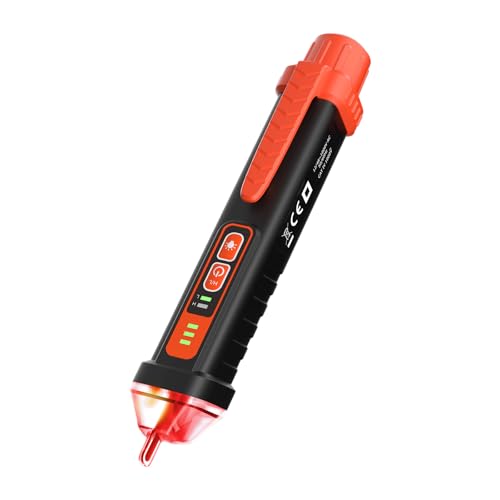
AstroAI VTS1000HAstroAI VTS1000H Voltage Tester with Screwdriver
Dual range tester with a built-in screwdriver and display.
- Min detection voltage
- 12 V
- Safety rating
- CAT III 1000V / CAT IV 600V
- Signal strength display
- Yes
A non-contact voltage tester tells you whether a wire, outlet or switch is live before you touch it, simply by holding the tip near it. It is the first tool to reach for before changing a light fixture or outlet, and electricians carry one every day. Look for a dual sensitivity range so you can find both standard and low-voltage circuits, a high CAT safety rating, clear light and sound alerts, and a self-test or visible on indicator so you know the tester is working. We put 16 voltage testers on one spec sheet so you can compare them side by side.
Quick answer
Ranked from 16 voltage testers that met our standard, compared on CAT safety rating, minimum detection voltage, and dual-range (contact and non-contact) capability.
As an Amazon Associate I earn from qualifying purchases. Links to retailers on this site are affiliate links; we may earn a commission at no extra cost to you.
Dual range tester with a built-in screwdriver and display.

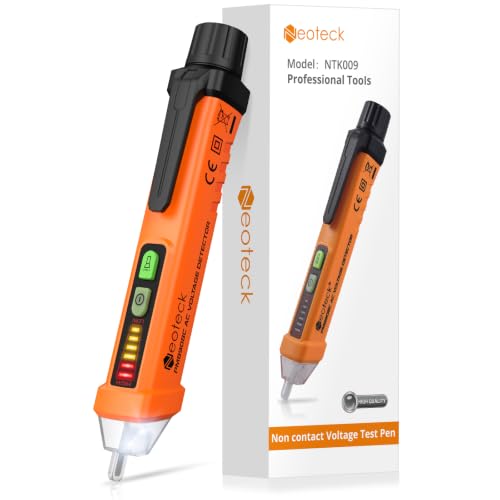
Klein NCVT3P with CAT IV 1000V and a flashlight.

KAIWEETS HT100s with a 3-year warranty.
| Spec | ||||||||||
|---|---|---|---|---|---|---|---|---|---|---|
| Best Scoreout of 100 | 85 | 83 | 78 | 71 | 75 | 69 | 66 | 66 | 63 | 59 |
| Min detection voltageV | 12 V (best in row) | 12 V (best in row) | 12 V (best in row) | 90 V | 12 V (best in row) | 12 V (best in row) | 12 V (best in row) | 12 V (best in row) | 12 V (best in row) | 90 V |
| Safety rating | CAT III 1000V / CAT IV 600V | CAT IV 1000V (best in row) | CAT III 1000V / CAT IV 600V | CAT IV 1000V (best in row) | CAT III 1000V / CAT IV 600V | — | None listed | — | CAT III 600V | CAT IV 1000V (best in row) |
| Dual sensitivity range | Yes | Yes | Yes | Yes | Yes | Yes | — | Yes | — | — |
| Signal strength display | Yes | — | Yes | — | Yes | Yes | Yes | — | — | — |
| Audible alert | Yes | Yes | Yes | Yes | Yes | Yes | Yes | Yes | Yes | — |
| Built-in flashlight | Yes | Yes | Yes | — | Yes | Yes | — | Yes | Yes | — |
| Self-test indicator | — | Yes | — | Yes | — | — | — | — | — | Yes |
| Auto power-off | Yes | Yes | Yes | — | Yes | Yes | — | — | — | — |
| Drop protectionft | — | — | — | — | — | — | — | — | — | — |
| Weightoz | 3.0 oz | 1.6 oz | 2.8 oz | 2.1 oz | 1.6 oz | — | 1.6 oz | 1.8 oz | 2.3 oz | 0.3 oz (best in row) |
| Lengthin | 7.0 in | 1.0 in (best in row) | 5.9 in | 10.2 in | 6.0 in | — | 5.7 in | — | 6.3 in | 10.2 in |
| Warrantyyr | — | — | 3 years (best in row) | 2 years | — | — | — | 3 years (best in row) | — | 2 years |
We reviewed 22 voltage testers and kept only the 16 that pass every check below. Those are ranked by a Best Score built from spec fit for this job, sales rank.
These reviews are based on each tester's published specifications and listing information, in the order of our ranking.
AstroAI VTS1000H, a voltage tester with a screwdriver
The AstroAI VTS1000H leads our ranking. It is a non-contact voltage tester with a high-strength steel screwdriver built into the tail, so one tool lets you check that a circuit is dead and then remove the cover plate or terminal screw. That saves a trip back to the toolbox on every outlet and switch.
It has dual sensitivity: a high range of 12 to 1000V for low-voltage and hard-to-detect circuits, and a low range of 70 to 1000V that ignores weak stray signals when you just want to confirm a standard circuit. When it detects voltage, the tip glows red, the screen backlight turns red and an alarm sounds, with a signal display that shows strength as you move closer.
It carries a CAT III 1000V and CAT IV 600V rating, includes a flashlight for dark boxes and powers off automatically to save its batteries. It is the heaviest tester on this page, though still light enough for a shirt pocket. For homeowners and DIYers who want a safe, practical everyday tester, it is the best choice here.
VerdictThe best voltage tester on this page.
Klein Tools NCVT3P, a dual range pro tester
Second in our ranking, the Klein Tools NCVT3P comes from a brand electricians have trusted for generations. It detects voltage without contact across a 12 to 1000V range, or 70 to 1000V when you want to target standard voltage, and Klein notes it finds low voltage in security, entertainment, communications, environmental control and irrigation systems.
Its CAT IV 1000V rating is the highest safety rating among our top five, meaning it is designed for the most demanding environments. A bright LED glows green to show it is working, then flashes red and beeps when voltage is detected, so you always know the tester itself is on.
A built-in flashlight illuminates the work area and can be used on its own. It has a self-test, auto power-off and a slim pocket clip design. It has no numeric signal display. For electricians and serious DIYers who want a proven pro brand with top safety ratings, it is an excellent pick and a long-standing industry favorite.
VerdictThe best pro tester in our top five.
KAIWEETS HT100s with a 3-year warranty
The KAIWEETS HT100s ranks third. It is a non-contact tester with dual range detection of 12 to 1000V AC and 70 to 1000V AC. You press the S button to switch sensitivity, which helps when you want to trace low-voltage wiring or confirm a standard household circuit.
When it senses voltage, the tip turns red and it beeps, and the beeps get faster and the indicator rises as you get closer to the source, which helps you pinpoint the live conductor. A high voltage alert warns you of higher voltages, and a flashlight helps in dark panels and boxes.
It is IEC rated CAT III 1000V and CAT IV 600V, double insulated and meets CE requirements. It powers off automatically and carries a 3-year warranty, tied for the longest on this page. For homeowners who want a reliable, well-equipped tester with strong warranty cover, it is a great choice and a close rival to the leader.
VerdictA well-equipped tester with strong cover.
Fluke 1AC II VoltAlert for line voltage
Fourth in our ranking, the Fluke 1AC II VoltAlert comes from one of the best-known names in electrical test equipment. The tip glows red and a beeper sounds when it detects voltage, and its continuous self-test means you always know it is working, an important safety feature.
Its detection range is 90 to 1000V AC, or 200 to 1000V AC, which targets line voltage in homes and commercial buildings. It does not detect the low 12V range of the testers ranked above, so it will not find doorbell, thermostat or irrigation wiring.
It carries a CAT IV 1000V rating, has an audible or silent mode for quiet environments, and comes with a 2-year warranty. It has no flashlight. For electricians who want a trusted, rugged tester focused on standard line voltage, it is a classic, and its simplicity is a strength when you just need a fast yes or no.
VerdictA trusted classic for line voltage.
YOWEXA YW 322 pen for live and neutral identification
The YOWEXA YW 322 completes our top five. It is a non-contact pen with high sensitivity of about 12 to 1000V AC and low sensitivity of about 48 to 1000V AC, chosen before you start detecting.
Its standout use is identifying live and neutral wires. By comparing the signal strength near two wires or between socket holes, the stronger signal shows the live wire, which helps when wires are unlabelled. It beeps and lights 1 to 3 signal indicators by strength, with faster beeps and more lights as you get closer.
It is rated CAT III 1000V and CAT IV 600V, includes a flashlight and powers off automatically. It is one of the lighter testers here. Always confirm with a contact tester before working on a circuit. For DIYers who often need to tell live from neutral in older wiring, it is a handy pen.
VerdictA handy pen for tracing live wires.
Best among the reviewed tools
Dual range testers detect from 12V for low-voltage wiring and from about 70V for standard circuits. Some testers start at 90V.
CAT III and CAT IV ratings show protection against spikes. CAT IV 1000V is the highest rating here.
Bright lights and beeps make results clear. A self-test or green on light confirms the tester is working.
Flashlights, signal bars and a built-in screwdriver make daily work faster.
They are a quick, safe first check. Test the tester on a known live outlet first, and confirm with a contact tester before working.
Dual range testers detect down to 12V. Testers that start at 90V only find standard line voltage.
They can sometimes detect wires close behind drywall, but results are unreliable. Use a stud finder with wire detection for that.
Yes for electrical work. Higher CAT ratings mean better protection against voltage spikes.
Your own selection is kept in the link, so friends see the same side-by-side.