#1
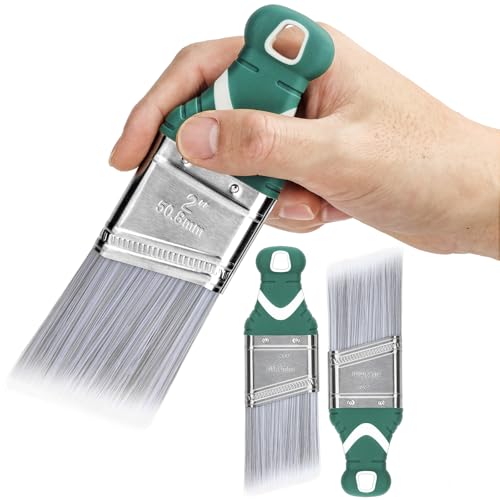
Wooster Wooster Brush - Q3211 - 2inWooster Shortcut Angle Sash 2in
Ranks first, with a 2 in nylon/polyester blend and a short rubber handle for tight spots.
- Brush width
- 2.0 in
- Filament material
- Nylon/polyester blend
- Price per brush
- —
Cutting in means painting a straight edge where a wall meets the ceiling, trim or another color, without tape. An angled sash brush makes that easier because the slanted tip lets you lay a fine line and steer into corners. The specs that matter most are brush width, filament material and stiffness, handle style and whether the filaments are built to resist shedding. Width should match your trim, and the filament should suit your paint. We put 10 products on one spec sheet so you can compare them line by line.
Quick answer
Ranked from 10 angled sash paint brushes that met our standard, compared on brush width, filament material, shed resistance.
As an Amazon Associate I earn from qualifying purchases. Links to retailers on this site are affiliate links; we may earn a commission at no extra cost to you.
Ranks first, with a 2 in nylon/polyester blend and a short rubber handle for tight spots.

At 3 in with soft polyester filaments, it covers long ceiling lines in fewer passes.

Twelve 2.5 in brushes with medium stiff synthetic filaments for whole-house cut-in jobs.
| Spec | ||||||||||
|---|---|---|---|---|---|---|---|---|---|---|
| Best Scoreout of 100 | 65 | 61 | 60 | 54 | 51 | 47 | 42 | 32 | 54 | 45 |
| Brush widthin | 2.0 in | 3.0 in | 2.5 in | 2.0 in | 2.0 in | 2.5 in | 1.5 in | 1.5 in | 2.5 in | 2.0 in |
| Filament material | Nylon/polyester blend (best in row) | Polyester | Synthetic (unspecified) | Synthetic (unspecified) | Synthetic (unspecified) | Polyester | Synthetic (unspecified) | Polyester | Nylon/polyester blend (best in row) | Nylon/polyester blend (best in row) |
| Paint compatibility | All paints and stains (best in row) | Latex and oil-based | All paints and stains (best in row) | All paints and stains (best in row) | All paints and stains (best in row) | Latex and oil-based | All paints and stains (best in row) | All paints and stains (best in row) | — | — |
| Bristle stiffness | — | Soft | Medium stiff | — | Medium stiff | — | Medium stiff | Firm | Stiff | Firm |
| Handle material | Rubber | Birchwood | Wood | Rubber | Wood | Wood | Wood | Hardwood | Alderwood | Sealed maple wood |
| Handle style | — | Angular | Comfort grip | Short | Comfort grip | Sash | Comfort grip | — | Fluted | Sash |
| Ferrule material | Brass-plated steel | Stainless steel (best in row) | — | Stainless steel (best in row) | — | Stainless steel (best in row) | — | Stainless steel (best in row) | Stainless steel (best in row) | — |
| Overall lengthin | — | — | — | 6.5 in (best in row) | — | — | — | — | — | 12.0 in |
| Weight per brushoz | 0.2 oz (best in row) | 5.6 oz | — | 2.5 oz | — | 5.6 oz | — | — | 3.2 oz | 3.2 oz |
| Brushes per pack | 1 | 1 | 12 (best in row) | 3 | 12 (best in row) | 1 | 12 (best in row) | 1 | 1 | 1 |
| Price per brushUSD | — | — | — | — | — | — | — | — | — | — |
| Hanging hole | — | — | — | Yes | — | — | — | — | — | — |
| Shed-resistant filaments | — | — | — | Yes | — | — | — | — | — | — |
We reviewed 26 angled sash paint brushes and kept only the 10 that pass every check below. Those are ranked by a Best Score built from spec fit for this job, sales rank.
The reviews below cover the top five brushes in our ranking. They are based on specifications and listing information.
Short handle, 2 in blend built for tight cut lines
The Wooster Shortcut leads our ranking, and its design explains why. The handle is a flexible rubber Shergrip that the listing says is only 2 in long. That puts your hand close to the bristles, which helps you steer the tip along a ceiling line or behind a toilet tank where a full-length handle would bump the wall.
The 2 in head uses a white nylon and gold polyester blend rated for all paints and stains. Nylon adds snap and polyester holds shape, so the mix works with latex and oil. The ferrule is brass-plated steel. Wooster does not publish bristle stiffness, so you can't compare firmness here against the brushes that list it.
Listed weight is 0.21 oz, the lowest among the models that publish a weight. The listing gives a head thickness of 1/2 in. It comes as a single brush, so there is no spare if you switch colors mid-job.
VerdictFor cutting in around cramped corners, cabinets and bathrooms, this short 2 in brush is the one to start with.
Widest head here, with soft filaments for smooth finishes
At 3 in, the Silver Tip is the widest brush on the page, and it ranks second overall. A wide angled head carries more paint per dip, so you can run longer strokes along a ceiling line before reloading. The tradeoff is control in narrow spots. On thin window muntins or small trim, a 3 in head can be more brush than the job needs.
Wooster uses 100% CT polyester rated soft, which the listing ties to smooth coverage and minimal brush marks. Soft filaments level paint well, which suits enamels and finish coats on trim. They flex more under pressure, though, so thick latex may feel less crisp at the edge than with a stiffer brush. It is rated for latex and oil-based paints.
The handle is angular birchwood and the ferrule is stainless steel, which resists rust after repeated washing. At 5.6 oz, it ties for the heaviest among the models that list a weight. That extra heft can tire your wrist over a long ceiling line.
VerdictPick it for long, straight ceiling and wall edges where a smooth finish matters more than squeezing into tight corners.
Twelve 2.5 in brushes for big multi-room cut-in jobs
This Pro Grade set ranks third and is one of three on the page that ship 12 brushes per pack, the most in the lineup. That count matters on a whole-house repaint. You can keep one brush per color, hand brushes to helpers, or toss a worn one without slowing the job.
The 2.5 in width sits between the 2 in trim brushes and the 3 in Wooster, so it handles both wall-to-ceiling lines and standard baseboards. Filaments are a medium stiff synthetic blend. Medium stiff bristles push thicker latex into a crisp edge without splaying, and the listing says the tips are thinned for precision.
Pro Grade does not name the synthetic filament or publish weight, length or ferrule material. Shed resistance is not listed either, so watch the first few strokes on a fresh brush. Handles are wood with a comfort grip, and the brushes are rated for all paints and stains.
VerdictA practical choice when you need many matching cut-in brushes for walls and trim across several rooms.
Shed-resistant 2 in brushes on a short rubber grip
Bristles that drop onto a fresh cut line are a common cutting-in headache. The PinStone is the only brush on this page whose listing marks its filaments as shed-resistant, described as shed-free. That makes it worth a look if loose hairs have ruined your edges before. It ranks fourth in our ranking.
Each brush is 2 in wide with a short rubber handle and an overall length of 6.5 in. A short grip keeps your hand near the tip for control around window frames, cabinets and baseboards. The ferrule is stainless steel, and each handle has a hanging hole for drying. The pack holds three brushes.
Listed weight is 2.47 oz per brush. The synthetic filament type is not named, and bristle stiffness is not published, so you can't tell how firm the tip feels. It is rated for all paints and stains, including latex, primers and enamel. Rinse and air dry for reuse, per the listing.
VerdictA good fit for DIY trim and touch-up work where stray bristles on the cut line are your main worry.
Same bulk Pro Grade build in a 2 in width
This 12-pack is the 2 in sibling of the third-ranked Pro Grade set, and it ranks fifth. The narrower head is the main difference. A 2 in brush is a common size for door casings, baseboards and window trim, where a wider head would slop paint onto the adjoining surface.
Filaments are medium stiff synthetic, rated for all paints and stains. That stiffness gives the tip enough backbone to hold a straight line against a ceiling without fanning out. The listing says the thick filament blend holds more paint, which means fewer trips to the can, and that the thinner tips add precision.
Twelve brushes per pack ties for the most on the page. Handles are wood with a comfort grip. Weight, length, ferrule material and shed resistance are not listed, so you are buying on the general description more than hard specs. Each brush can be washed and reused, per the listing.
VerdictChoose this pack if your cutting in is mostly standard trim and you want spares on hand for every room.
Best among the reviewed tools
A 2 in angled brush suits most door casings, baseboards and window trim. A 2.5 in or 3 in head covers long wall-to-ceiling lines faster. A 1.5 in brush fits narrow muntins and small touch-ups. If you only buy one, 2 in is a flexible size for cutting in.
Polyester and nylon/polyester blends work with latex and oil-based paints. Nylon adds snap, while polyester holds its shape in water-based paint. None of the brushes here use natural bristle, which is fine for latex. Check the paint compatibility line before you buy.
Firmer filaments push paint into a sharp line and resist splaying against a ceiling. Softer filaments level paint more smoothly and leave fewer brush marks, but they flex more. Medium stiff is a middle ground for most cutting in. Several makers here do not publish stiffness at all.
A loose bristle stuck in a fresh cut line means stopping to pick it out. Only one model here lists shed-resistant filaments. Handle length also matters. Short handles give control in tight spots, while longer sash handles help on ladders and high ceiling edges.
A 2 in angled sash brush is the most common pick because it fits standard trim and still covers wall-to-ceiling lines. Choose 2.5 in or 3 in for long, open edges and 1.5 in for narrow window parts and tight details.
An angled brush is usually easier. The slanted tip lets you place the longest bristles right at the edge and guide paint into corners while your wrist stays in a natural position. Flat brushes are better suited to broad areas like doors and panels.
Yes, if the maker rates it for oil. Every brush on this page is listed for latex and oil-based paints or for all paints and stains. Polyester and nylon/polyester blends handle both types, so check the paint compatibility line on the spec sheet.
Start with a brush listed as shed-resistant if you can. Before painting, flick the bristles and pull out any loose ones by hand. Clean the brush promptly after use and let it dry hanging or flat so the filaments keep their shape.
Your own selection is kept in the link, so friends see the same side-by-side.