#1
General Tools MMD950General Tools MMD950
Offers both pin and pinless modes, a 99.9% wood range and a 4 in scan depth.
- Sensing method
- Pin and pinless
- Max wood moisture reading
- 100 %
- Max scan depth
- 4.00 in
A good moisture meter reads accurately on the material you check. Wood, drywall and concrete respond differently, so the sensing method matters. Pin meters push probes into the surface and read the material directly. Pinless meters scan through the surface without marks, and their scan depth sets how far they see. Ranges, accuracy, humidity sensing and reporting also count. We put 5 products on one spec sheet so you can compare them side by side and pick the right meter for leak, water damage and construction checks.
Quick answer
Ranked from 5 moisture meters that met our standard, compared on pin vs pinless sensing, wood and building material range, scan depth.
As an Amazon Associate I earn from qualifying purchases. Links to retailers on this site are affiliate links; we may earn a commission at no extra cost to you.
Offers both pin and pinless modes, a 99.9% wood range and a 4 in scan depth.
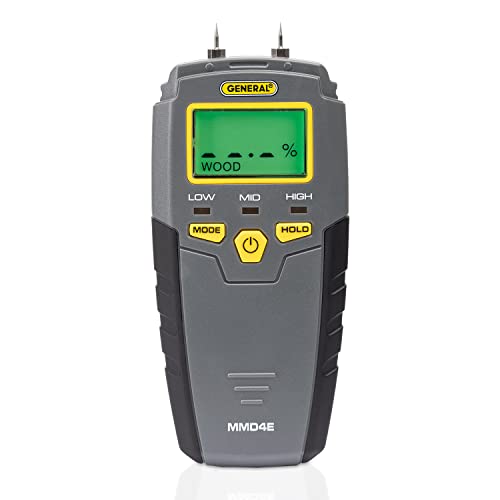
At 0.19 lb with a backlit display, it is the easiest pin meter to carry.

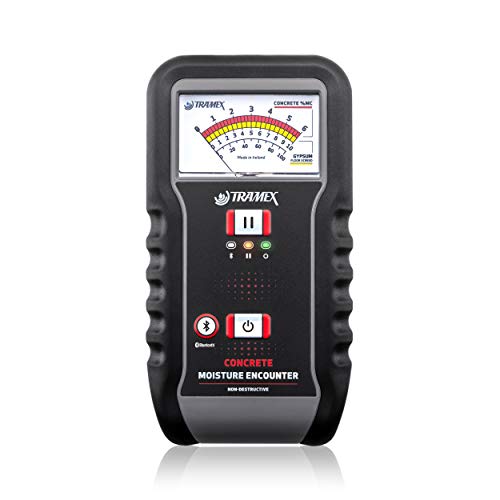
Pairs a pin sensor with an RH probe and a Bluetooth app for reports.
| Spec | |||||
|---|---|---|---|---|---|
| Best Scoreout of 100 | 69 | 64 | 40 | 26 | 25 |
| Sensing method | Pin and pinless (best in row) | Pin | Pin with RH probe | Pinless | Pinless |
| Max wood moisture reading% | 100 % (best in row) | 50 % | 30 % | 30 % | 30 % |
| Building material range% | — | 1.5–33 | 0–6.9 | 0–100 | 0–100 |
| Max scan depthin | 4.00 in (best in row) | — | 3.94 in | 1.25 in | 1.25 in |
| Accuracy | ±(3% of reading +5 digits) | ±2% (resolution 0.1%) | — | — | — |
| Concrete testing | Yes | Yes | Yes | Yes | — |
| Ambient humidity/temperature | Yes | Yes | Yes | — | — |
| Bluetooth app | — | — | Yes | Yes | Yes |
| Reading hold | Yes | Yes | — | — | — |
| Backlit display | — | Yes | — | — | — |
| Audible or LED alerts | — | — | — | — | Yes |
| Battery type | 9V | 9V | 2 x AA alkaline | 2 x AA alkaline | 2 x AA alkaline |
| Weightlb | 0.50 lb | 0.19 lb (best in row) | 0.79 lb | 1.10 lb | 0.66 lb |
We reviewed 19 moisture meters and kept only the 5 that pass every check below. Those are ranked by a Best Score built from spec fit for this job, sales rank.
These reviews are based on specifications and listing information only. Each one explains what the specs mean for leak, water damage and construction checks.
Only meter here with both pin and pinless modes
The MMD950 leads our ranking, and the sensing method explains why. It offers pin and pinless modes in one body. Pin mode reads inside the material, which suits wood and framing. Pinless mode scans without leaving holes, which suits finished drywall, ceilings and tile. For a buyer who does both leak checks and construction checks, that flexibility matters.
The wood range tops out at 99.9%, the highest on this page. Scan depth is 4 in, also the highest, and the listing says the pinless sensor can detect leaks up to 4 in behind walls and ceramic tile. Accuracy is ±(3% of reading +5 digits). The maker doesn't publish a building material range.
Extras help on a job site. It has a remote pin probe on a 46 in cable, a reading hold, and ambient humidity sensing. It runs on a 9V battery and weighs 0.5 lb. The listing shows no Bluetooth app, so you log readings by hand. The pinless side is the one to use first when you want to avoid damaging a surface.
VerdictA complete meter for mixed leak and construction work, and the best match for this keyword.
Lightest meter here, with a backlit display
The MMD4E ranks second and is a pin-only meter. You push the stainless steel pins into the surface, so it reads the material itself. That suits wood, drywall and concrete checks where small pin marks are acceptable. It cannot scan through a finished surface the way a pinless sensor can, so it fits spot checks better than wide sweeps.
Ranges are stated clearly: 5 - 50% for wood and 1.5 - 33% for building materials. Accuracy is ±2% with 0.1% resolution. The wood ceiling of 50% is below the 99.9% of the top model, but it is above the 30% of the three Tramex units. Low, medium and high tones and on-screen icons flag how wet a spot is.
At 0.19 lb, it is the lightest meter on this page. The display is backlit with 0.3 in digits, and there is a reading hold. It also reads ambient humidity. A protective cap doubles as a calibration checker. It runs on a 9V battery.
VerdictA light, readable pin meter that handles everyday leak and drywall checks well.
Concrete-floor specialist with Bluetooth mapping
The CMEX5 is built mainly for concrete floors, slabs and screeds. It uses a pin sensor plus an RH probe. That makes it a narrower fit for the general keyword than the two General Tools meters. For wood and drywall, the listing says you need the optional pin meter. Treat it as a specialist tool, not an all-round pick for leak hunting.
Its building material range is 0 - 6.9%, the lowest on this page, which fits concrete moisture readings. Wood reads up to 30%. Scan depth is 3.94 in, and the listing says it can measure to a depth of 3/4 in (20 mm) into the slab. The maker doesn't publish an accuracy figure here.
It adds a built-in hygrometer for ambient humidity, temperature and dew point. It is the only meter here listed with an RH probe. Bluetooth connects to an app that builds moisture maps and reports with geotags and time stamps. Two AA alkaline batteries power it, and it weighs 0.79 lb. It lists no reading hold or alerts.
VerdictA concrete-focused tool with good reporting, but a weaker match for general wood and building checks.
Pinless concrete meter with dual-depth readings
The CME5 is a pinless meter, so it reads through the surface without leaving marks. The listing describes it as an analog meter for concrete flooring, slabs and screeds, following ASTM F2659. That makes it a better fit for flooring and slab work than for hunting a small leak in framing.
It has two depth settings. The shallow setting reaches up to 0.4 in (9 mm) and the deep setting reaches 1.25 in (30 mm), so you can compare surface and core moisture. Wood reads from 5-30%, and other materials use a 0-100 comparative scale. The 1.25 in maximum is tied for the lowest scan depth on the page.
At 1.1 lb, it is the heaviest meter on this page. Two AA alkaline batteries power it. Bluetooth connects to an app for maps and reports. Its 0-100 range matches the widest building material range on the page. The maker doesn't publish an accuracy figure, and it has no listed humidity sensor, reading hold or backlight.
VerdictA capable pinless tool for slab and floor work, held back by weight and a lack of extras.
Pinless meter with an optional high-moisture tone
The ME5 ranks fifth, and it covers the pinless side of the keyword at a lighter weight than the CME5. It weighs 0.66 lb. The listing describes a large analog display and an optional high-moisture audio warning tone, which helps when you scan a wall and cannot watch the dial.
Like the CME5, it offers a shallow reach of 0.4 in (9 mm) and a deep reach of 1.25 in (30 mm). The listing says it is pre-calibrated for materials such as wood, drywall, plaster, roofing, tile and masonry. Adjustment tables account for wood type density. The wood scale tops out at 30%.
It is a poor match if you need concrete work, since the listing shows no concrete testing. It also lists no humidity sensor, reading hold or backlight. Bluetooth connects to an app for maps and reports. Two AA alkaline batteries power it. Its 1.25 in deep reach is shallower than the 4 in of the top-ranked model.
VerdictA simple pinless scanner with an alert tone, but it trails the leaders on features and range.
Best among the reviewed tools
Pin meters read the material directly and suit wood and framing, at the cost of small holes. Pinless meters scan through the surface and suit finished walls, floors and tile. Only the General Tools MMD950 here offers both modes, which covers the widest range of jobs.
Wood and building materials use different scales. The MMD950 reads wood up to 99.9%, the MMD4E up to 50%, and the three Tramex units up to 30%. Building material ranges also differ, from 0 - 6.9% on the CMEX5 to 0-100 on the pinless Tramex models.
Scan depth shows how far a sensor reads below a surface. The MMD950 lists 4 in, while the CME5 and ME5 list 1.25 in. Accuracy is published only for the two General Tools meters, so check the maker's figures before relying on a Tramex for tight tolerances.
Reading hold, backlit displays and alerts help in dark or tight spaces. A humidity sensor adds ambient context. The Tramex models offer Bluetooth apps that build maps and reports. Weight runs from 0.19 lb to 1.1 lb, which matters if you carry the meter all day.
Neither wins on every job. Pin meters read the material directly and suit wood. Pinless meters scan without damage and suit finished surfaces. If you do both, the MMD950 is the only model here that offers pin and pinless modes in one meter.
Among these five, the MMD950 lists the highest wood reading at 99.9%. The MMD4E lists 5 - 50% for wood. The three Tramex meters list wood up to 30%, so check that range suits the lumber you measure.
Four of these five list concrete testing: the two General Tools meters, the CMEX5 and the CME5. The CMEX5 and CME5 are aimed at concrete floors and slabs, per their listings. The ME5 does not list concrete testing.
The MMD950 lists a 4 in scan depth, and the CMEX5 lists 3.94 in. The CME5 and ME5 list 1.25 in, with a shallow setting of 0.4 in (9 mm). Deeper reach helps when you check behind tile or drywall.
Your own selection is kept in the link, so friends see the same side-by-side.