#1
Cataclean 120009CATCataclean Fuel & Exhaust System Cleaner
Largest bottle at 169 fl oz, listed for gasoline, diesel and hybrid engines.
- Total volume
- 169.0 fl oz
- Product form
- Fuel additive
- Cleans catalytic converter
- Yes
Choosing an emission system cleaner starts with the engine and the job. Check that the bottle lists gasoline use, and look for catalytic converter, EGR valve and P0420/P0430 claims. Dosing and volume tell you how often you can treat the car. TÜV certification is a useful extra. A cleaner removes deposits only and cannot repair a failed part. We put 10 products on one spec sheet so you can compare these points side by side.
Quick answer
Ranked from 10 oxygen sensor cleaners that met our standard, compared on EGR and catalytic converter cleaning scope, product form (fuel additive vs. spray), P0420 code claims.
As an Amazon Associate I earn from qualifying purchases. Links to retailers on this site are affiliate links; we may earn a commission at no extra cost to you.
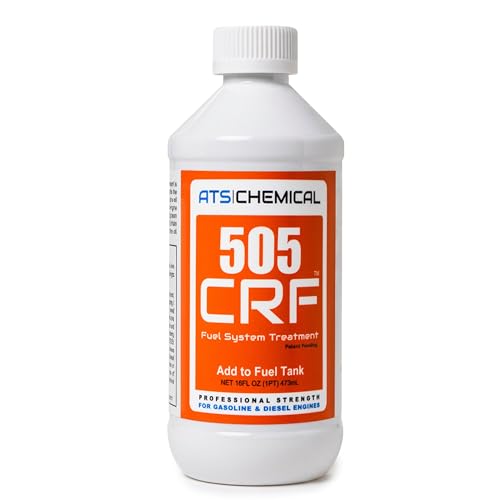
Largest bottle at 169 fl oz, listed for gasoline, diesel and hybrid engines.
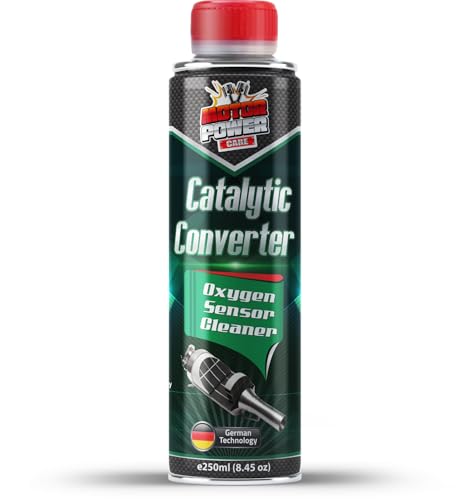
Lists EGR valve and turbocharger cleaning, P0420/P0430 targeting and TÜV certification in one 8.45 fl oz bottle.

Ties for most bottles in a pack at two, with 16.9 fl oz in total.
| Spec | ||||||||||
|---|---|---|---|---|---|---|---|---|---|---|
| Best Scoreout of 100 | 84 | 76 | 74 | 71 | 63 | 61 | 52 | 52 | 48 | 65 |
| Total volumefl oz | 169.0 fl oz (best in row) | 8.4 fl oz | 16.9 fl oz | 16.9 fl oz | 16.0 fl oz | 12.0 fl oz | 33.8 fl oz | 16.0 fl oz | 8.4 fl oz | 13.5 fl oz |
| Bottles in pack | 1 | 1 | 2 (best in row) | 1 | 1 | 1 | 2 (best in row) | 1 | 1 | 1 |
| Product form | Fuel additive | Fuel additive | Fuel additive | Fuel additive | Fuel additive | Fuel additive | — | Fuel additive | — | Aerosol spray |
| Dosing instructions | Add to fuel tank as directed | Pour into fuel tank with 5-15 gal gas; drive 40 min | — | Add entire bottle to 1/2 full tank of gasoline | One pint treats 18-21 gallons of fuel | Use every 1,000 miles; 12 oz treats 21 gal gasoline | — | Treats 5 to 20 gallons of gasoline or diesel | — | Spray, soak 20-25 min, reinstall sensor, then drive |
| Gasoline engines | Yes | Yes | Yes | Yes | Yes | Yes | Yes | Yes | Yes | Yes |
| Diesel engines | Yes (best in row) | — | — | — | Yes (best in row) | No | Yes (best in row) | Yes (best in row) | Yes (best in row) | Yes (best in row) |
| Hybrid vehicles | Yes | Yes | Yes | Yes | — | Yes | — | — | — | Yes |
| Cleans catalytic converter | Yes | Yes | Yes | Yes | Yes | — | Yes | — | Yes | Yes |
| Cleans EGR valve | — | Yes | Yes | Yes | — | — | — | — | — | Yes |
| Cleans turbocharger | — | Yes | — | Yes | — | — | — | — | Yes | — |
| Targets P0420/P0430 codes | Yes | Yes | Yes | Yes | — | — | — | — | — | — |
| TÜV certified | — | Yes | — | — | — | — | Yes | — | Yes | — |
We reviewed 39 oxygen sensor cleaners and kept only the 10 that pass every check below. Those are ranked by a Best Score built from spec fit for this job, sales rank.
These reviews are based on specifications and listing information from each maker. They look at how each product fits an emission system cleaning job.
Cataclean leads our ranking with the widest engine coverage
Cataclean ranks first on our spec sheet. The bottle holds 169 fl oz, the largest volume of the nine products on the page. That is a lot of product for repeated use. The maker lists it for gasoline, diesel and hybrid engines, and the dosing is simple: add it to the fuel tank as directed.
On cleaning scope, the data marks catalytic converter cleaning and P0420/P0430 targeting as yes. The listing also names oxygen sensors and injectors. It does not mark EGR valve or turbocharger cleaning, so it is a fuel-and-exhaust treatment, not a full intake cleaner. The listing says it is 50-state legal, which matters for buyers heading to a smog check.
The tradeoff is that the dosing line is general. It says to add the product to the tank as directed and gives no gallon range. Read the bottle label before you pour. Buyers who want a stated EGR claim should look at the next two products.
VerdictCataclean is the broadest and largest option here, best for buyers who want exhaust-focused cleaning across engine types.
MotorPower Care 7001 adds EGR and turbo cleaning
This bottle ranks second. It is the only one of the nine that marks all five: catalytic converter cleaning, EGR valve cleaning, turbocharger cleaning, P0420/P0430 targeting and TÜV certification. That is the closest match to what this keyword asks for. The maker also marks it safe for gasoline and hybrid engines.
Dosing is clear. Pour it into the tank with 5-15 gal of gas, then drive 40 min. The 5-15 gal range means you add it to a partly filled tank. The bottle is 8.45 fl oz, the smallest size on the page, tied with one other product. That is a small bottle, so plan on buying again for repeat use.
The listing cites government-tested drops in HC from 108 to 67 ppm and NOx from 986 to 332 ppm. Those are the seller's figures, not ours. The listing also names O2 sensors among the parts it cleans. The data does not list diesel use, so keep it to gasoline and hybrid engines.
VerdictMotorPower Care 7001 is the most complete match for this keyword, as long as you drive a gasoline or hybrid car.
The 2-Pack gives two bottles of the same formula
This pack ranks third. It holds two bottles, 16.9 fl oz in total, which ties for the most bottles in a pack on the page. The product form is a fuel additive for gasoline and hybrid engines. Two bottles suit someone who plans to treat the car more than once.
The spec sheet marks catalytic converter cleaning, EGR valve cleaning and P0420/P0430 targeting. It does not mark turbocharger cleaning or TÜV certification, and it gives no dosing line. Those gaps separate it from the single bottle at rank two. Check the bottle label for how much to add per tank.
The listing adds a warning. Make sure the catalytic converter is intact, because this product will not repair a cracked, broken or melted one. A cleaner removes deposits. It cannot replace a failed part, so check for other causes if the code returns.
VerdictA sensible two-bottle pack for gasoline and hybrid owners, with fewer listed features than the single bottle.
Rislone Cat Complete treats a half-full tank of gasoline
Rislone ranks fourth. The dosing is specific: add the entire 16.9 fl oz bottle to a tank that is half full of gasoline. That is easy to follow with no measuring. The product is a fuel additive and the maker lists it for gasoline and hybrid engines.
On scope, the sheet marks catalytic converter, EGR valve and turbocharger cleaning, plus P0420/P0430 targeting. That matches the MotorPower Care 7001 on cleaning scope, though Rislone does not list TÜV certification. The listing says it is safe on vehicles with oxygen sensors and catalytic converters, and that it will not void a manufacturer's new vehicle warranty.
The listing suggests use every 5,000 miles to keep the emissions and exhaust systems clean and help stop the check engine light from returning. Interval guidance like that helps if you want a routine. It also names fuel injected, direct injected, carbureted and turbo engines. The data does not list diesel use.
VerdictRislone Cat Complete matches the top bottles on cleaning scope and is easy to dose, but it lacks a TÜV mark.
Gumout fits fuel-system cleaning better than emission work
Gumout ranks fifth, and it is a looser fit for this keyword than the four above it. The data marks catalytic converter cleaning as yes, but it does not mark EGR valve cleaning or P0420/P0430 targeting. It also lists no hybrid use. Buyers chasing a code should look higher up the ranking.
What it does offer is range. The listing describes a PEA formula that cleans GDI injectors and carburetors, stabilizes gas and fights ethanol and water corrosion. The maker lists gasoline and diesel engines. One 16 fl oz pint treats 18-21 gallons of fuel, which is a clear dose.
The listing says you can add it to the gas tank, crankcase or through induction, and it names lawn mowers as well as cars. That makes it a general maintenance product, not a dedicated emission cleaner. The listing also positions it as a gas stabilizer, which suits storage use more than smog prep.
VerdictGumout suits routine fuel-system care, but it is not the pick for emission or code concerns.
Best among the reviewed tools
Check engine type first. Most products here list gasoline use, and several also list hybrid or diesel. The Chevron Techron bottle lists diesel as not compatible. Pick a bottle that names your engine type on the spec line, so you do not have to guess.
Emission cleaning means more than fuel injectors. Look for catalytic converter and EGR valve cleaning on the spec sheet. Some bottles clean only the fuel system. Others also list turbocharger cleaning. A product that names the part you suspect is a better fit than a general additive.
Dosing tells you how far a bottle goes. The MotorPower Care 7001 treats 5-15 gal of gas per bottle. Gumout treats 18-21 gallons per pint. Cataclean holds 169 fl oz, but its dosing line only says to add it as directed. Always follow the label.
A cleaner removes deposits. It cannot repair a cracked, broken or melted catalytic converter, as one listing warns. If a P0420 or P0430 code returns after treatment, have the converter and O2 sensors checked. Treat these products as maintenance, not a guaranteed repair.
On our spec ranking, Cataclean leads, followed by the MotorPower Care 7001 and its 2-pack. Cataclean has the largest volume at 169 fl oz. The MotorPower Care 7001 is the only product that lists EGR valve cleaning, turbocharger cleaning and TÜV certification. Pick by your engine type.
Some listings say their product targets P0420 and P0430 codes. A cleaner can only remove deposits, so it will not fix a failed catalytic converter. One listing warns it will not repair a cracked, broken or melted converter. Have the part checked if the code returns.
Among the nine products on the page, MotorPower Care 7001, its 2-pack, Rislone, Cataclean and Chevron Techron list hybrid use. Gumout, ATS Chemical and both AUTOPROFI products do not list it in the data. Check your owner's manual too.
It depends on the label. The MotorPower Care 7001 listing suggests every 3,000 miles. Rislone suggests every 5,000 miles. Chevron Techron says every 1,000 miles. Cataclean says to add it as directed, so read its label. Do not exceed the stated dose.
Your own selection is kept in the link, so friends see the same side-by-side.