#1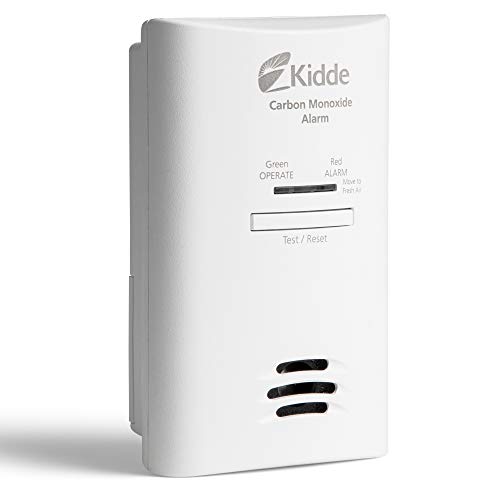
Kidde KN-COB-DP2Kidde Plug-in CO Detector with AA Battery Backup
Leads our ranking with peak level memory, battery backup and a 10-year warranty.
- Power source
- Plug-in with battery backup
- Alarm volume
- 85 dB
- Warranty
- 10 years
A good CO alarm does three jobs. It senses the gas with a dependable sensor, it carries a recognized safety certification, and it tells you when it is worn out. We put 13 products on one spec sheet to compare those points. We looked at power source, battery backup, alarm volume, sensor type, certification, peak level memory, display, test/hush button, end-of-life warning, weight, pack size and warranty. Where a maker does not publish a spec, we say so.
Quick answer
Ranked from 13 carbon monoxide detectors that met our standard, compared on UL 2034 certification, sensor type, end-of-life warning.
As an Amazon Associate I earn from qualifying purchases. Links to retailers on this site are affiliate links; we may earn a commission at no extra cost to you.
Leads our ranking with peak level memory, battery backup and a 10-year warranty.

Lists UL 2034 5th Edition and a backlit CO display with plug-in power.
Signals when to replace the unit and uses a 9V battery backup.
| Spec | ||||||||||
|---|---|---|---|---|---|---|---|---|---|---|
| Best Scoreout of 100 | 86 | 78 | 77 | 69 | 68 | 68 | 68 | 59 | 55 | 53 |
| Power source | Plug-in with battery backup (best in row) | Plug-in with battery backup (best in row) | Plug-in with battery backup (best in row) | Plug-in with battery backup (best in row) | Plug-in with battery backup (best in row) | Battery only | Plug-in with battery backup (best in row) | Battery only | Battery only | Battery only |
| Battery backup | Yes (best in row) | Yes (best in row) | Yes (best in row) | Yes (best in row) | Yes (best in row) | No | Yes (best in row) | No | No | No |
| Sealed 10-year battery | No | No | No | No | No | — | — | — | Yes (best in row) | No |
| Alarm volumedB | 85 dB | 85 dB | 85 dB | 85 dB | 85 dB | 85 dB | 85 dB | 85 dB | 85 dB | 85 dB |
| Sensor type | Electrochemical | — | Electrochemical | Electrochemical | Electrochemical | — | — | — | — | Electrochemical |
| Safety certification | — | UL 2034 5th Edition (best in row) | — | — | — | UL 2034 5th Edition (best in row) | UL 2034 5th Edition (best in row) | UL 2034 5th Edition (best in row) | UL 2034 5th Edition (best in row) | UL 2034 |
| Peak level memory | Yes | — | — | — | — | — | — | — | — | — |
| Digital CO display | — | Yes | — | Yes | — | Yes | Yes | — | Yes | — |
| Test/hush button | Yes | Yes | Yes | Yes | Yes | Yes | — | Yes | Yes | — |
| End-of-life warning | — | — | Yes | Yes | — | — | — | — | Yes | Yes |
| Weightlb | 0.50 lb | 0.43 lb | 1.10 lb | 0.83 lb | 0.40 lb | 0.37 lb (best in row) | 0.43 lb | 0.37 lb (best in row) | — | 0.70 lb |
| Detectors in pack | 1 | 1 | 1 | 1 | 2 (best in row) | 1 | 1 | 1 | 1 | 1 |
| Warrantyyears | 10 years (best in row) | 10 years (best in row) | 7 years | 7 years | — | 10 years (best in row) | 10 years (best in row) | 10 years (best in row) | 10 years (best in row) | 7 years |
We reviewed 17 carbon monoxide detectors and kept only the 13 that pass every check below. Those are ranked by a Best Score built from spec fit for this job, sales rank.
These reviews are based on specifications and listing information only. We cover the top five products in our ranking and point out what each one does and does not publish.
Plug-in alarm with battery backup and peak memory
The Kidde KN-COB-DP2 leads our ranking. It plugs into a standard 120V outlet and keeps working in a power outage on two AA batteries. It uses an electrochemical sensor, a common choice for home CO alarms. The alarm sounds at 85 dB, loud enough to signal a household to move to fresh air. It weighs 0.5 lb.
Peak Level Memory records the last time CO was detected or when the unit's test function was last used. That helps you check whether the alarm went off while you were away. The Test-Hush button lets you check the unit or silence a false alarm.
The gaps matter for this keyword. The data lists no safety certification, no end-of-life warning and no digital display for this model. The battery is not a sealed 10-year type, so you will replace the AA cells. That is its main weakness. Confirm the certification mark on the package before you buy.
VerdictA well-equipped plug-in alarm and our top pick, but confirm its certification before relying on it.
Kidde COPD pairs a CO display with a listed UL standard
The Kidde COPD is the only one of the five reviewed here that lists a safety certification: UL 2034 5th Edition. The listing also says it is ETL Listed. That tells you the alarm met a defined standard. For a buyer who wants proven certification first, that is the key point. It ranks second in our ranking.
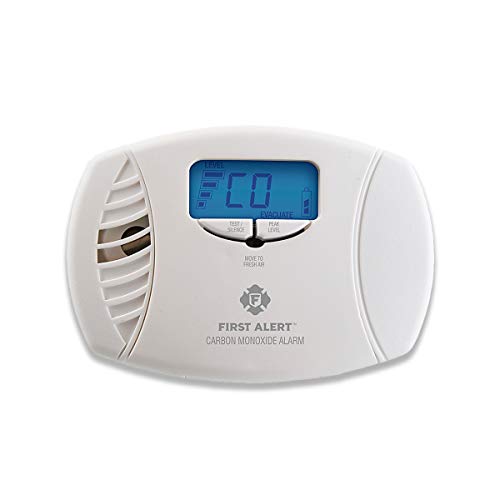
A backlit digital display shows CO levels, so you can read the number instead of waiting for the alarm. The alarm sounds at 85 dB. Power comes from a 120V outlet, with two AA batteries for outages. The plug rotates to fit vertical or horizontal outlets. A Test/Hush button handles quick checks.
At 0.43 lb it is light, and the listing calls it suitable for travel. The 10-year limited warranty ties for the longest on the page. The data does not list a sensor type, an end-of-life warning or peak level memory, and the battery is not sealed.
VerdictA good pick for certified protection with a live CO readout, though the sensor type is unpublished.
First Alert CO606 adds an end-of-life chirp to a basic plug-in
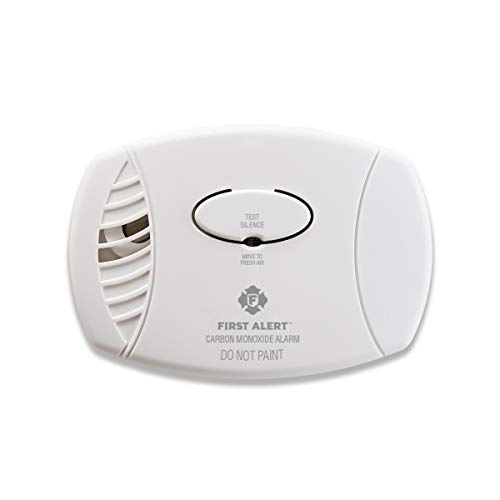
The First Alert CO606 is built around a simple job: detect CO and sound a loud alarm. Its electrochemical sensor is described in the listing as accurate wherever the unit sits in a room. The alarm is 85 dB. A single test/silence button handles checks, and the low battery signal can be muted for up to 8 hours.
The feature that sets it apart from the two models ranked above it is the end-of-life signal. The unit chirps when it is time to replace it. That answers a key buyer concern: knowing when the whole unit needs replacing. Backup power is a 9V battery, and the battery is not a sealed type.
Two numbers stand out. Its 7-year warranty is also the shortest, tied with two others. The listing refers to UL standards for First Alert CO alarms, but no certification edition is listed for this model.
VerdictA plain plug-in alarm for buyers who put end-of-life alerts first.
First Alert CO615 adds a digital display and end-of-life timer
The First Alert CO615 pairs a backlit digital display with an end-of-life timer. No model ranked above it lists both. The display shows power and CO readings at a glance. The timer signals when the unit needs replacing, so you are not guessing about sensor age. Both help you judge the alarm's condition.
Power is plug-in with a battery backup, and the alarm sounds at 85 dB. It uses an electrochemical sensor. A single test/silence button keeps operation simple. The listing notes that the date printed on the unit is the manufacture date, not an install date, which matters when you count toward replacement.
It weighs 0.83 lb, lighter than the CO606 at 1.1 lb. Its warranty is 7 years, shorter than the 10 years on the Kidde plug-in models. The data lists no safety certification for this model, which is a gap for buyers who put certification first. It ranks fourth in our ranking.
VerdictA useful display and end-of-life alert, held back by missing certification data.
SITERWELL A4602A-7 offers a two-pack but little certification data
The SITERWELL A4602A-7 is the only model in this review that ships as a two-pack, so one box covers two rooms. It is a plug-in unit with battery backup and an electrochemical sensor. The alarm sounds at 85 dB. A one-touch silence function and a color light show normal, fault and alarm states.
The listing mentions a 10-year backup battery. The spec data, however, does not show a sealed battery, so read that claim with care. The unit weighs 0.4 lb. The listing gives its size as 4.72 × 2.76 × 1.65 in and calls it compact enough for a suitcase, though a plug-in alarm is mainly for fixed use.
This is where it falls short for this keyword. The data lists no safety certification, no end-of-life warning and no warranty term. Buyers who want proven certification first should look at the Kidde COPD instead. It ranks fifth in our ranking, behind models that publish more. Check the package for a UL mark before you buy.
VerdictA practical two-pack, but missing certification data makes it a riskier choice.
Best among the reviewed tools
Look for a stated standard such as UL 2034. In our data, UL 2034 5th Edition appears for several Kidde models and UL 2034 for the First Alert CO400. Where a maker lists no certification, confirm the mark on the package before you buy.
Plug-in models with battery backup keep working in an outage but need an outlet. Battery-only models can sit on a table or wall without one. A sealed 10-year battery removes battery changes, though only one ranked model lists it.
A CO alarm does not last forever, so it should tell you when to replace it. First Alert lists end-of-life signals on the CO606, CO615 and CO400. Kidde lists one on the COBDL10. Several other models in the data do not list one.
A digital display shows the CO reading instead of only sounding an alarm. Peak level memory records a past detection, which helps if the alarm went off while you were away. Both are useful extras. Certification and the sensor come first.
The First Alert CO606 listing advises placing one on each level of your home and in each bedroom. Follow the maker's manual for exact spacing and height, since the specs we have do not cover placement rules.
Models with battery backup do. The Kidde plug-ins use two AA batteries, and the First Alert CO606 uses a 9V battery. Battery-only alarms such as the Kidde COB run on two AA batteries and need no outlet at all.
The data lists warranties of 7 to 10 years, and several models list end-of-life signals. A warranty term is not the same as sensor life, so replace the alarm when it signals end of life or when the manual says.
It records a past CO event so you can check it later. The Kidde KN-COB-DP2 listing says it records the last time carbon monoxide was detected or when the unit's test function was last used.
Your own selection is kept in the link, so friends see the same side-by-side.