#1
BTAS PASTE WBTAS Brake Grease 1oz Synthetic Ceramic
Ceramic synthetic grease with rubber and plastic safety listed and a -40°F to 3000°F range.
- Net content
- 1.0 oz
- Max temperature
- 3000 °F
- Base formula
- Ceramic synthetic
The right brake system grease stays soft under heat, resists water and road salt, and leaves rubber boots and plastic hardware alone. Check the base formula, the listed temperature range and whether the maker states rubber and plastic safety. Container size and applicator matter for repeat jobs. We put 10 products on one spec sheet, so you can compare these points side by side. Keep grease off pad friction surfaces and rotors, and treat missing specs as a reason to read the label.
Quick answer
Ranked from 10 brake system greases that met our standard, compared on rubber and plastic safety, high-temperature range, water resistance.
As an Amazon Associate I earn from qualifying purchases. Links to retailers on this site are affiliate links; we may earn a commission at no extra cost to you.
Ceramic synthetic grease with rubber and plastic safety listed and a -40°F to 3000°F range.

Holds 8 oz with a brush lid and lists a 3000°F max temperature.

Silicone formula rated -40°F to 3000°F, with EPDM and nitrile compatibility in the listing.
| Spec | ||||||||||
|---|---|---|---|---|---|---|---|---|---|---|
| Best Scoreout of 100 | 83 | 81 | 77 | 73 | 70 | 62 | 60 | 59 | 58 | 57 |
| Net contentoz | 1.0 oz | 8.0 oz (best in row) | 8.0 oz (best in row) | 8.0 oz (best in row) | 4.0 oz | 2.0 oz | 8.0 oz (best in row) | 8.0 oz (best in row) | 5.0 oz | 8.0 oz (best in row) |
| Price per ounce$/oz | — | — | — | — | — | — | 3.40 $/oz | — | — | — |
| Base formula | Ceramic synthetic (best in row) | Ceramic synthetic (best in row) | Silicone | Silicone | Silicone | Silicone | Synthetic | Synthetic | — | Silicone |
| Operating temperature range°F | -40–3,000 (best in row) | — | -40–3,000 (best in row) | -20–425 | -20–425 | — | -40–400 | -40–400 | -50–3,000 (best in row) | -20–400 |
| Max temperature°F | 3000 °F (best in row) | 3000 °F (best in row) | 3000 °F (best in row) | 425 °F | 425 °F | — | 400 °F | 400 °F | 3000 °F (best in row) | 400 °F |
| Safe for EPDM/rubber seals | Yes | — | Yes | Yes | Yes | Yes | Yes | — | Yes | Yes |
| Safe for plastic hardware | Yes | — | Yes | Yes | — | Yes | Yes | — | Yes | Yes |
| Waterproof / water resistant | Yes | Yes | Yes | Yes | Yes | Yes | Yes | — | — | Yes |
| Corrosion and seize protection | Yes | Yes | Yes | Yes | Yes | — | Yes | Yes | Yes | — |
| Anti-squeal claim | Yes | Yes | Yes | Yes | Yes | Yes | Yes | Yes | — | — |
| Container and applicator | — | Brush-top can (best in row) | — | Tube | Brush-top can (best in row) | — | — | — | Tube | Tube |
| Made in USA | — | — | — | Yes | Yes | — | — | — | — | Yes |
| Listed applications | Caliper pins, pads, brake hardware | Slide pins, calipers, bolts, sleeves, caliper pins | Guide pins, rubber boots, bushings, hardware | Caliper pins, boots, pad backing plates, shims | Caliper pins, boots, pad shims, drum shoe contacts | Caliper pins, brake pads, backing plates, bushings | Metal to metal contact points and sliding surfaces | Caliper pins, hardware, and the back-side of brake pads | Caliper hardware, mating surfaces, backing plates | Weatherstrip, sunroof tracks, window channels, hinges |
We reviewed 19 brake system greases and kept only the 10 that pass every check below. Those are ranked by a Best Score built from spec fit for this job, sales rank.
These reviews are based on specifications and listing information. We compare each product's data with the other products on the page.
Ceramic synthetic grease in a small 1 oz size
BTAS PASTE W leads our ranking for this keyword. It uses a ceramic synthetic base and lists caliper pins, pads and brake hardware as uses. That covers the slide pin job and the contact points around it. The data marks it safe for rubber and plastic, and the listing names EPDM and nitrile. That matters for pin boots.
Heat is the other half of the job. The listed range is -40°F to 3000°F, which ties for the highest operating range on the page. The rating leaves wide margin for brake heat. It is also listed as water resistant, with corrosion protection and an anti-squeal claim, which helps against road grime and noise.
The catch is size. It contains 1 oz, the lowest net content of the ten products. That suits a single job at home, but not a busy shop. The maker doesn't publish an applicator type, so expect to apply it by hand or with a tool.
VerdictA well-matched grease for pins and hardware, held back only by its small size.
Big brush-top can with ceramic heat rating
Keze's 8 oz can ranks second on our list. It ties for the largest size on the page. It uses a ceramic synthetic base and a brush-top lid, which lets you brush grease onto pins and sleeves without a separate tool. Listed uses are slide pins, calipers, bolts, sleeves and caliper pins. That fits the keyword's main job.
Heat and wet are covered. The max temperature is 3000°F, which ties for the highest on the page. It is listed as water resistant, with corrosion protection and an anti-squeal claim. The listing also mentions a shield against rust, dirt and moisture. These specs speak to road grime and seized pins.
The gap is material safety. The data does not say whether this grease is safe for EPDM rubber or plastic hardware, and the listing is silent on it. Slide pin boots are usually rubber, so confirm with the maker before using it on them. It also lists no low-end temperature.
VerdictA roomy, heat-rated can, but check rubber compatibility before using it on boots.
Silicone grease rated to 3000°F, safe for rubber
FMNB FM013 ranks third. Its base is silicone, which is a different chemistry than the ceramic synthetic pastes above it. Listed uses are guide pins, rubber boots, bushings and hardware. The listing says it works with EPDM and nitrile rubber and compatible plastic, without swelling or cracking. That speaks directly to the buyer's biggest worry about boots.
Temperature range is -40°F to 3000°F, tied for the highest operating range among the models that list it. The listing says it resists water washout and stays in place through heat, cold and wet. Corrosion protection and an anti-squeal claim are both listed. It also adds fine ceramic particles to cut friction on pins.
Keep it off rotors and pad friction surfaces, as the listing warns. The 8 oz size matches the largest on the page, so it covers repeat jobs. The maker does not list an applicator type or Made in USA status. Those are small gaps for a grease that checks the main boxes.
VerdictA rubber-safe silicone grease with a wide listed temperature range and a generous size.
US-made silicone tube built for pins, boots and shims
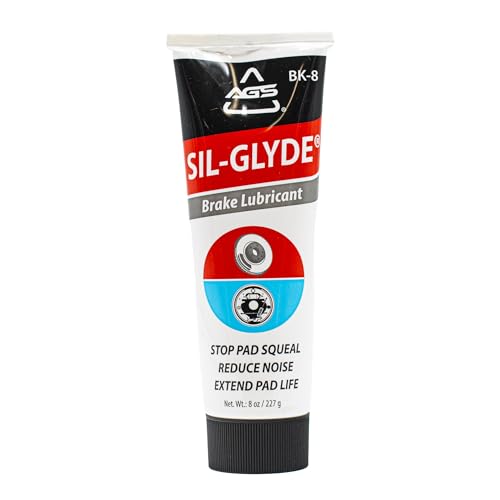
AGS SIL-Glyde BK8 ranks fourth. Listed uses are caliper pins, boots, pad backing plates and shims. The data marks it safe for rubber and plastic, and the listing names EPDM and nitrile seals plus plastic brake hardware. That means one tube can cover the pins, the boots and the pad contact points.
The listed range is -20°F to 425°F. That sits well below the 3000°F ratings of the top three, so it is the weaker pick on paper for heat. The listing says it will not burn off under hard braking and seals out water and road salt. Water resistance, corrosion protection and an anti-squeal claim are all listed.
It is one of three products here that list Made in USA, and the 8 oz size ties for the largest. A tube means you apply it by hand or with a tool. Apply it to hardware only, never to pad friction material, rotors or drums, as the listing says.
VerdictA brake-specific silicone grease that trades heat rating for confirmed material safety.
Brush-top silicone can in a 4 oz size
AGS SIL-Glyde BK-44 ranks fifth and shares its silicone base with the BK8, but comes in a 4 oz brush-top can. The brush sits in the cap and lays a thin film on pins and pad ears with no fingers needed. Listed uses are caliper pins, boots, pad shims and drum shoe contacts.
The data marks it rubber safe, with water resistance, corrosion protection and an anti-squeal claim. The range is -20°F to 425°F, the same as the BK8. Parts of the listing carry unresolved confirm notes about the formula and the range, so check the label before relying on those figures. Plastic safety is not listed.
That missing plastic spec matters if your hardware includes plastic parts. The 4 oz size sits between the 8 oz cans and the small packs. Like its sibling, it is Made in the USA and carries the same warning to keep grease off pad friction material, rotors and drums. It fits buyers who want a brush and a mid-size can.
VerdictA handy brush-top option, held back by a missing plastic spec.
Best among the reviewed tools
Caliper slide pin boots are rubber, and some hardware parts are plastic. The wrong grease can make seals swell. Look for a maker statement naming EPDM rubber and plastic. Some products here do not list it, so treat that as an open question, not a yes.
Brake hardware gets hot, so the grease must not melt or run. Max ratings in this group go from 400°F to 3000°F. A higher number gives more margin. Check the low end too, since cold climates can stiffen some greases.
A brush-top can paints grease onto pins and pad ears without a tool. A tube gives tighter control for small spots. Several products here do not list an applicator. Size matters too: 8 oz suits repeat work, while 1 oz suits a single job.
Brake grease goes on hardware contact points, such as pins, backing plates and shims. Keep it off rotors and pad friction surfaces. Some products here list general uses instead of brake uses, so check the applications line before buying.
Among these, BTAS PASTE W leads our ranking, with a ceramic synthetic base and a rubber and plastic safe listing. Keze and FMNB follow. FMNB states EPDM and nitrile compatibility, while Keze does not list rubber safety, so check that point for your boots.
Silicone greases here, such as FMNB FM013 and AGS BK8, are listed as safe for EPDM and nitrile rubber. Rely on the product's stated rubber-safe claim, not a guess. Avoid products that do not list rubber safety unless the maker confirms it.
A higher rating gives more heat margin on paper. Four products list a 3000°F max, and three list 400°F. The AGS silicone greases list 425°F and add Made in USA status. Pick based on heat margin, material safety and applicator, not one number.
Keep it off pad friction material, rotors and drums. Several listings repeat this warning. Apply a thin film to pins, backing plates, shims and other hardware contacts, then wipe off any excess.
Your own selection is kept in the link, so friends see the same side-by-side.